If you’ve ever found yourself scrolling through social media, watching tutorials on rice water rinses, or eyeing a bottle of trendy biotin gummies then you are far from alone.
In fact up to 94% of women are concerned about hair loss, but with so much online discourse we’re here to help you separate science from marketing.
Dr Iain Sallis registered trichologist (RIT) explains how our diets can affect the hair on our heads.
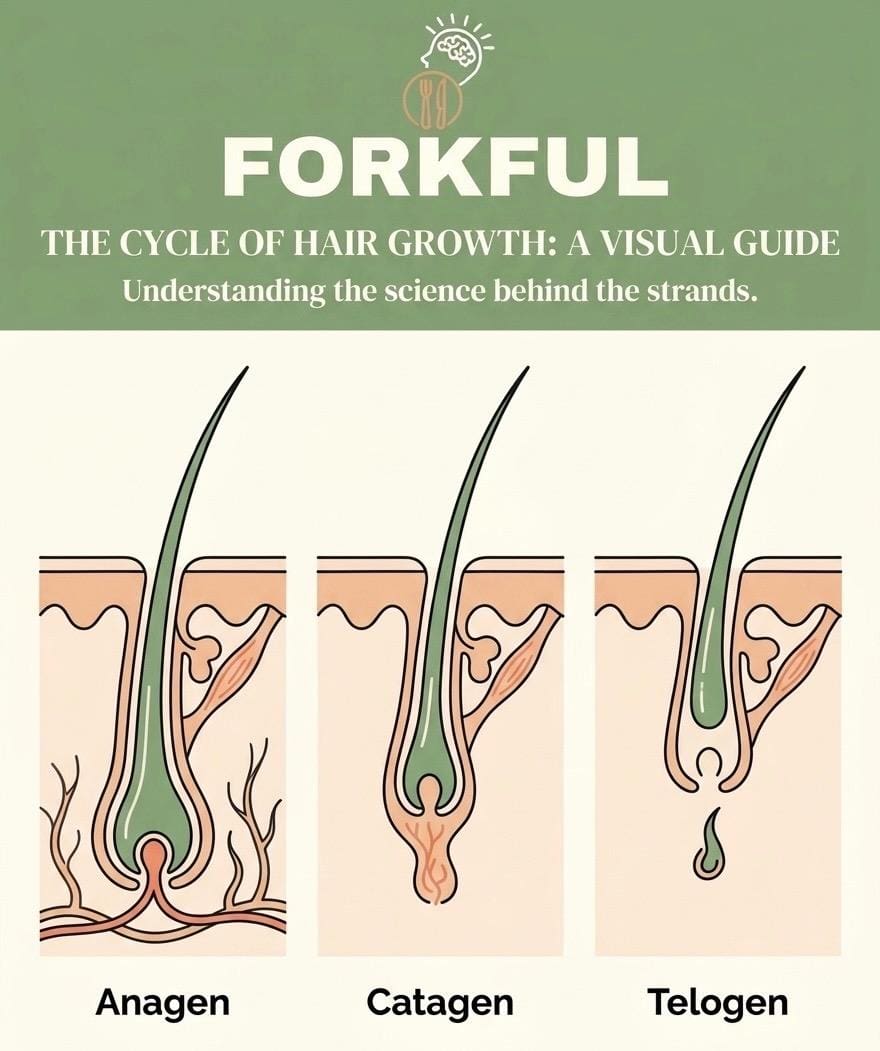
To understand why hair falls out, we first need to look at how it grows.
“Each hair follicle moves independently through three main phases. The first, anagen, is where hair is actively growing. This can last two to seven years, and around 85-90% of your hair should be here,” says Dr Sallis.
“The next is catagen, the transition phase, and this lasts two to three weeks, where the follicle shrinks and detaches from its blood supply. The third phase, called telogen, is the resting and shedding stage, which lasts around two to four months.”
What triggers sudden shedding?
Dr Sallis explains that when we experience sudden hair loss, it is often due to a condition called telogen effluvium, a mass exodus where hair follicles are pushed prematurely from the growth phase into the shedding phase. This can be triggered by illness, stress, or hormonal changes. However, throw nutritional deficiencies into the mix, and things begin to change.
“Hair is a non-essential tissue. Your body will prioritise nutrients to vital organs, and your hair gets what’s left over,” Dr Sallis explains “If nutrient intake is inadequate, the body can prematurely push follicles into telogen, resulting in shredding.”
Why Quick Fixes Fail
The big scaremongering around hair loss is that you need expensive, trendy supplements to fix it. We are bombarded with marketing for biotin gummies and rice water rinses. But it’s not a supplement issue.
Importantly, the hair loss you see today often reflects something that happened two to four months ago. Therefore, dietary changes won’t have immediate results. It takes time for the body to reallocate its resources.
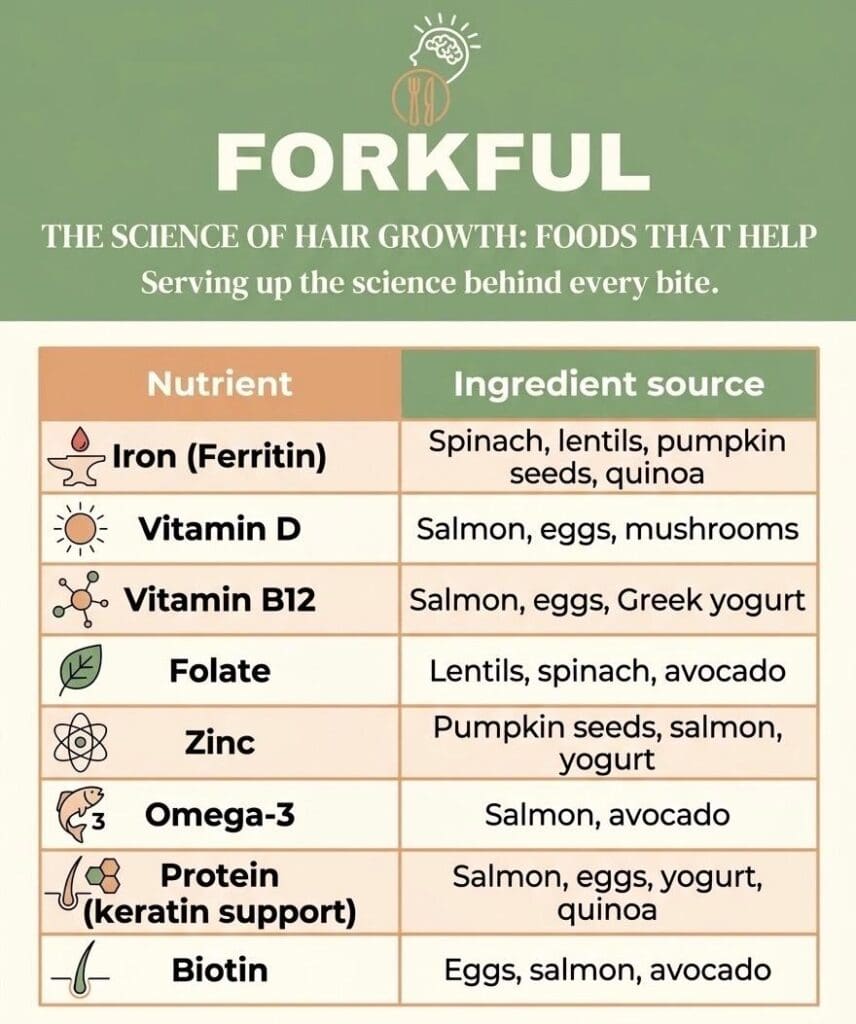
Iain’s research emphasises that iron and vitamin D deficiencies are often relevant factors in hair loss, alongside B12, folate and zinc, while omega-3 supports your scalp.
For macronutrients, your protein, carbs, fats and overall calorie intake should all be balanced. These can all be found in everyday foods.
“Crash dieting, low protein diets, poorly planned vegan or elimination diets, fasting and very low-fat diets are where I see the most negative real-world impact,” says Dr Sallis. “The common mechanism to remember is that metabolic stress plus a nutrient shortfall could cause hair loss.”
The Supplement Myth
People ask all the time are supplements good for you? So we suppose the answer is: compared to what?
If you have a confirmed deficiency or your intake is genuinely inadequate, then yes, they are useful. But if someone is eating well and has normal bloods, supplements won’t override genetics or hormones.
Ultimately, Dr Sallis’s insights reveal that nutritional deficiencies are neither the sole villain nor are supplements the ultimate hero.
“Supplements are useful when there is a confirmed deficiency or when intake is inadequate, but if someone is eating well and has normal bloods, supplements won’t override genetics or hormones.”
While diet is a critical piece of the puzzle, hair loss is ultimately a symptom, not the root problem. (See what we did there)
Changing what you eat, or what pills you take, is just one part of a much wider biological picture.