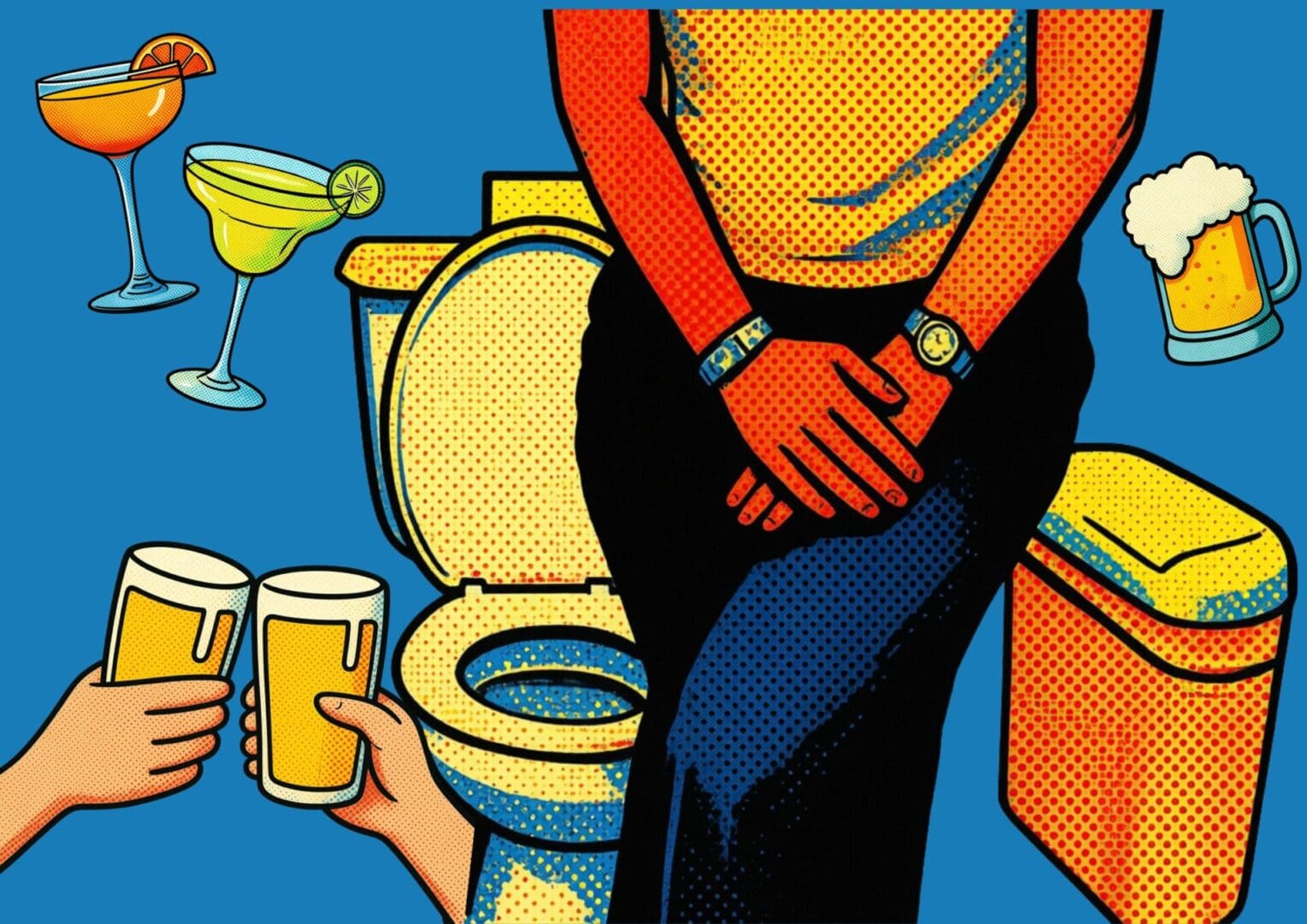
It’s a busy Friday night in your local pub where the line for the toilet is longer than the queue at the bar.
Amongst all the drunken cries of “I really do love you mate” and “that pint cost how much??!!” there’s usually one friend advising another not to “break the seal”.
Breaking the seal is a popular term referring to the first time you urinate while drinking alcohol. The idea is that once you “break the seal”, you must then use the loo frequently for the rest of the night.
Allegedly, you are now restricted to the bathroom and doomed to a night of standing in queues and praying there is toilet paper.
While the idea of the “seal” is an urban legend, the need to urinate more frequently can be explained scientifically.
What happens when we drink alcohol?
Ordinarily, your body produces a hormone called vasopressin, also known as antidiuretic hormone (ADH) which regulates the body’s water balance and maintains blood pressure by controlling how much water is reabsorbed by the kidneys.
However, alcohol suppresses ADH production causing your body to produce more urine.
So while you will find yourself in the line for the bathroom more often, there is no “seal” to speak of.
Weeing after you’ve started drinking won’t make you need to go any more or less as the night continues. Instead, it’s thought to be more of a mental suggestion.
If you believe in the seal and breaking it, you’ll feel the need to urinate more often as it weighs on you mentally.
The addition of longer queues and less appealing bathrooms can also add to the illusion that it takes up a larger proportion of your evening.
Despite it being mental, the need to urinate is still a physical urge and should not be ignored.
Holding in wee can increase your risk of urinary tract infections, so it is advised to grin and bear the lines and listen to your body’s signs. After all, you don’t want to be the one paying an expensive cleaning fee for the taxi home, or having to change your bed sheets in the middle of the night.