There are worse things than sharing a name with a former UK Deputy Prime Minister.
“It’s got me very good tables at restaurants in the UK,” Dr. John Prescott says, completely deadpan. “We are from similar area in England, and we are probably cousins.”
Beyond the occasional booking upgrade, the resemblance ends there.
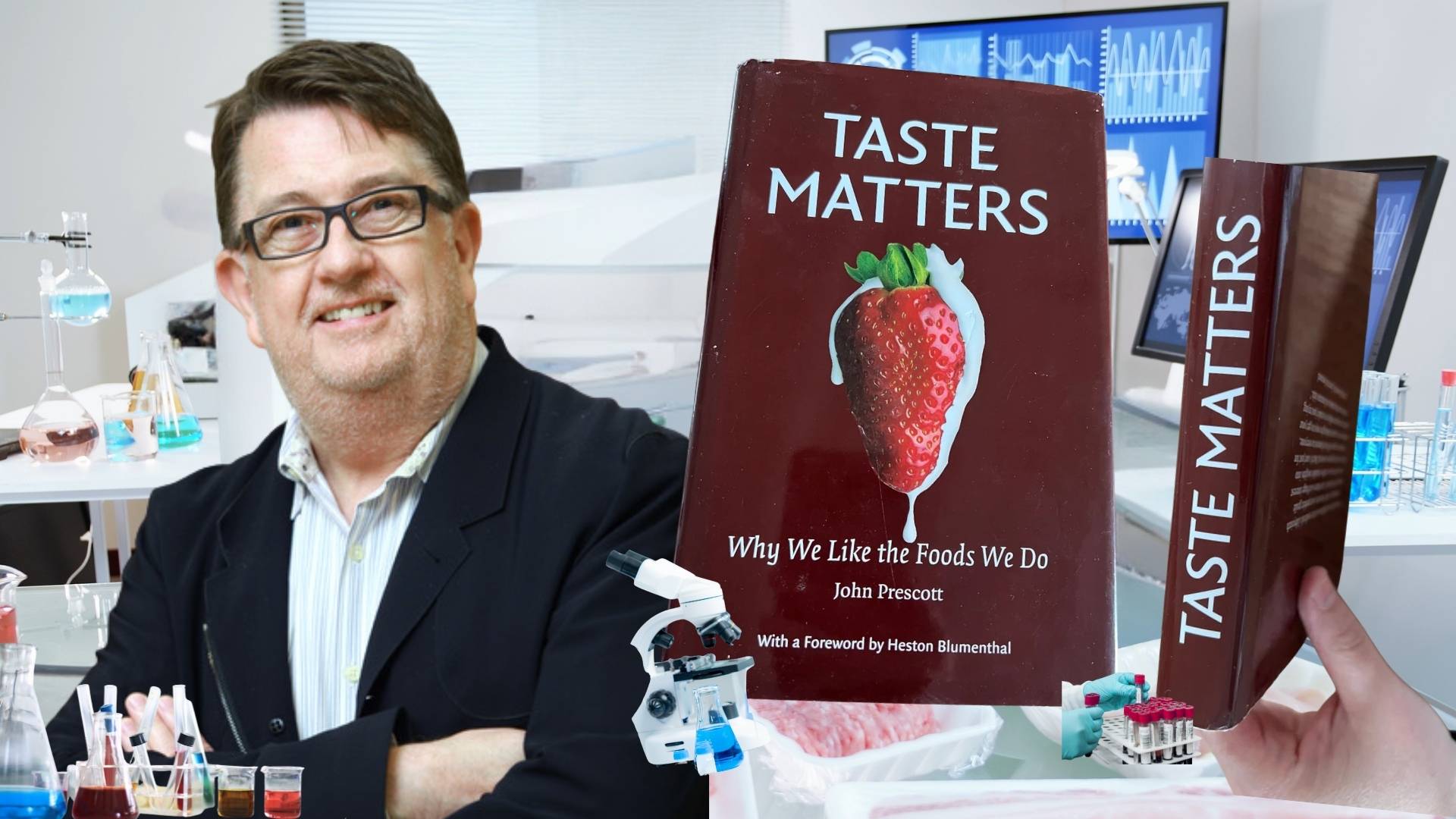
Dr. John Prescott is a sensory and consumer scientist, a psychologist, and the director of TasteMatters Research & Consulting. He is also a long-time editor of the scientific journal Food Quality and Preference and the author of the book Taste Matters: Why We Like the Foods We Do.
A graduate job taken serious
“I had no ambitions to work in food at all.”
Trained as a psychologist, his early work focused on physiological psychology, running EEG studies and analysing brain activity. Food, at that point, barely registered as an academic interest. There was no grand plan to decode flavour or explain cravings.
Then came a job application.
He applied to join Australia’s national science agency, CSIRO, in a division dedicated to food science. The team was interdisciplinary — chemists, psychologists, sensory scientists — all working on a deceptively simple problem: why do people like certain foods and reject others?
“That was it,” he says. “I found it was a very interesting area.”
What struck him early on was that much of what passed as “sensory science” was, in reality, psychology in disguise. Measuring taste preference, studying food acceptability, analysing how people respond to flavour — these are fundamentally about human perception and behaviour.
“It’s applied psychology,” he says. “That’s what it is.”
From Brainwaves to Behaviour
At first, he tried to bring his old methods with him.
Fresh from his PhD, he set up an EEG lab to study how the brain responds to taste. On paper, it made sense — why not measure flavour at the neurological level? In practice, it quickly became clear that the approach wasn’t sustainable.
“I was spending all my time doing technical things rather than actually collecting data.”
Instead of measuring brainwaves, he started studying perception directly — how people experience taste, smell, and texture in real time. This meant working with human subjects, running sensory tests, and focusing on behaviour rather than biology.
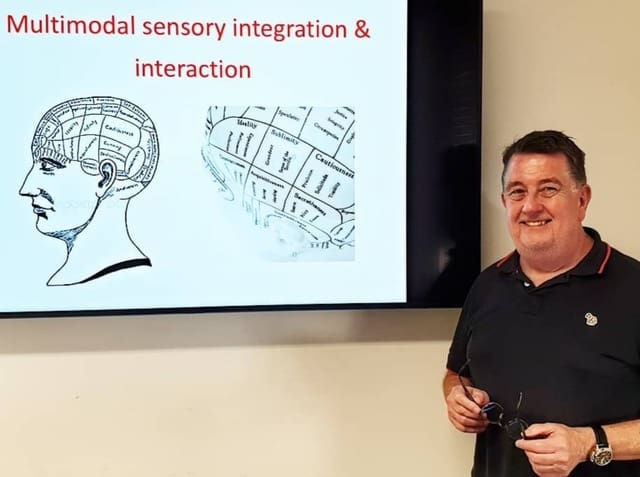
He began exploring multisensory perception — the idea that flavour is not just taste, but a combination of senses working together. Smell, texture, temperature, even sound all play a role.
Long before it became a buzzword in food circles, he was investigating how these elements interact, and how we learn to associate them.
The making of the book
For someone who has spent decades publishing academic papers, writing a book for a general audience turned out to be unexpectedly difficult.
“I didn’t know how to approach it.”
The idea had been there for 15 years.
The breakthrough came almost by accident. A colleague asked him to write a couple of short entries for an encyclopedia of food.
“I found it very hard,” he admits.
Not because a lack of expertise, but because the audience was different. Writing for fellow scientists is one thing. Writing for “your next-door neighbour,” as he puts it, is completely different.
He describes the hardest part as simply starting.
“It’s like a dog settling into a basket,” he says. “It walks around for a while before it settles down.”
Once he found momentum, the book came together.

When he was writing, much of the focus in nutrition debates was on fat. Today, the conversation has shifted towards carbohydrates, processed foods, and eating patterns.
If he were to revisit the book now, he says, he’d place more emphasis on those changes. and on the growing body of research around how food structure and behaviour influence health.
Why We Like What We Like
Ask him what determines food preference, and the answer is anything but simple.
“It’s multifaceted,” he says.
Genetics plays a role. So does culture. So does habit. But increasingly, his work has focused on something less obvious: personality.
“We all vary,” he explains. “And that variation affects what we eat.”
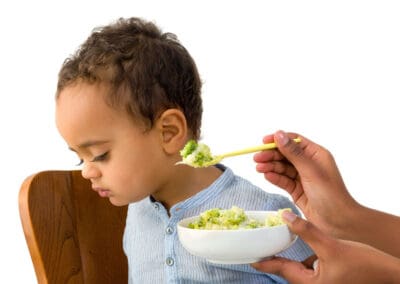
One concept he returns and has been focusing on recently is food neophobia — the reluctance to try new foods. It’s more common than you might think. Around a quarter of the population scores high on it, meaning they tend to avoid unfamiliar dishes and stick to a narrow range of foods.
But it’s not just about being “picky.” Food neophobia has real consequences. People with high levels of it often have less varied diets, which can affect nutrition and long-term health.
“It’s a big determinant,” he says.
What makes this particularly interesting is that it shifts the conversation away from taste alone. Disliking a food isn’t always about flavour — it can be about fear, familiarity, or psychological comfort.
In other words, we don’t just eat with our mouths. We eat with our personalities.
His research also touches on emerging ideas in nutrition, particularly around how we eat, not just what we eat. One growing area of interest is texture — and how it influences eating speed.
You can read our exclusive article by Kate Nicholls – Why We Love Crunchy Foods: The Science Behind the Sound.
Foods that are soft or easy to consume tend to be eaten more quickly, which can lead to higher intake before the body registers fullness. This is a subtle effect, but one that could help explain patterns of overeating in modern diets.
“It’s not just the calorie content,” he says. “It’s how rapidly you eat the food.”
Simplicity, Pasta, and the Italian Lifestyle
For someone who has analysed food at such depth, his personal tastes are refreshingly uncomplicated.
“I cook a lot,” he says. “Mostly Italian.”
This is partly practical, partly personal. For over a decade, he has spent several months each year in Florence, working with colleagues and immersing himself in Italian life.
It’s not just the food that draws him back — it’s the lifestyle.
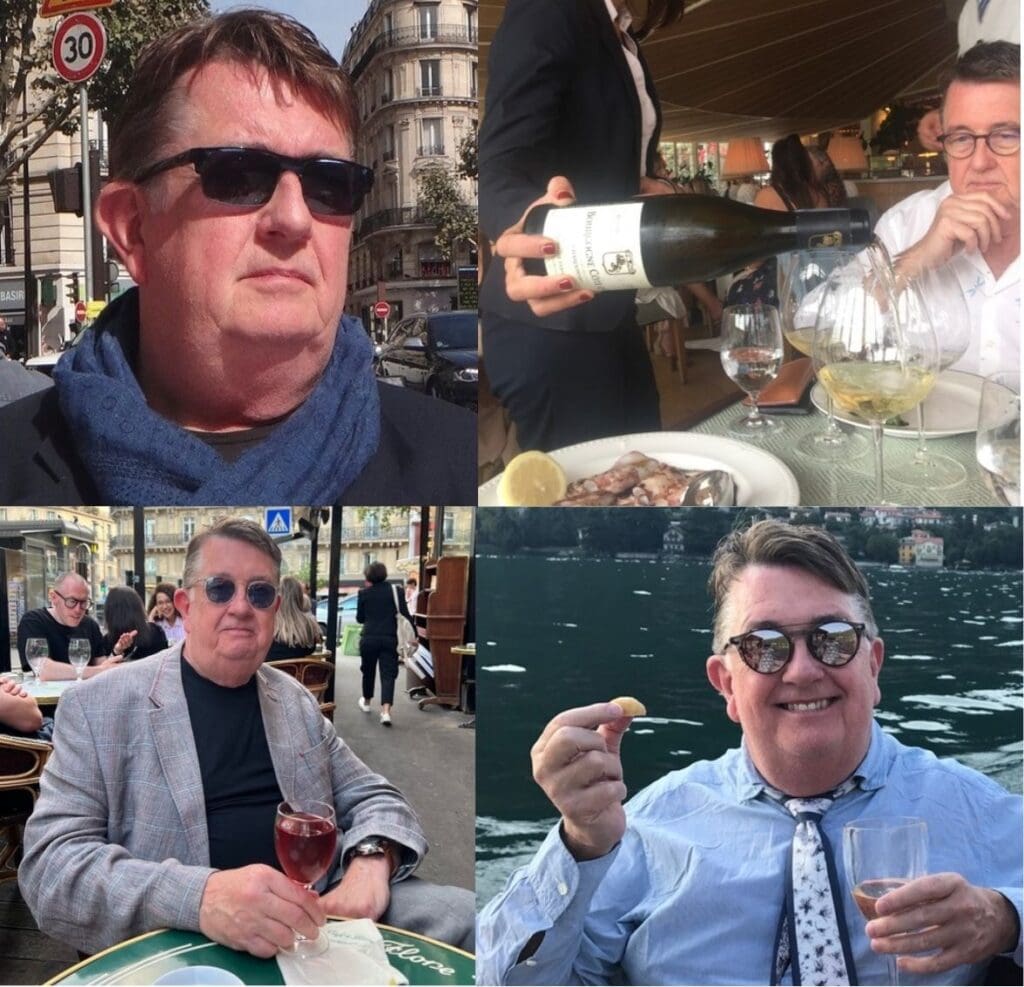
Evenings are spent in local squares, where people gather for a drink, conversation, and a kind of unstructured social ritual that feels increasingly rare elsewhere.
“You see everyone from the neighbourhood,” he says. “Just sitting and chatting.”
That simplicity carries through to his cooking. Despite having dined in some of the world’s most prestigious restaurants, he finds himself drawn to the opposite end of the spectrum.
“I just find them too much now,” he says of fine dining.
Instead, he prefers food that is simple: a good steak, a glass of wine, or a bowl of pasta.
“There’s nothing simpler than carbonara,” he says. “And it’s absolutely delicious.”
“But no cream,” he adds firmly.
It’s a perspective shaped by years of studying food from every angle. Complexity, he’s learned, isn’t always the point. Sometimes, satisfaction lies in familiarity, balance, and restraint.
Stay Curious, Stay Critical
“I think the key thing is to appreciate science.”
In an age of food trends, viral health claims, and endless misinformation, he warns about the risks. From fad diets to pseudoscience, the noise can be overwhelming.
“There’s so much nonsense written,” he says.
But the solution is to become more curious, more informed, and more critical about where information comes from.
Good science, he insists, is accessible. You don’t need to be an expert to understand it — just willing to engage with it.