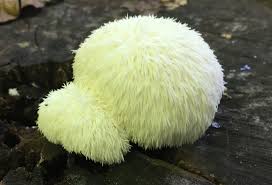
Found in the Northern Hemisphere’s damp woodlands, Lion’s Mane mushrooms does can do a lot. Not only does it boost your immunity, it is also said to be the ultimate brain food. Identifiable by their prominent white, icicle like spines Hericium erinaceus was first foraged and consumed in China in 600 AD in the Tang Dynasty, mostly for the medical benefits people believed it had. Now, thousands of years later, they sit awkwardly as a topic of discussion in the golden age of social media. Social media loves Lion’s Mane, but it also loves to sugar-coat the truth of its benefits, and what they actually do for us.
A Twisted Message
Lion’s Mane is a rare species of fungi, but it seems even rarer to get valuable information about it, as it finds itself sat in the centre of the of the social media misinformation crisis when it comes to food. But why? What is the benefit of lying about it? Put simply, it’s marketing. PR agencies amplify the mushroom’s supposed cognitive benefits and splurge it to the mass media through influencer endorsement. Unfortunately for us, a healthy commission will outweigh most influencers intention to spread real information, that actually proves factual. In fact, last year, National Geographic found that 45% of nutritional content posted to Instagram contained inaccuracies.
Even mycologists fall victim to this, a good example being Paul Stamets, a North American mycologist who has been criticised for pushing a sensationalised narrative on the mushroom, calling it a ‘cognitive transformer.’ Despite being the public face of cognitive mushroom research, Stamet’s alliance to company Fungi Perfecti, and their online supplement store muddies the water when it comes to his objectivity on mushroom research, putting him in the middle between selling a story, and the truth.
An Evidence Based- Approach
Fortunately for all you mushroom heads out there, a group of cognitive experts having been chipping away at these false narratives to bring you the fact checks, clinically evidence truth on Lion’s mane.
Professor Edward Wickstead, an assistant professor of Neuroscience and Pharmacology at Midwestern University says: “It’s really frustrating when i see people detaching their research and understanding by inflating what they’ve found. Often when talking about Lion’s Mane and its effect on cognition, things get lost in translation. You often see small discoveries being blown out of proportion like it’s some new miraculous finding.”
Edward and his fellow researchers have recently submitted a major review on Lion’s Mane, looking specifically at it’s potential benefits to human health and the brain. Despite this, varying evidence and a lack of human lead trials has left the researchers to be conservative in their claims of what a daily does of the fungus does for your cognition.
Professor Shelini Surendran, the Associate Dean for the Faculty of Health and Medical Sciences at the University of Surrey says: “There could definitely be more work done regarding the effects that Lion’s Mane has on humans. A lot of testing at the moment in the cognitive sphere bases their results off animal testing. Most of the studies are done on rats and mice.”
“How can you accurately measure cognition in a rat?” Edward chimes in, “I would love to see more specific cognitive work done. We do, however, have behaviour testing that looks at their recognition memory where we conduct what we call Novel Object Recognition.”
First used by researchers in the 1980s Novel Object Recognition is one of many methods used in assessing the behaviour of rodents. The test operates off familiarity, assessing the rodent’s ability to decipher between what it knows and what it doesn’t. When given varying dosages of Lion’s Mane, researchers can observe animals’ behaviour. From doing this, they have seen varying doses, some suggesting increased nerve growth. While this is promising, they must be careful not to be definite in attributing these outcomes to humans. After all, we aren’t rats.
Brain Medicine?
Nerve Growth Factor (NGF) is a protein that complements the growth, maintenance and survival of neurones in the brain, and limited clinical testing on humans means that it is uncertain whether a daily dose of the Lion’s Mane can offer support on this protein. Supplement brands often prove guilty in ‘inflating’ the idea that it does, and positions Lion’s Mane as an essential nerve growth booster.
“Our understanding of Lion’s Mane mushrooms influence on NGF is still limited,” explains Professor Wickstead, “The brain is very complex, it contains an estimated 86 billion neurones. These go one to form almost 100 trillion synaptic connections. I do think Lion’s Mane could be important for the brain, but i also think so much more research is required.”
Despite the conflicts between the sellers and the scientists, Lion’s Mane has made promising connections to the prevention of neurological diseases.
One of Professor Wickstead’s specialities is Alzheimer’s, with a specific focus on new ways to slow the progression of the disease. “We haven’t had a really beneficial drug for Alzheimer’s since Memantine in 2003. Taking a supplement will not replace that, but there is preliminary data suggesting that Lion’s Mane could be important in the same sort of pathways.”
According to the Alzheimer’s Society, on average one in three people in the UK develop dementia, with Alzheimer’s being the most common form. With Lion’s Mane research still in its infancy, there is potential for it to serve one day as a cognitive medicine for this very issue.
Fruiting Body VS Mycelia
The most common misconception in the world of fungus is that all nutrients and vitamins that mushrooms have to offer lie in the fruiting body. With Lion’s Mane, however, it’s the deep roots that Professor Surendran sees variation. “Different parts of the mushroom have different impacts,” she explains. “In a recent study we found differences in a compound called erinacines A and B in the fruiting body, a compound that contributes to nerve growth. The concentration was found to vary between the fruiting body and the mycelia.” For those not in the know, the mycelia is the root like network that makes up the main body of the fungus, whereas the fruiting body is the visible, above ground structure.
In countries like Japand and China, mushrooms are consumed in full as key ingredients in many of their traditional dishes, with mycelium web-like structures still hanging off the rear of the fruiting body. While this is perfectly legal there, being traditional dishes, the UK has banned this due to novel food regulations.
Despite such barriers, this does not halt Lion’s Mane research in the UK, however it does raise questions around the part of the mushroom that consumers are ingesting, and whether that translates to the cognitive benefit claims attached in terms of nerve growth.
Whether or not Lion’s Mane mushroom is the nerve growth booster that your brain so desperately needs, the current air of information surrounding it is cloudy. There simply isn’t enough research. In an age of mass communication and interconnectedness, scientific findings are bound to get misinterpreted, or inflated for corporate needs. Last year, the supplement market in the UK was worth over $17 billion. Unfortunately for customers, the corporate race to conquering the market comes at the cost of valuable information.