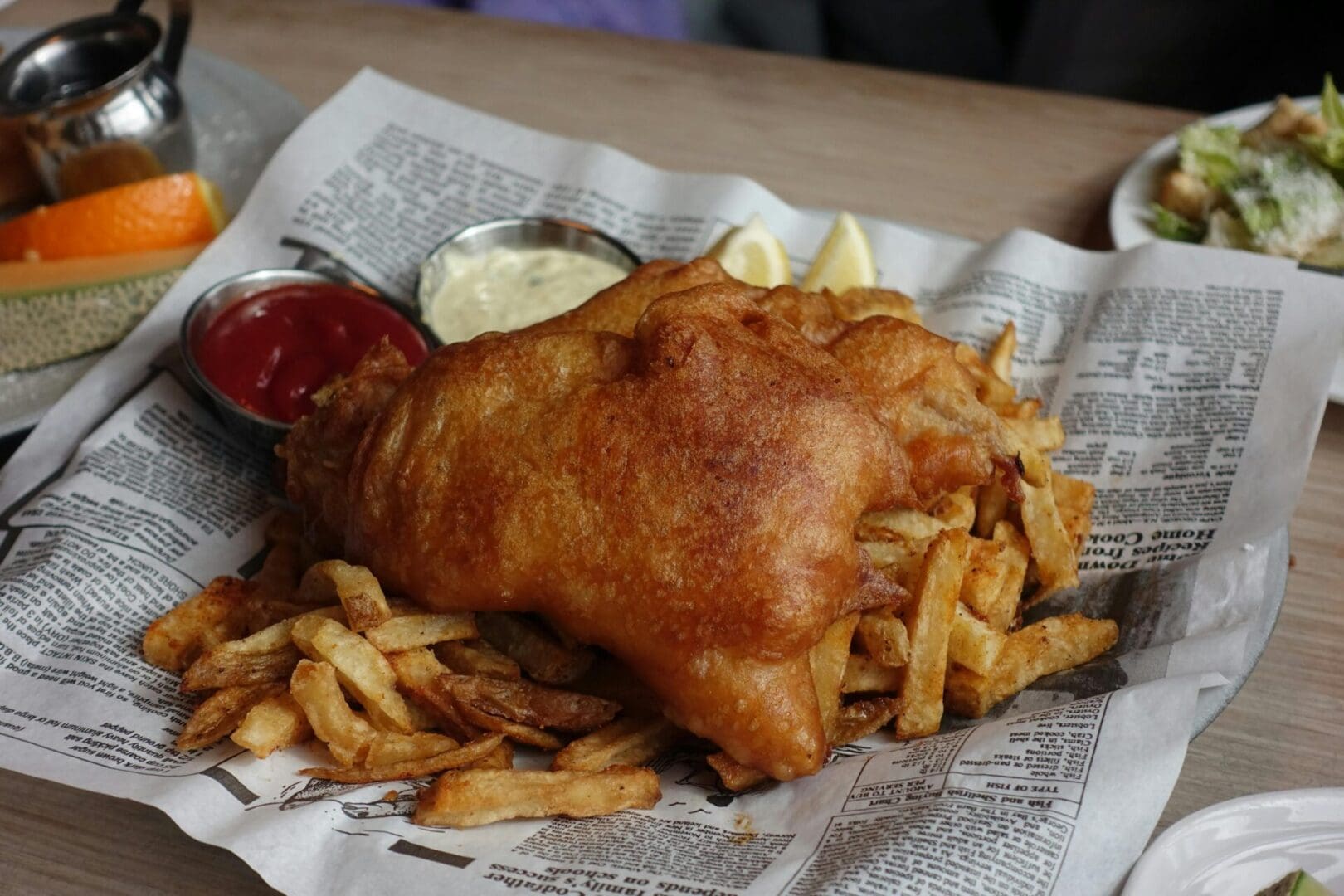
Whether you have them with gravy, mushy peas, curry sauce, or just a bit of salt and vinegar – happy National Fish and Chips Day.
Celebrated every year on the first Friday in June, the day is designated for the appreciation of one of Britain’s most popular national dishes. The association of fish and chips with British culture stretches beyond these shores, so much so that on foreign menus they can often be seen represented by a little Union Jack next to it.
But how much of our love for the dish stems from patriotism? And is it actually not a British invention after all?
The History
Panikos Panayi is a Professor of European History at De Montfort University. His 2014 book Fish and Chips: A History gives a comprehensive overview of the dish’s origins and evolution.
The story starts in the East End of London. “The battered fish is Jewish,” Panayi explains. “The story is you cook your fish on Friday, so you don’t have to cook it on Saturday. It was eaten by East End Jews, a community which dates back to the 17th century when Jews were readmitted after being expelled in 1290 by Cromwell.”
“But [at that time] it’s just fried fish, the chips aren’t there,” he adds. “So the issue is how does the fish marry with chips and how does it move onto the mass market?”
The “determining factor” for popularisation is the railway. “Railways became fairly widespread by the 1850s, and what railways mean is everyone in Britain can have fresh sea fish within a couple of hours. Before then it was a really complicated process.”
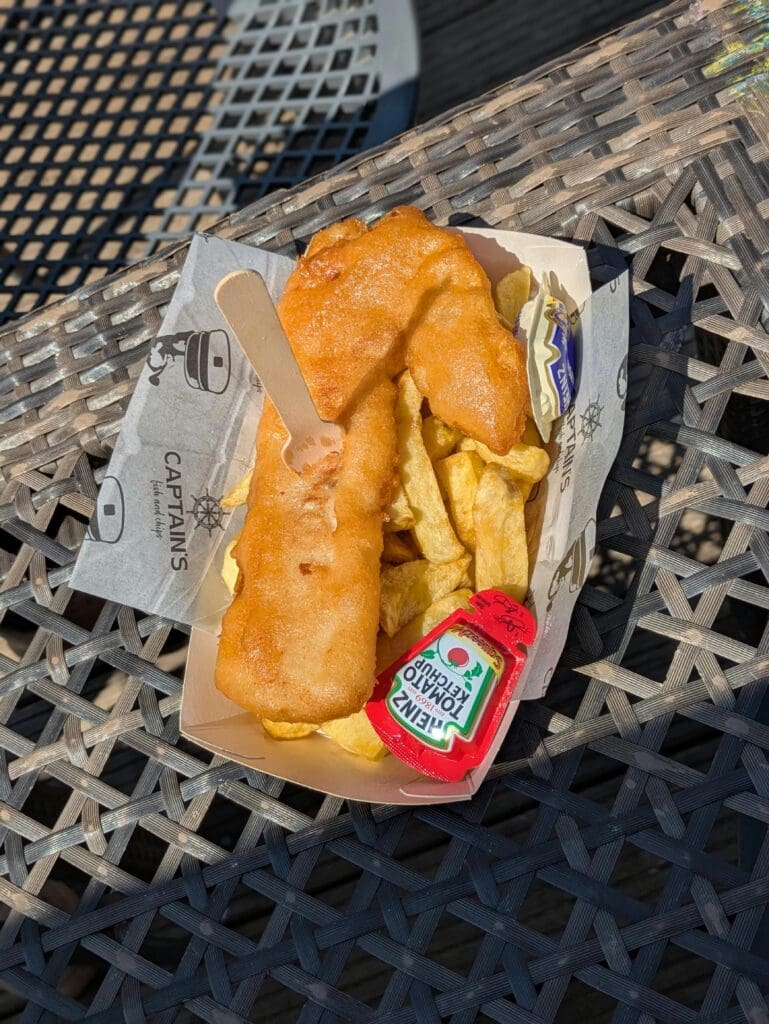
As for when the two elements combined: “It was not really a marriage, it was a long-term relationship. But by the 1890s it’s probably a marriage,” he continues. “What happens before that is fried fish is eaten with bread and then even with baked potatoes.”
“The first fish and chip shop was Mallin’s [in East London] around 1860. But I’ve still found references to fried fish being served with other stuff after that. And by 1900 there’s about 25,000 fish and chip shops – so it’s quite a gradual process.”
Consumption
Fridays are the busiest days for fish and chip shops – but why is there strong association with the day? And no, it isn’t because that when they serve fish for school dinners. The tradition dates back centuries further: to the medieval times.
“Going back to the medieval period, when Britain was Catholic, there were two days a week when you were not supposed to eat red meat,” Panayi says. “You could fish because I think the argument was that it wasn’t hot-blooded. So eating fried fish is Jewish, fish on Fridays originally has medieval origin.”
During both world wars, fish and chips were not subject to food rationing. Winston Churchill dubbed it “the good companion”, but it was after this period that the dish was brought to the foreground as a cultural symbol.
“Foods don’t really develop nationalities until after the Second World War when nationalism becomes associated with not wars and other military symbolism, but much more widespread aspects of life.”
It was around this time that there was also an influence from newly introduced cuisines. “From the 1960s, there was a reaction against Chinese and Indian food in particular. The National Federation of Fish Friers are the ones who put the flag on top of fish and chips from the 1960s and 1970s onwards.”
Fundamentally, however, Panayi agrees that the popularisation and present day form of fish and chips makes it a British dish.
“The reality of it is that it is a British dish. It was born in Malin’s. Then it’s also the way it’s marketed as well that has contributed to that idea [of Britishness].”
For more cultural food history, find out about the evolution of other fast foods in the UK here.