At 8:22am, somewhere between a rushed commute and a half-awake scroll through emails, you reach for a tiny glass bottle. You tip it back in one quick motion.
A wince. A pause. A breath.
“It’s working.”
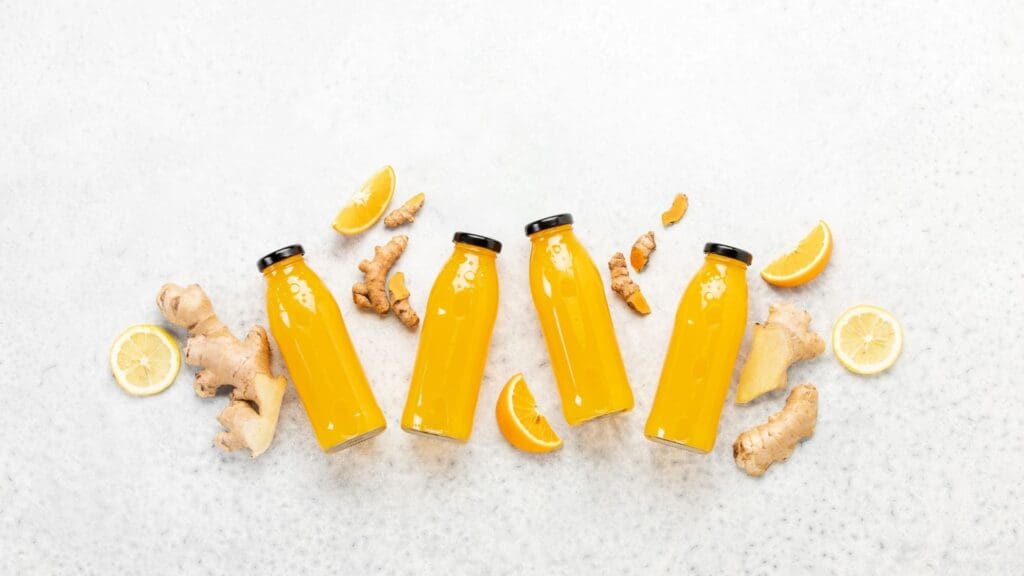
This is the ritual of the wellness shot. Sold with words like boost, cleanse, and defence, it is found in cafés, supermarkets, and influencer morning routines. The wellness shot among many other health boosting shots presents itself as a small but powerful act of self-care.
Trace back to the roots
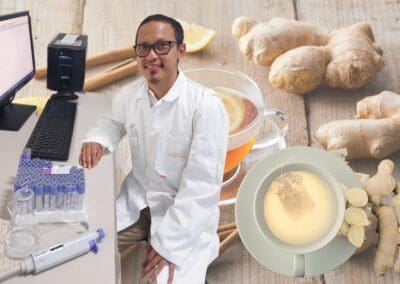
Long before it was bottled into £3 shots, ginger was part of ancient systems of medicine.
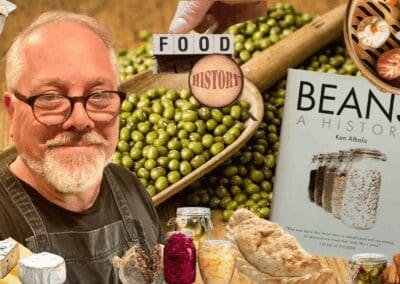
“In China it goes into medicinal soups and teas. It goes all the way back to Shenyang, the first mythical Chinese, emperor who tried every drug on himself,” Dr. Ken Albala says.
He is a food historian, author, and a professor of history at University of the Pacific: “The myth goes, but the whole sort of Chinese pharmacopeia has always included Ginger”. It’s always been there, you know, “
It comes very late in the form of dried ginger tea to Europe explains by Dr. Albala.
“As trade routes expanded, ginger travelled. By late antiquity, it had reached Europe, where it slotted neatly into Hippocratic medicine. For it is one of the most things bring flavour on your tongue, along side with peppers,” Dr. Albala points out.
In most of the, ancient medical systems, the way that they categorise things in the universe was based on their physical properties. Ginger, with its unmistakable burn, was categorised as “hot”. Something that could warm the body and counteract illness explains by Dr. Albala.
“It’s really very simple,” Dr. Ken Albala says. “It’s spicy. That’s the logic.”
Transition into a ritual
Crucially, ginger was never rare. It was dried, ground, traded, and used widely. It was functional. Everyday. Accessible.
That’s what makes its transformation today appears striking.
“Ginger shot is a luxury item, It’s there to show off your wealth.” Dr. Albala notes bluntly. “It makes people feel good to spend money and think that they’re helping their body. It can’t hurt you.”
Dr. Alan Levinovitz is an assistant Professor of Religion at James Madison University. He points out that there are two main reasons. “First, there’s the appeal of the ‘exotic’,” he explains. “Ways of thinking from outside one’s own culture can feel like they hold the key to solving problems that local systems haven’t been able to fix. This is where Orientalism comes in.”
This, he suggests, is not neutral. It is shaped by a long history of romanticising non-Western traditions. “The romanticisation of Chinese or Indian traditional medicine is very common,” he says, particularly among those who feel disillusioned with their own healthcare systems. Ginger, rooted in these traditions, carries that symbolic weight.
But the appeal is not only cultural. It is also deeply personal.
Natural remedies is another factor, Dr. Levinovitz argues, offer something modern healthcare often cannot: agency. The ability to act immediately, independently, and without permission. “You can go to the supermarket, buy ginger, and use it based on your own research,” he says. “You don’t need a prescription or a doctor.”
For people dealing with chronic or hard-to-understand symptoms, especially around mental health, that sense of control is really important, Dr. Levinovitz explains.
Underlying this is a broader, almost instinctive belief system. As Levinovitz puts it, many people operate with the assumption that “natural equals good.” It feels intuitive. We come from nature, so nature must, in some way, be able to restore us. When the body feels off, the explanation often follows: a disconnection, an imbalance, a drift away from something more “pure.”
Ginger fits seamlessly into this narrative. It is recognisable, plant-based, ancient. It feels trustworthy.
And it is not alone. The same pattern emerges with turmeric, with medicinal mushrooms, with countless ingredients drawn from global traditions and reframed as modern solutions according to Dr. Levinovitz.
The Illusion of the “Magic Bullet”
Ginger shots, like many wellness trends before them, are not the first “superfood” and they will not be the last.
Dr. Albala sees this pattern as cyclical. “Those superfoods will be very important for a short while,” he explains, “and then people will generally forget about them.”
He points to past obsessions such as berries and ginseng, ingredients that once surged in popularity before quietly fading from the spotlight. “You can still find them,” he adds, “but no one’s crazy about them anymore.”
What drives this cycle is not just marketing, but something more psychological. A persistent belief that somewhere, there exists a single, transformative fix. “People think there must be some kind of ‘magic bullet’ out there,” Dr. Albala says, “and they want to spend their money on something they think is going to be good for them.”
In that sense, ginger occupies an unusual position. Unlike many so-called superfoods, it resists exclusivity. It is not rare, not expensive, and not difficult to access. Fresh ginger can be found easily in supermarkets and afforable.
“I would say ginger is almost set up not to be a superfood,” Dr. Albala reflects, “because it’s so common and so inexpensive.” Its very accessibility works against the narrative of scarcity that defines many health trends. Unless, of course, it is repackaged. “You cannot really market it,” he notes, “unless you make it into something like a ginger shot.”
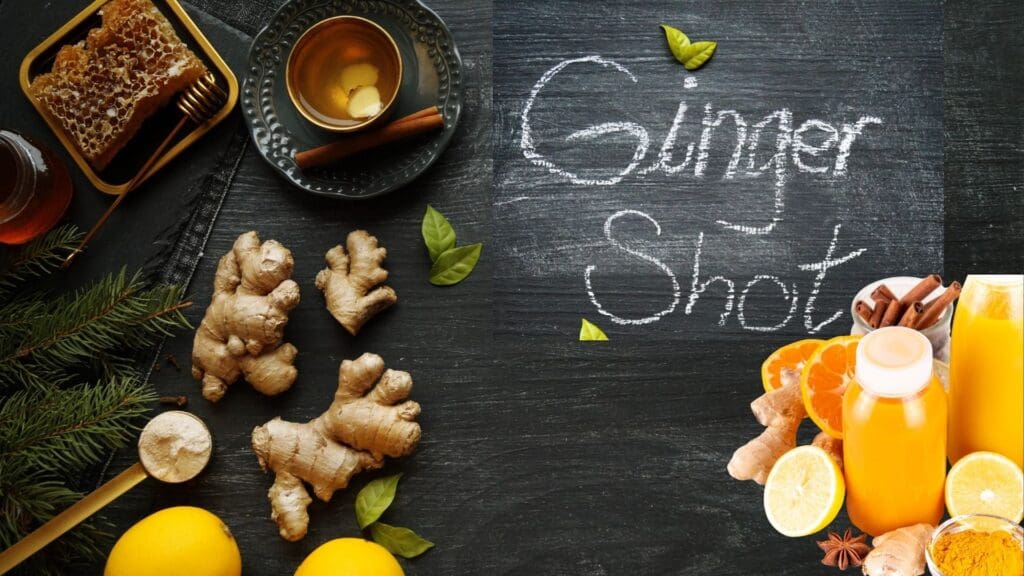
Why we are hooked
Part of ginger’s appeal is grounded in reality.
“First, ginger genuinely has physiological effects,” explains Dr. Alan Levinovitz. “For example, ginger tea can soothe a sore throat.” This tangible, bodily response gives ginger a credibility that many wellness trends lack. It is not entirely placebo. There is a real therapeutic foundation. You can read more about its function here: Ginger as Defence: How We Eat for Protection and the Science behind it.
But what keeps people coming back is not just what ginger does. It is how it feels.
Ginger burns. It tingles, it warms, it lingers. And that sensation, Levinovitz suggests, is crucial. “People often associate sensation with effectiveness,” he says. The logic is simple, almost instinctive: if you can feel it, it must be working. He draws a parallel to mouthwash, deliberately designed to sting. “That feeling makes people think, ‘It’s working.’”
Ginger offers that same immediate feedback. A sharp, physical response that transforms an invisible process, like “boosting immunity,” into something perceptible.
Then there is the format.
“Being bottle into shots, they are easy to consume, and they resemble medicine,” Levinovitz notes. The act of taking a small, concentrated shot mirrors how we take cough syrup or other pharmaceutical treatments. It is quick, deliberate, almost clinical. That familiarity matters. It lends the ritual a sense of legitimacy.
We are, after all, deeply conditioned to trust potency in small doses. “We already believe that concentrated amounts can have powerful effects,” he explains. Within that framework, a ginger shot feels inherently more effective than simply grating ginger into a meal, even if the nutritional difference is negligible.
The search for certainty
If ginger shots feel almost ritualistic, that is not accidental.
“Social media amplifies something that has always existed,” says Dr. Levinovitz. Platforms have not created the desire for guidance, but they have scaled it, building vast networks where people exchange advice, experiences, and personal “cures.” Within these spaces, certain voices rise to prominence. “Charismatic individuals—what we might now call influencers—promote specific ways of living,” he explains.
The dynamic, he suggests, is strikingly familiar. It echoes religious traditions, where trusted figures offer frameworks for how to live well. In a world that feels increasingly complex and uncertain, that clarity is deeply appealing. Rules help. Rituals help more.
Food, in particular, becomes an accessible way to impose that sense of order. What we eat, when we eat, and how we prepare it can all function as small, controllable systems within an otherwise unpredictable world. A daily ginger shot is not just a health choice. It is a practice.
At the same time, Levinovitz is careful to point out that the underlying impulse is not new. “People have always tried to figure out what foods are safe and what foods are harmful,” he says. The difference today lies in where authority is placed.
For many, traditional medical systems no longer feel sufficient. “A lot of people feel let down or dismissed,” he explains. When symptoms go unanswered or concerns are minimised, trust begins to erode. And when that happens, people look elsewhere.
Increasingly, that “elsewhere” is online.
Social media offers immediacy, accessibility, and, perhaps most importantly, validation. It provides answers where formal systems sometimes do not. Within that context, trends like defensive eating begin to make sense. They are not simply fads, but responses.
“I have a lot of sympathy for people in that position,” Levinovitz adds. “If you’re suffering and not getting answers, it’s completely understandable that you would look elsewhere for solutions.”
Including, perhaps, a small, fiery shot of ginger each morning. Not just as a remedy, but as reassurance.
What We’re Really Buying
So what are we actually buying when we buy a ginger shot?
It is the reassurance, control, and identity.
Health is unpredictable. Bodies are complicated. But a shot is simple. It fits into a routine. It offers a sense of order in an otherwise uncertain system. The choice to consume a ginger shot communicates something about who we are—or who we want to be.
The irony is that ginger itself never asked for this.
For centuries, it was just a root. Spicy. Useful. Ordinary.