You probably have a favourite fast food brand. Maybe it’s a Big Mac at McDonald, or maybe it’s a Burger King Whopper. It could be a Papa John’s, or it could be a Dominoes. Whatever it is, you know that when you reach for the delivery apps, that’s what you’re going to get.
What you don’t know, however, is how much you’ve been conditioned into enjoying these brands. Would a maccies even be a maccies if it didn’t come in it’s signature packaging, well research suggests maybe not.
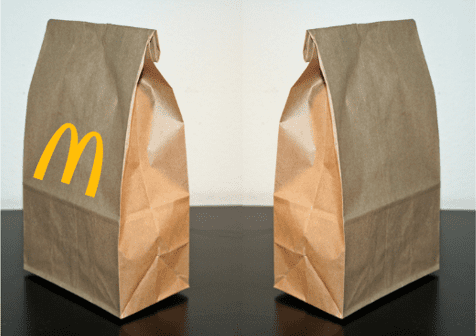
Thomas Robinson, MD, MPH, a professor of paediatrics at Stanford University conducted an experiment to test the power of marketing on infiltrating areas of our life we didn’t even realise it had. In this study he presented pre-school children from low income backgrounds with a McDonald’s food. It was cut up, so the burgers and fries were identical, and split between clean branded packaging, and unbranded packaging. During the study, they asked the children to choose which food they preferred. Was it the branded food, or unbranded.
“Overwhelmingly kids were more likely to choose the food they thought was from McDonald’s,” remarks Thomas Robinson, “this wasn’t just a way of addressing their brand preference but also their tastes preference. They actually enjoyed the branded food more.”
Robinson makes sure to point out that this isn’t just seen in children who have little awareness of the powers of advertising, and that similar studies have been done in adults. “They used fMRI scans on adults tasting wine,” he describes, “and they told them some wines were expensive and some weren’t. What it showed was that they actually enjoyed the ‘expensive wine’ more.
“If someone says they enjoy something branded more than unbranded, I would never tell them they were wrong, because they aren’t. The evidence shows they did prefer it.”
What the study was unable to conclude was why this happened. “I’d imagine it’s just brand awareness,” he explains, “70% of the parents told us they had at least one Maccies toy in the home. We also knew that these parent’s took their kids to McDonald’s as a treat, effectively endorsing them. These social influences definitely come into play in brand perception.”

Another big part as to why this happens is expectation. “Expectation is huge. If people believe something is going to be a certain way, they’re more likely to experience that, even if they’re experiencing these things one bit apart,” Robinson says.
As for the benefits of this research, Robinson explains that they can be used in market regulation. “These sorts of studies support efforts to to regulate marketing to children. Before they are 7 or 8, most children don’t understand the concept of advertising, and they shouldn’t be free game for advertisers.
“I’m a believer that we need some thoughtful regulation about marketing to children. I also we believe we can use this sort of understanding in advertising healthier options. No research suggests that this effect only appears in fast, unhealthy food.”
What this all shows though, is that maybe it we don’t have to think about our brains ‘tricking us’ when it comes to our senses. After all, as Thomas Robinson says, “If you like it more then you like it more, the experience is real.”
You can read more about marketing here