You’re standing in the supermarket, half on autopilot. It’s midweek. You’re tired. As you drift through the aisles you’re debriefing your day, mentally drafting emails for tomorrow, barely scanning the shelves. You need baked beans. Nothing dramatic. Just beans.
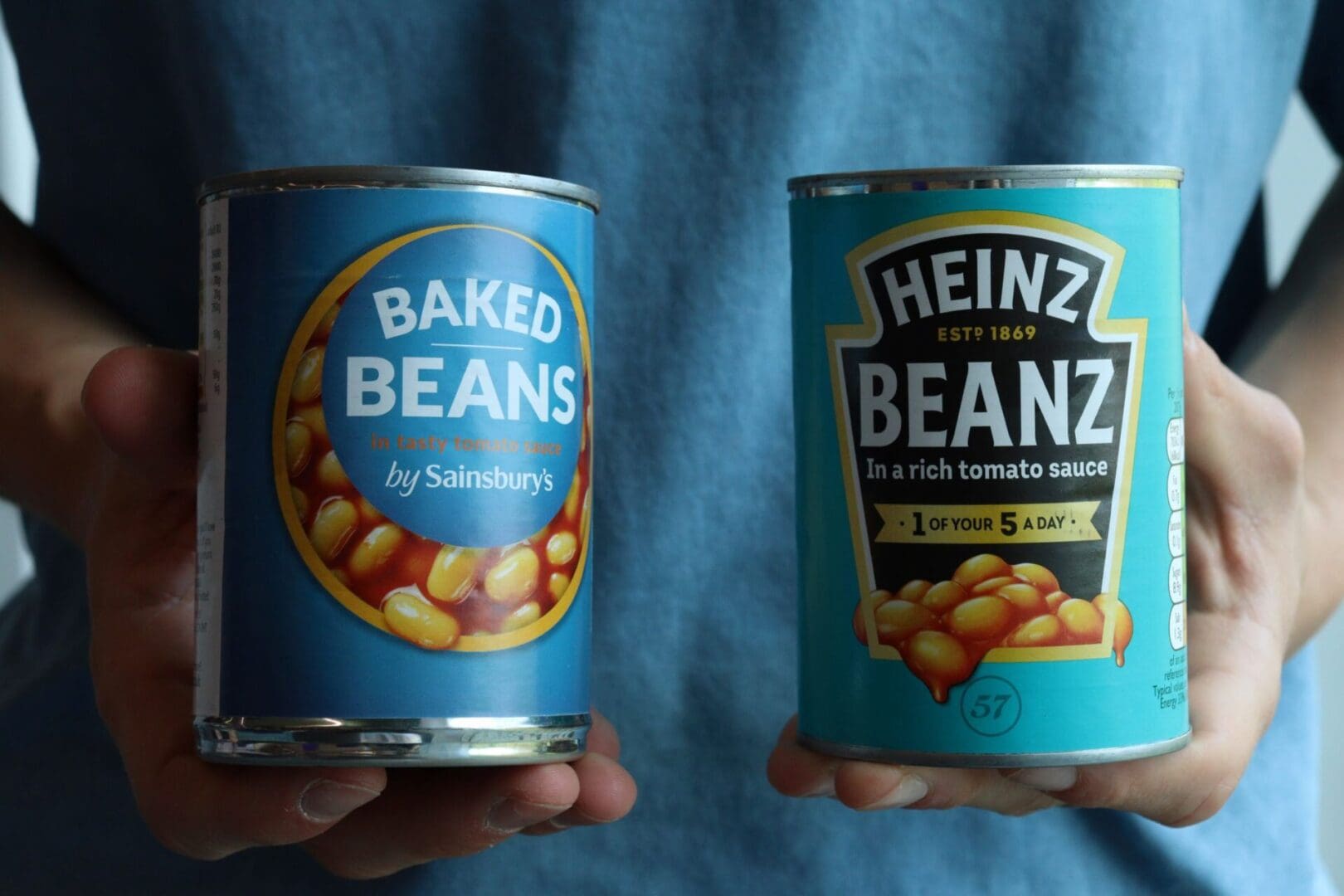
In front of you are hundreds of tins. The great wall of beans. Same ingredients, similar packaging, wildly different prices. On the left, the supermarket’s own brand is cheaper and quieter. On the right, the familiar and assertive: Heinz. You don’t pause. Your hand moves before your brain does. Into the basket it goes.
You didn’t weigh up the salt content. You didn’t read the back of each tin. You didn’t consciously decide it tasted better or was worth the extra money. You just reached. And that’s the point.
Most of our food decisions don’t really feel like decisions at all. They feel obvious. Automatic. But that split second grab, whether that’s branded over unbranded or familiar over functional, is doing more psychological work than we like to admit.
Because if the product is essentially the same, the choice wasn’t really about food. It was about what that tin represents. Trust. Quality. Normality. Maybe even a quiet sense of being the kind of person who doesn’t buy the cheap one.
We tell ourselves we choose logically, that we’re rational shoppers. The reality is more uncomfortable. A lot of what ends up in our baskets isn’t chosen so much as defaulted to. Once you notice that, it’s hard to stop.
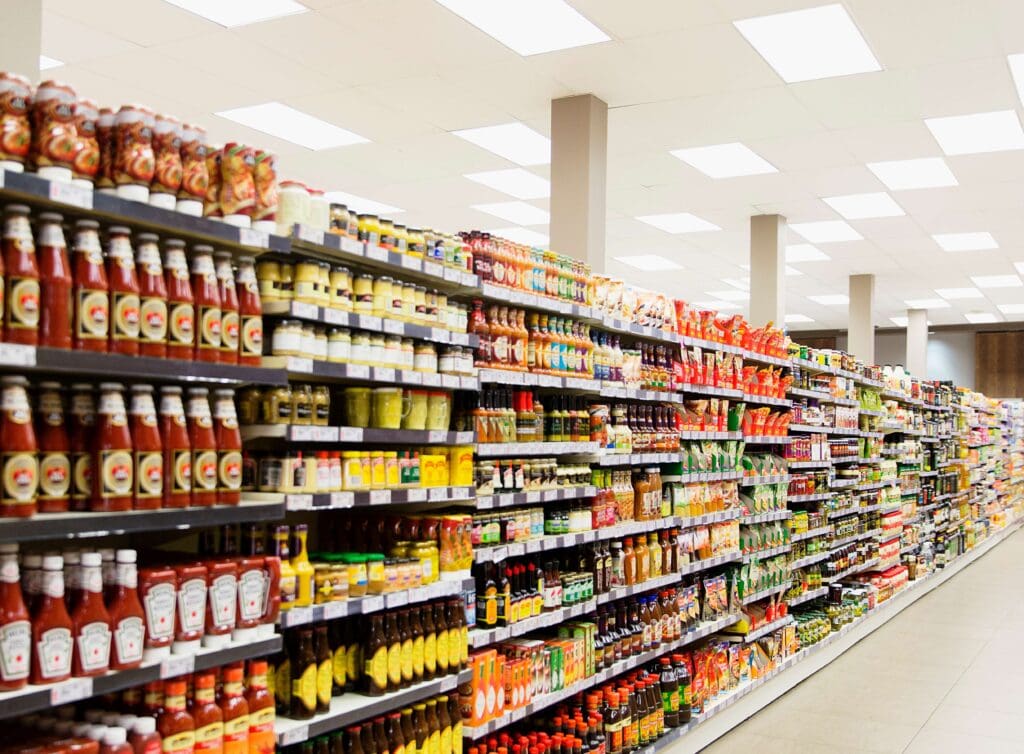
Modern supermarkets sell abundance. Thirty types of beans. Twenty versions of yoghurt. Entire aisles dedicated to choice. It looks like freedom. It feels empowering. Psychologically, it’s something else.
One of the most powerful shortcuts to a decision we use is status, even when we’d never label it that way or admit that who we think we are can quietly control us.
Status doesn’t always mean luxury or wealth. It shows up as reliable, good quality, ‘what people like me buy’. It’s bound up with identity. Who we think we are, who we want to be seen as, and who we may not want to resemble.
To understand why we cling to familiar food choices, we need to look beyond ingredients, price and labels. We need to understand the psychology behind eating itself.
Why Food Choices Feel Automatic
If our food choices feel automatic, that’s because, according to nutrition therapist and author Ian Marber, they largely are.
Marber, who has written over 15 books on nutrition and now consults privately, is blunt about the limits of knowledge when it comes to eating well. “Everyone knows what they should eat,” he says. “Information isn’t the problem. Behaviour is.”
“Habits are harder to shift than facts because they’re rooted in family, class and culture. What we eat and where we shop is learned early, reinforced daily and rarely questioned. That’s why familiar brands carry weight. They act as benchmarks.
“A tin of Heinz beans, for example, promises consistency. You know what you’re getting. You know it’ll taste the same whether you buy it at home or spot it in a foreign supermarket. That certainty creates a sense of control and a feeling that the extra cost is justified. What we often mistake for quality is reassurance.”
This is where status enters the picture. Marber notes that supermarkets themselves can offer a sense of belonging. Shopping somewhere like Waitrose isn’t just food shopping. It’s about being surrounded by people who look like you, act like you and share similar values.
The idea that premium equals better is rarely challenged. “A butterbean is a butterbean,” Marber says.
Branding, pricing and packaging encourage us to believe otherwise. In the same way social media has transformed wellness into a lifestyle badge, food trends now move like fashion, often dressed up as health advice.
“A superfood,” Marber adds, “is often just a food with a good marketing department.”
Status, in other words, doesn’t just influence what we eat. It helps explain why we keep eating the same things, even when alternatives sit right next to them on the shelf.
While Marber exposes why we cling to certain habits, cognitive psychologist Dr Suzanna Forwood explains how those habits play out in the brain, and why status works best when we’re not paying attention.
“We’re not analysing much about food choices,” Forwood says. “Most everyday eating decisions operate below conscious awareness, driven by what psychologists call System 1 thinking. Fast, instinctive, reflexive.
“System 2 thinking, by contrast, is slow and deliberate. It’s what we use when buying a house or planning a dinner party. If we’re mentally absent when food shopping, System 2 is offline, leaving System 1 to make the call.
“Choosing food that aligns with how we see ourselves reduces friction. Going against that identity is uncomfortable. So, we don’t.”
This raises an uncomfortable question. If our brains are shortcutting constantly, who’s designing the shortcuts, and to whose advantage?
How Supermarkets Shape Our Decisions
That’s where consumer psychologist Dr Cathrine Jansson-Boyd comes in. She looks at what happens when those shortcuts collide with social identity.
She recalls bumping into a friend in Aldi. “The first thing she said was, ‘I don’t normally shop in here,’” Jansson-Boyd says. “It wasn’t about price or quality. It was a defence. A way of distancing herself from what the shop represented.”
Jansson-Boyd sees this often. “People instinctively hide cheaper or own brand items in their baskets, as if apologising for them.”
This isn’t about food. It’s conditioning. “Branding power isn’t just about products,” she explains. “It’s about deep socialisation and snobbery. Certain things are seen as better because over time we’ve been taught they are, by comfort and repetition.
“Humans are risk averse. Behavioural economics shows we’d rather avoid a perceived loss than make a potential gain. Familiar brands reduce that risk, even when the difference is negligible.”
She adds, “Supermarkets are designed around this psychology. Layouts force us to walk past more products. Cheap options sit lower. Eye level signals value. Yellow stickers scream bargain. Items are moved so we must search and, in doing so, pick up around 30 per cent more than intended. They don’t like baskets getting heavy. That feedback tells you to stop shopping.”
Premium supermarkets lean fully into identity. Wine sections in Waitrose styled like specialist shops. Bread displayed like a bakery. Chocolate brands positioned as lifestyle statements, not snacks.
Jansson-Boyd notes, “By the time we reach the checkout, the choices in our basket say less about hunger and more about who we think we are.”
None of this makes us shallow or easily fooled. It makes us human. We eat tired, distracted and socially aware, navigating systems far more powerful than individual willpower.
The point isn’t to shop differently tomorrow or abandon the brands in your cupboard. It’s to notice the moment your hand reaches without thinking. To ask what else might be shaping that choice.
Because once you see food as psychological and social, not just nutritional, it becomes harder to pretend our choices are entirely our own.
Interested in how status plays out in restaurants instead? Check this out.