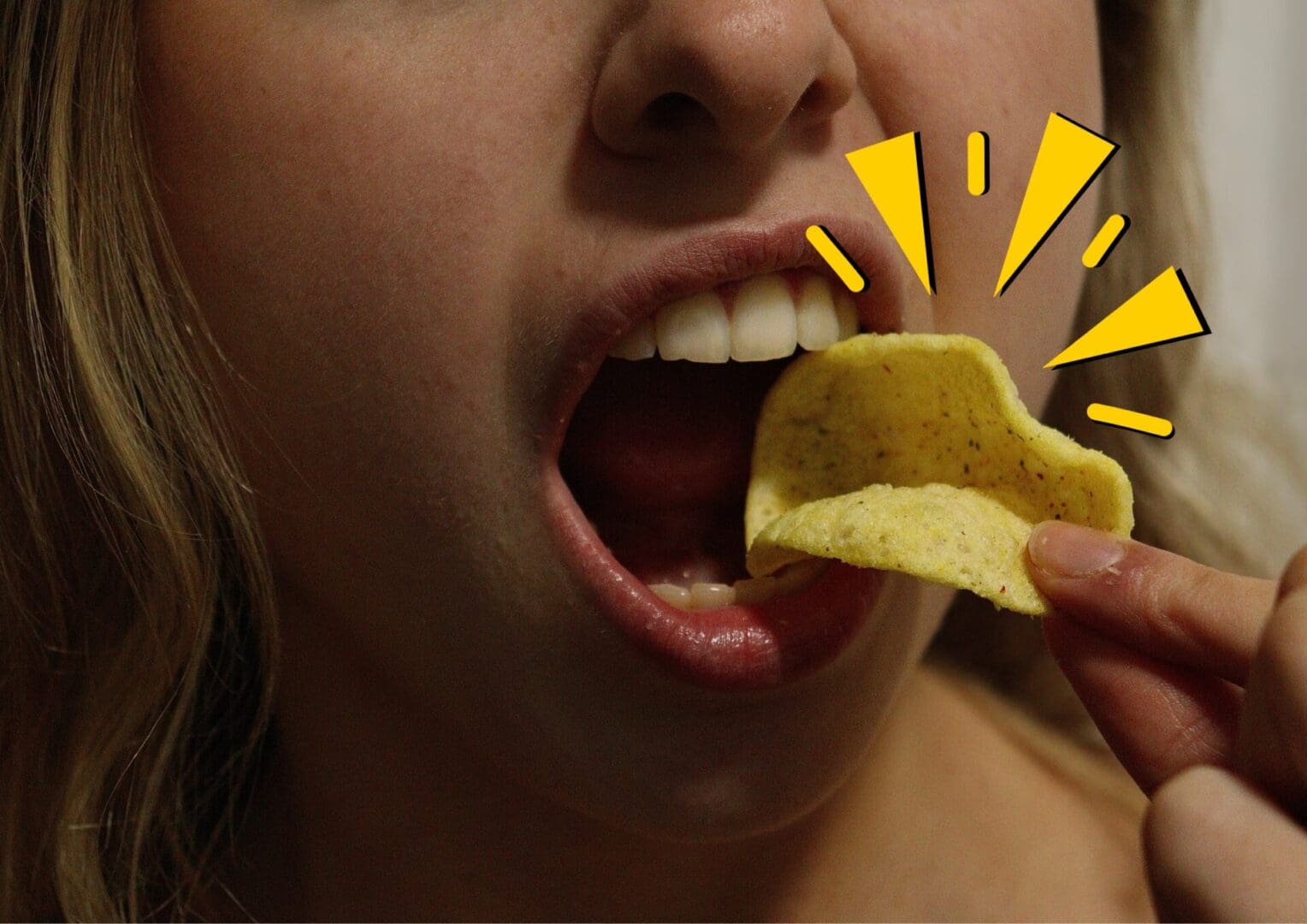
Close your eyes and listen for that sharp crackle of the first bite into the salt-and-pepper chicken from your cheeky Friday night takeaway, or the vibrant crisp munch on your fresh caesar salad, crunch sells. You’ve probably stumbled across a messy and unapologetically loud eating video whilst on your daily evening scroll through TikTok. Whether you love it or hate it, there’s something irresistible about that crisp, satisfying crunch that keeps you watching.
Beyond the marmite-like love-or-hate reaction these videos provoke, our obsession with crunchy foods runs deeper, tapping into a rich sensory landscape where sound plays a powerful role in shaping how we experience texture and flavour.
Professor Barry Smith, founding director of the Centre for the Study of the Senses and Director of the Institute of Philosophy at the University of London’s school of Advanced Study, explores how our senses work together to contribute to our everyday experiences. When it comes to food and eating he describes it as: “A special orchestration. Sounds are a little sensory carnival that we add on top of the blandness of just ingesting and consuming food.” He says.

From Pringles to Ferrero Rocher: Why Brands Engineer the Perfect Bite
Drawing on his work with Ferrero Rocher, Professor Smith says: “Their commercial success lies in their carefully crafted multisensory appeal.
“Before even tasting the chocolate, you can tell it’s knobbly to touch. Even through the gold foil you can see pieces of hazelnuts sticking out, it makes a cracking noise when you break the shell. Then you get to the wafer and they put a lot of work into making sure the wafer has a sound when you break the shell, not just so it feels nice when you’re crunching it but it’s got the sound of a wafer being crunched.” He says.
“Then you go through into the gooey, Nutella-like chocolate hazelnut filling and then the final dense crunch on the hazelnut right in the middle. The brain absolutely loves the journey of contrasting textures, it’s what keeps us interested and amused. The pleasure of eating isn’t a single event, it’s a little sequence of events one after the other.”
The Sonic Chip Study: How Sound Alters Our Perception of Flavour
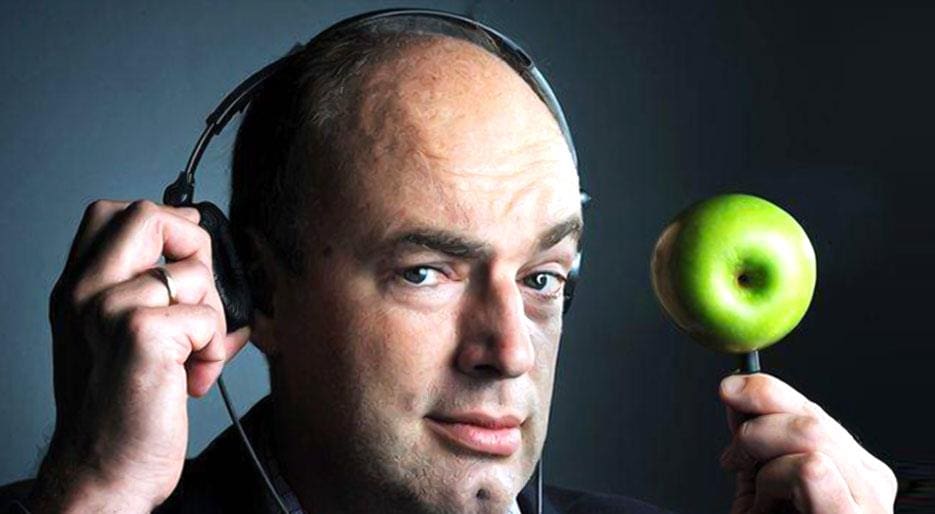
The science behind the crunch sensation has even won an Ig Nobel Prize. Proof there’s far more going on in that satisfying crunch than we might think. Professor Charles Spence, head of the Crossmodel Research Laboratory at the University of Oxford, has explored the role of sound in our eating experience through his winning research, The Sonic Chip. In his study, participants ate pringles whilst wearing headsets manipulating the sound of the crunch, boosting or dampening certain frequencies. The findings highlighted that when the crunch was amplified, the crisps were perceived as significantly fresher and crisper.
“There may be a connection between the auditory cortex of the brain and our expectations of what a crunch should feel like,” he says. “The Sonic Chip study found that if you change the sound it occupies some sensory dominance that provides more information for our brain than subtle changes in our mouth.
“Wherever you look in the brain, the senses connect with one another, hence you have crossmodal effects, changing one sense changes your perception in another.”
The Sonic Chip highlighted the important role of the crunch noise when assessing the freshness of the food. Put simply, “noisier foods are likely to be fresher.” Professor Spence says.
So, if you ever need to rescue a stale bag of crisps from the back of the cupboard, apparently all you need is a louder crunch soundtrack and a bit of self-delusion! Building on this Professor Smith says: “The noise tells you about the texture as much as the feel in the mouth, and they should go together, there’s what we call sensory congruence.
“If you bluff people to the sound, even though it’s not quite matching what’s in their mouth, you begin to think they’re fresh.
“The brain knows that staleness predicts decay, so it’s a sign of something deteriorating, that’s why I think the sound of freshness is actually predictive.”
The Evolutionary Link Between Loud Food and Fresh Flavor
From an evolutionary perspective, our response to sound is shaped by adaptive factors rather than a fixed instinct. Professor Spence says: “We are probably not wired to prefer crunch, but instead learn these associations over time.
“All our responses to sounds and textures are learned, so what our brain does is pick up statistical correlations in the world.”
As humans, we’re strangely particular about what we eat. We’ve all got that friend who claims to hate cheese, while simultaneously will inhale an entire extra cheese pizza. Much of what we crave, avoid or find satisfying comes down to patterns our brains have learned over time. Exploring our evolving relationship with food further in The Omnivorous Mind, John S. Allen, describes humans as “super omnivores. Omnivory is as much about what we don’t eat, so we decide which things are edible in the universe, food has all these rules which are shaped by our minds rather than our guts.
“We have a cognitive niche and convert things into symbols, or being good or bad.” Over time, our brains may have come to interpret the crunch sound into a signal of freshness,” he says.
Similarly, another association linked to crunchy textures is fat. From an evolutionary perspective fatty foods may have been particularly valuable with high energy rewards. Cooking has introduced new sensory cues. “Cooking provides a surface to meat and vegetables that provides a crispy surface,” Allen says.
Our attraction to the noise might not be just about freshness, but about an evolved preference for foods that offer greater nutritional payoff. In the modern world many deep fried foods combine crunch with high fat content, a crispy bit of fried chicken, or even craving that crunch with a deep fried mars bar, although I’m not sure how I feel about that one. Professor Spence says: “We don’t have fat receptors in our mouths, but our brains are drawn to fat as being very energy-dense. Maybe there’s a correlation between how much noise a fried food makes and its fat content.”
What Sonic Branding Teaches Us About Our Eating Habits
Popular and successful brands have picked up on our obsession with the sound of crunch and utilise sonic branding, a marketing tool which gives the reader a sense of exactly what it’d be like to be eating that product. One of the most iconic examples of sonic branding dates back to 1932, when Kellogg’s Rice Krispies introduced their popular characters Snap, Crackle and Pop. A simple but effective marketing strategy which got us all holding up our cereal bowls to our ears as children. Professor Smith says: “A lot of these sounds are little advertising hooks, little clues about what it’s like to start eating a product.”
The Neuroscience of ASMR: How Sound Waves Calm the Brain
A similar principle can be seen in the rise of Autonomous Sensor Meridian Response (ASMR), a term coined by YouTuber Jennifer Allen in 2010. Food-focused ASMR has surged in popularity, with endless viral videos of creators exploiting crunching sounds, from fried chicken to crispy takeaway dishes.
Research from Emma Barratt, Science Communicator and Editor of The British Psychological Society’s Research Digest and Nick Davis Senior Lecturer in Psychology at The Manchester Metropolitan University, found that crisp sounds rank among the most popular ASMR triggers. Steven Do @foodie.steven, a Canadian content creator, said: “People respond strongly to crunch because it’s a pleasurable sensory experience.
“I feel crunches and chewing just scratches the right part of the brain, good looking food catches attention, but a good crunch hooks viewers in.”
Neurological evidence from a 2025 IBRO Neuroscience Report supports the idea that ASMR can create feelings of reduced stress and promote relaxation, showing decreased delta waves across the brain, increased alpha waves in visual processing areas and heightened beta activity in frontotemporal regions. Essentially highlighting a created calm yet alert mental state.
Sensory cues translate powerfully to digital media, not just to entice us but also to sooth and connect audiences. Fyiya Grace @iamfyiya, incorporates ASMR into her neurodivergent, comfort food content and says: “ASMR is about creating a feeling, you hear the crackle, and the crunch, and it just makes you feel calm and regulated.
“A humongous selling point of theDubai Fix Dessert Chocolatier’s, viral Can’t Get Knafeh of It, chocolate bars was the crunchy texture of the knafeh filling, it was great because there was the break of the bar then the lovely texture of the filling that was crunchy but smooth.
“My Dubai chocolate bar videos had hundreds of thousands of views because the sounds you can hear, it’s almost like you can feel yourself trying the bar.”
Ultimately, that irresistible crunch is doing far more than signalling texture. Professor Smith says: “The crunch is a little cascade of sensations that are both felt and heard, bringing us joy.
“Sounds are a sensory carnival that we add on top of the blandness of just ingesting and consuming food.”
Whether it’s the engineered snap of a chocolate shell or the amplified crackle in a TikTok video, that sound guides not just what we eat, but how we experience it.
If you hate the sound of the crunch, you might be interested in this article