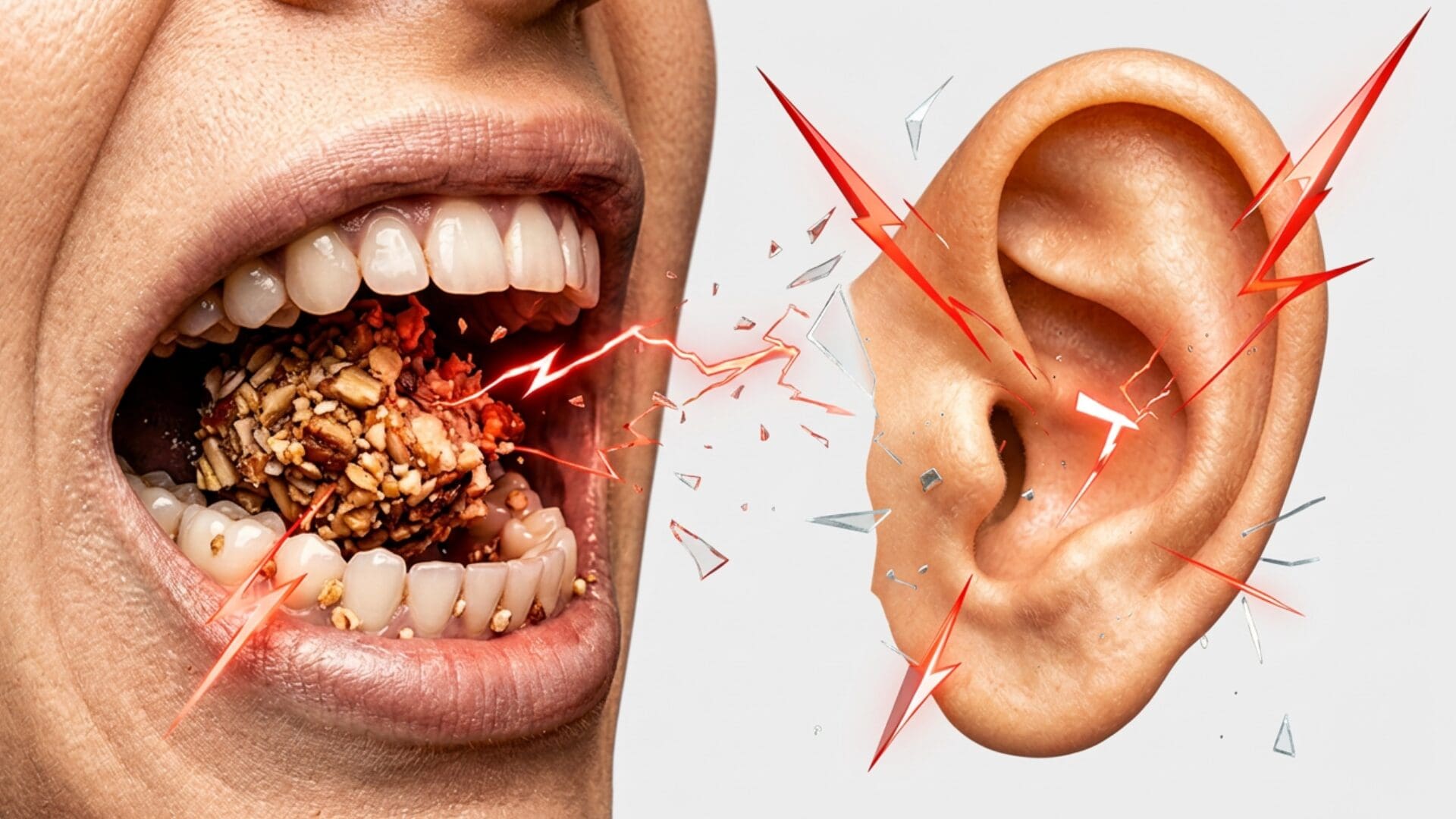
Picture the scene. You’re in a quiet cinema. The emotional climax of the film is unfolding. Then somewhere behind you comes the unmistakable crack of somebody opening a packet of crisps. Crunch. Crunch. Crunch.
Annoying? Definitely.
But for some people, that sound does not just irritate them. It overwhelms them.
Their heartbeat spikes. Their muscles tense. Panic, anger and disgust arrive all at once. The only thing they can focus on is the sound of somebody chewing.
This is misophonia, a condition where certain everyday noises trigger intense emotional and physiological reactions. Eating sounds are among the most common triggers, with chewing, slurping, lip smacking and heavy breathing all regularly mentioned by sufferers.
“Misophonia is a kind of sound sensitivity in which people have extreme emotional responses to particular kinds of sounds,” explains Dr Louisa Rinaldi, a researcher specialising in misophonia.
“Generally this involves individuals experiencing extreme levels of anger, disgust, frustration or even anxiety when hearing triggering sounds.”
And despite sounding niche, it may be far more common than most people realise. Some studies suggest nearly one in five people experience symptoms associated with misophonia to some degree.
It is not just “hating chewing noises”
Almost everyone has been irritated by somebody eating loudly before. The colleague who somehow turns soup into a surround sound experience. The friend who chews gum like they are trying to start a lawn mower. The person eating popcorn directly behind your left ear on the train.
Misophonia goes beyond that.
For somebody with clinically significant misophonia, the condition can begin shaping day-to-day life. People may avoid certain social situations entirely, wear headphones around others or dread shared meals.
“It might involve wearing earplugs or headphones when around other people, particularly at dinner tables,” says Dr Rinaldi.
“Or it might involve avoiding particular situations to avoid having to hear unpleasant, triggering, sounds.”
Importantly, it is not usually volume that causes the reaction. It is the type of sound itself.
A dripping tap might be manageable. Somebody chewing with their mouth open might feel unbearable.
What makes misophonia particularly fascinating is that the trigger sounds are often deeply human. Breathing. Swallowing. Sniffing. Eating.
The kinds of noises most people filter out automatically.
When food sounds become impossible to ignore
For many people with misophonia, the reaction is not just irritation. It is physical.
Bill Cooper, who experiences misophonia himself, describes certain eating noises as producing an almost instant visceral response.
“Talking while chewing food is really bad,” he says. “It’s almost like a semi-paralysis reaction.”
Other sounds trigger different levels of discomfort.
“Chewing with your mouth open is dreadful. Biting hard fruit like apples or pears is very cringey.”
But interestingly, context and intensity matter.
“Crisps, tortilla chips and pork scratchings crunched with the mouth open are almost vomit inducing,” he explains. “But if they go into the mouth and are chewed with the mouth closed, it’s bearable.”
That distinction may sound oddly specific to somebody without misophonia, but researchers say the condition is often deeply linked to the meaning and context attached to sounds, not simply the volume itself.
“All of these sounds make my flesh creep and provoke a visceral reaction,” Bill says. “Think cat sees snake.”
That comparison feels surprisingly accurate to how many sufferers describe the experience. The reaction is fast, instinctive and difficult to control. Not annoyance in the usual sense, but something much more immediate and physical.
It also helps explain why shared eating situations can become emotionally exhausting. For somebody without misophonia, chewing is background noise. For somebody with it, the sound can dominate the entire room.
And because eating is such a social activity, the condition can quietly reshape everyday life. Family dinners become stressful. Restaurants feel overwhelming. Cinema snacks become impossible to ignore.
In some cases, the distress is not even limited to the sound itself, but the anticipation of it. Waiting for somebody to crunch into an apple can feel almost as uncomfortable as hearing it happen.

Why eating sounds?
Scientists are still trying to fully understand why eating noises are such powerful triggers.
Like many neurological and psychological conditions, misophonia appears to involve a mixture of factors rather than one single cause.
“We think it’s likely to be a combination of nature and nurture that causes misophonia to emerge, usually during adolescence,” says Dr Rinaldi.
Research has also shown that people with misophonia process trigger sounds differently from people without the condition.
“When we look at brain images of people with misophonia, we can see that they use areas of the brain known as the salience network, associated with processing and regulating emotions, when they hear triggering sounds,” Dr Rinaldi explains.
In simple terms, the brain may struggle to treat the sound as unimportant.
That helps explain why reactions can feel so immediate. Many sufferers describe a fight or flight response the second a trigger sound appears. Their attention locks onto it completely, making it almost impossible to ignore.
Physically, people with misophonia can experience increased heart rate and sweating responses similar to other forms of emotional distress.
And oddly, anticipation can make things worse.
People with misophonia are often described as becoming “hyper-alert” to trigger sounds, meaning anxiety can begin before the sound itself even happens.
The internet has made eating louder than ever
There has never been more food audio online.
Mukbang creators build audiences from amplified chewing noises. ASMR videos turn crisp bites and fizzy drinks into relaxation content. TikTok microphones capture every crunch in cinematic detail.
For millions of viewers, these sounds are oddly satisfying.
For people with misophonia, they can feel unbearable.
That contrast says something interesting about how differently humans experience sound. One person’s comfort noise is another person’s sensory nightmare.
It may also explain why awareness of misophonia has grown so quickly online. Social media has not only given people a word for what they experience, but also exposed them to more trigger sounds than ever before.
If you want to hear more about the affects of crunchy food and ASMR check out this article.