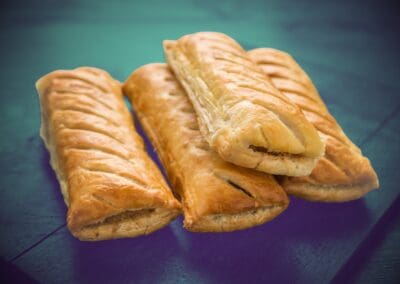
You sat alone on your daily commuting train home with a meal deal from the station. You took a bite of the sandwich in a noisy carriage, your stomach rambling. You thought to yourself that this was unpalatable.
Once you got home, hunger ramped all over you. You were confused and almost forgot about the sandwich you had on the train.
The Mindless Commute Meal
When we eat on the move like on the train, we tend to be eating mindlessly, explained Dr. Jane Ogden, a Professor in Health Psychology at the University of Surrey. She said: “We’re not focusing on the food that we eat. Because of that, the calories don’t fill us up and we don’t feel as full. Then we eat more later on.”
“I don’t think we actually enjoy the process of eating. We don’t taste it in the same way. We don’t savor it in the same way. It doesn’t give us as much pleasure because we’re distracted from it.” continued Dr. Ogden, “Hunger, pleasure, fullness, they’re all perceptions. If we’re not giving it the full of our perception, then we’re not making the most of it.”
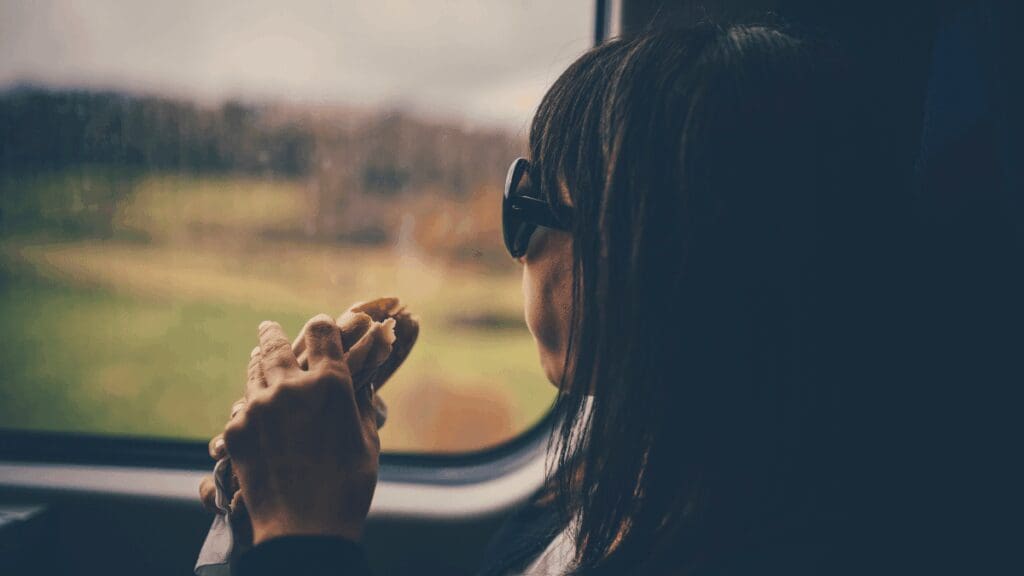
However, distraction is only part of the story. Places like train carriage tend to be a busy environment with numerous distractions. Food can easily taste different according to Dr. Mei Peng, an Associate Professor with the Department of Food Science at the University of Otago.
The Multisensory Nature of Taste
Dr. Peng said: “Our sensory systems are easily affected by the environment surrounding us, like movements or noise. Food can taste less intense and less enjoyable on the move, particularly when the environment is noisy, unstable, and distracting.”
The reasons behind it are complicated and interacting. “Movement changes our bodily state: we may need to maintain balance, deal with vibration, or experience mild motion discomfort,” said Dr. Peng, “At the same time, moving environments often involve background noise, divided attention, visual distraction, and sometimes altered air quality.”
Moreover, flavour is multisensory. Dr. Peng explained further that what we call “taste” is actually built from taste, smell, texture, temperature, vision, and sound. Smell is particularly important: much of the flavour comes from retronasal olfaction, where aromas travel from the mouth to the nose while we eat.
When we are moving, the brain is processing many other signals at the same time – vestibular information from balance and motion, auditory noise, visual flow, and attentional demands. These signals can interfere with how taste, smell, and texture are integrated into a coherent flavour experience according to Dr. Peng.
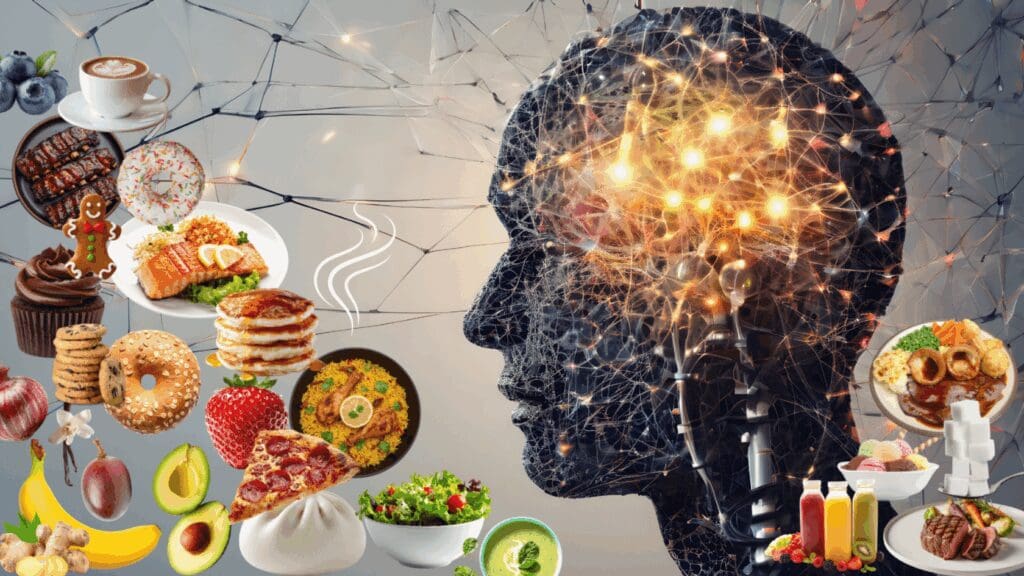
While our brain is processing these different signals, our eyes see a stationary environment like the train carriage, but our inner ear feels the physical motion of travel. This leads to a sensory conflict, commonly known as motion sickness.
Motion, Noise, and the Overloaded Brain
Common symptoms of motion sickness range from a subtle sense of “stomach awareness” and lethargy—often referred to as Sopite Syndrome—to more distressing physical reactions like dizziness, cold sweats, and nausea.
There are many signs of motion sickness while you are on the move. Professor Dr. John Golding at the University of Westminster pointed out that the first thing which you might not be aware of is that “your stomach stops moving its contents into the rest of the gut”.
Not everyone will experience severe motion sickness to the extent of vomiting while on the move. Dr. Golding explained that symptoms can be much more subtle: “The term ‘Sopite Syndrome’ exists for a very mild level where you experience a specific kind of drowsiness. In people who are fairly resistant to motion, it presents as a very mild symptom of motion sickness. It makes you feel a bit drowsy, sleepy, lethargic, and unmotivated.”

“One of the effects of motion sickness leads to reduced appetite,” said Dr. Golding, “Your appetite loss is related to nausea, but your appetite loss starts with some degree of stomach awareness. You might not even be that immediately aware of it. If the motion continues, it will cause you motion sickness.”
Dr. Golding suggested a hypothesis in evolutionary terms for motion sickness, which is the toxin detector theory – an appropriate activation by motion transportation of an ancient defense reflex against being poisoned.
The earliest stage of motion sickness—occurring even before nausea sets in—is the cessation of stomach contractions, known as gastric stasis. This serves as a primitive defense mechanism: if the brainstem (acting subconsciously) perceives that you have been poisoned, it immediately stops the stomach from moving its contents into the small intestine. Because the intestines are responsible for nutrient and toxin absorption, halting this movement prevents further “poison” from entering the bloodstream. This biological shutdown manifests first as a vague “stomach awareness” and an immediate loss of appetite, signaling that the digestive system has effectively closed for business.
Eating on the move isn’t just less enjoyable, it can be biologically suppressed. Dr. Golding mentioned a hormone called ghrelin, nicknamed the ‘hunger hormone’. He explained: “Its levels start to drop with motion sickness. It makes sense that your appetite goes down as a result. In fact, in animal work, researchers have experimented with ghrelin agonists as potential future anti-motion sickness drugs, but that research is still in its very early stages.
In reaction to hearing accounts and reading literature that says, ‘avoid this type of food’ or ‘eat this, don’t eat that’ to avoid motion sickness, Dr Golding believed that, on the whole, that advice is totally contradictory. He thinks everyone has their own individual preferences and differences in susceptibility. How eating particular things—or not eating them—affects motion sickness really comes down to people as an individual.
While motion sickness is a major player, not all movement is equal, the way we move shapes how we experience food on the move. Dr. Peng noted that walking stands apart because it is a “self-generated movement.” In this case, because the brain is actively directing and guiding the body, it can predict the sensory consequences. Dr. Ogden added that there is a practical health bonus to this active state: “If you’re eating and walking, you’re getting exercise… that’s going to make you more active, and that’s healthier for you.”
The Psychology of Passive Eating on the Move
She explained further that eating while walking makes multitasking more difficult than eating while driving. As a result, the level of distraction influences both the type of food you choose and how much you consume.
In contrast, eating in cars, buses, trains, and planes, the movement is externally imposed and often less predictable. The vestibular system has to respond to acceleration, braking, vibration, and turns. If the motion conflicts with what we see or expect, it can produce discomfort or nausea – and once nausea is present, appetite and flavour enjoyment are expected to drop, explained Dr. Peng.
Beyond the physical discomfort, this environment creates specific behavioral consequences. Dr. Ogden notes that food consumed in a car is often pre-selected and “passively” eaten. “The choice has been pre-made. You’ve bought the food already… and once you are in the car, it’s just there,” she explains. In this setting, temptation often overrides actual hunger.
Dr. Peng further differentiates between modes of transport, noting that the “key differences lie in noise, vibration, and predictability.” While the stop-start motion and turns of cars and buses can make eating feel unpleasant, trains offer a smoother, more predictable experience that interferes less with the meal—though noise and crowding remain factors.
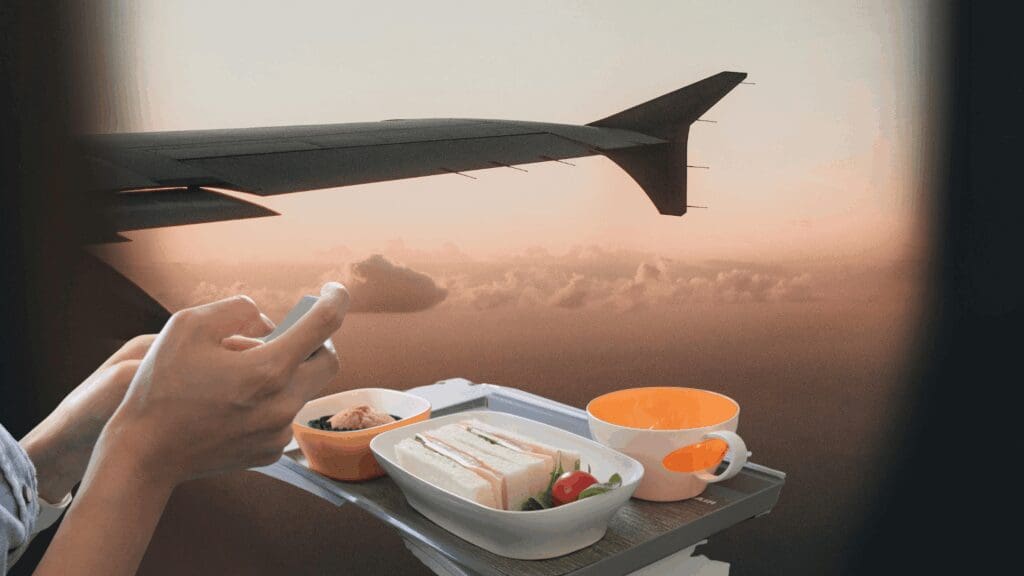
Air travel, however, represents the most extreme case. According to Dr. Peng, the combination of cabin noise, low humidity, and pressure changes actually reduces smell sensitivity. This makes flavors seem “flatter,” which is why airline meals require much bolder seasoning to remain palatable. You can read more about airplane food here.
Planning, Intention, and Eating with Awareness
Dr. Peng pointed out that eating on the move is part of modern life. But she is equally direct about its limitations that it is probably not the best context for really enjoying delicacies for having the fine dinning
Instead of avoiding it altogether, she suggests adapting. Slowing down where possible and choosing foods that are “easy and pleasant to eat on the go” can make a noticeable difference. And if something tastes underwhelming mid-journey, the problem may not lie with the food itself.
“The sensory environment is changing the flavour experience,” she explains, “The broader point is that flavour is constructed by the brain. It depends not only on the food, but also on our body, attention, surroundings, and expectations at the moment of eating.”
That has practical implications. Dr. Peng continued: “The evidence suggests that foods with stronger, more robust sensory profiles are likely to work better. In noisy environments, delicate sweetness may be muted, whereas savoury and umami-rich foods may hold up better. Tomato-based foods, mushrooms, soy sauce, cheese, and brothy or savoury flavours are good examples.”

How to eat on the move
In addition, she said that texture also helps. Crunchy or varied textures can remain engaging because texture perception is partly supported by sound and mouthfeel. Warm foods with noticeable aroma may also help, although this depends on the travel context.
For Dr. Ogden, however, the ideal scenario is simpler: avoid eating on the move altogether. She argues that we should try to “plan our day so that we have actual meal times” by setting aside space for breakfast, lunch, and dinner, rather than squeezing food into moments of distraction.
Creating a designated time and place to eat, she suggested, helps to “put food back into its box”, turning it into a conscious activity rather than an afterthought.
But she is also realistic. Not everyone has a schedule that allows for structured meals. In those cases, planning ahead becomes key. Deciding in advance what to eat can lead to better choices and reduce the likelihood of passive, automatic consumption.
What matters most is intention and this is the simplest step that everyone can do while eating on the move. Sitting down, and recognising the act—I am having lunch—can shift the experience. As Ogden explains, this kind of mindful eating not only increases enjoyment but also improves satiety: “You’ll feel fuller, you’ll enjoy the food more… and you’ll probably eat less later on, because you’ll remember that you’ve had a meal, and that kind of mindful eating will fill you up better, and that’s a better way to do it.”
So the next time you unwrap that sandwich on a rattling train or reach for a snack mid-journey, remember this: the problem is not that you are eating on the move, it is how absent you are when you do it.
Because flavour is not just on your tongue, it is in your attention. It is in the brief moment you pause, the choice you make, the awareness that this is a meal and not just fuel to fill a gap between places.
Eating in Motion, Living in Motion
In a world that is constantly accelerating, eating has quietly become something we do in the background. But it does not have to be. Even on the move, you can reclaim it. Slow down for a few seconds. Notice the taste. Choose something that holds its own against the noise, the motion, the rush.
Having learnt how food on the move is like on the ground, do you want to know more how it is like in the air? Read our exclusive article here.