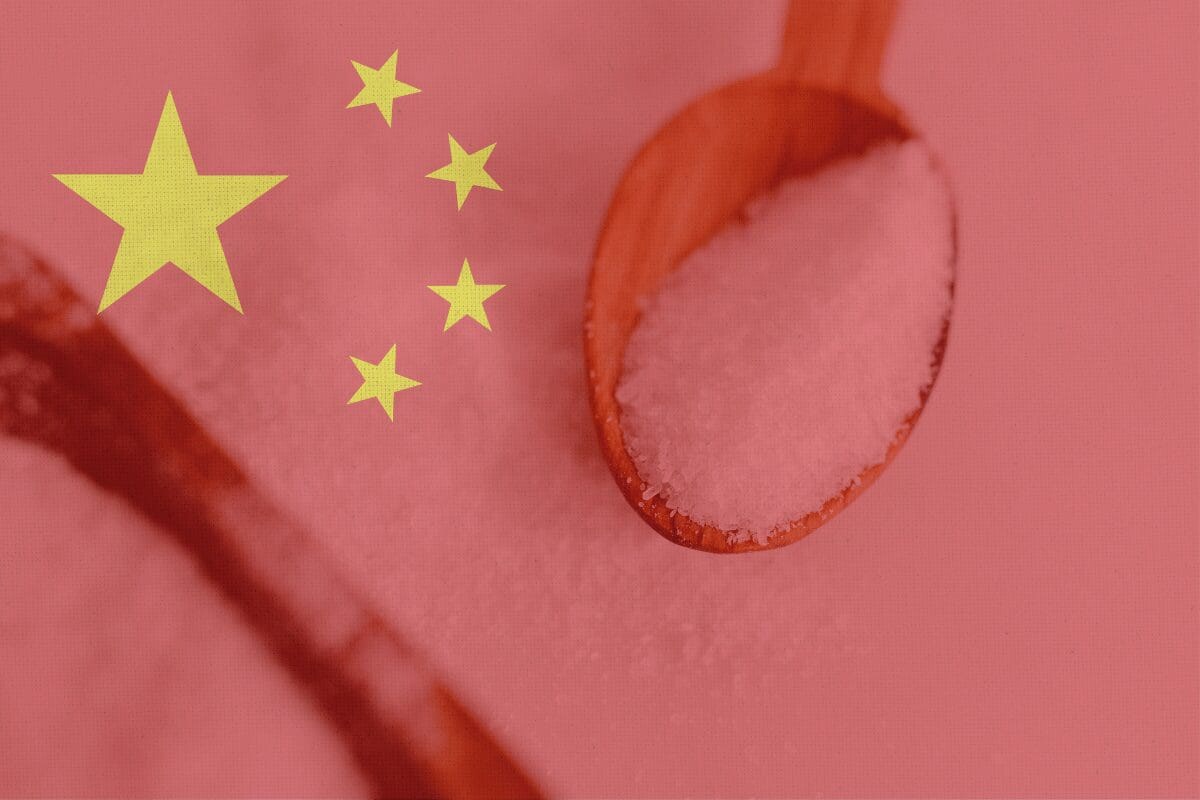
Throughout history, humans have been instinctively driven to eradicate things we don’t understand, despite new inventions and ideas being the crux of modern society. When the seasoning monosodium glutamate (MSG) was introduced to the Western world in the early 1900s, it was not a widely known and therefore became a contentious ingredient.
However, research suggests that the negative stigmas surrounding MSG are more cultural than culinary, with its reputation being built on decades of fear-mongering and racism rather than science.
What science has to say
Monosodium glutamate has been used as a flavour enhancer in cooking for over a hundred years, ever since it was extracted from seaweed broth and developed into a commercial seasoning in 1908 by Japanese biochemist Dr Kikunae Ikeda. Since then, its popularity has soared – primarily in East Asian cuisine – due to its signature “umami” taste. At the time, Dr Ikedia defined “umami” as a salty, meaty “absolutely singular” basic taste that cannot be categorised or replicated.
Food scientist Stephen Allen was appointed manager of new product development at Campbell’s soup in 1975 and oversaw the formulation and reformulation of products for over a decade during the height of the public’s fear of MSG. He said the ingredient should be viewed as a “flavour enhancer” for existing flavours.
Part of the contradiction surrounding modern day fears of MSG is that some people avoid this in cooking yet still unknowingly eat it every day.
Allen is not concerned by using it: “Personally, MSG never worried me as it occurs naturally in a lot of things like soy sauce, mushrooms and Parmesan. I used to use it in cooking at home”.
The birth of “Chinese Restaurant Syndrome”
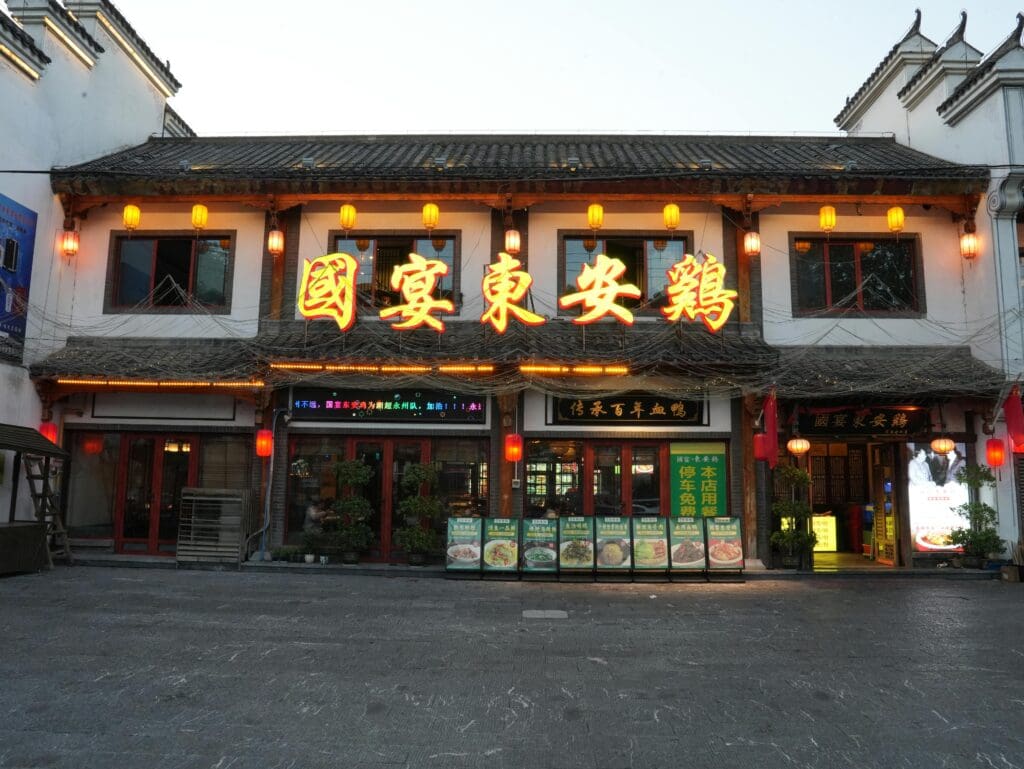
In the 1970s, the US was gripped by “Cold War paranoia”. The US had just entered the Vietnam War, which increased anti-Asian sentiment across the country, according to the Duke Law Journal. The geopolitical origins of the U.S. Immigration Act of 1965 meant US borders were open to people coming from Asia, Africa and Latin America. This backdrop of cultural anxiety was the perfect pathway for the MSG panic.
According to Allen, the fear of MSG can be traced back to a letter published in the New England Journal of Medicine in 1968. Written by a Chinese-American doctor, Robert Ho Man Kwok, the letter described nausea, weakness and heart palpitations after eating MSG at Chinese restaurants.
The term “Chinese Restaurant Syndrome” was coined in this letter, indicating that consuming East Asian cuisine will lead to health issues.
This letter should never have been interpreted as scientific. There was no clinical evidence, experiment or proof that MSG had caused the writer’s symptoms; however, the idea quickly escaped the pages of medical journals and made its way into mainstream media.
“It created this scare,” Allen explains. “People claiming all kinds of things from heat attacks to strange rashes. There was a public awareness that was reinforced by TV, radio and magazines and so people started to look at the labels to see if products had MSG in them.”
Newspapers began to pick up on the story and interviewed disgruntled customers outside dining establishments. Soon the term “Chinese Restaurant Syndrome” was deeply embedded in the public’s vocabulary.
Timing mattered. In the mid 20th century, East-Asian cuisine was often stereotyped as dirty, exotic or chemically altered. The stigma around MSG gave people a clear enemy to target.
Rather than questioning heavily processed western food, public anxiety became attached to East Asian cooking.
Soon, restaurants began displaying signs reading “NO MSG” in order to bring their customers back and distance themselves from the issue.
Scientists repeatedly conducted experiments to try and replicate “Chinese Restaurant Syndrome.” However, they all failed to achieve the results stated in the New England Medical Journal.
Despite this, the damage was already done.
The aftermath
As the fear of MSG intensified, major corporations and manufacturers began to listen to consumer anxiety over scientific facts. However the shift to remove MSG from Campbell’s Soup products had nothing to do with the scientists themselves.
“The decision came from the marketing department,” Allen recalls. “They were getting complaint letters from people saying, ‘why do you have MSG?’”
“It’s silly,” he sighs, “because everything is a chemical.”
People had begun avoiding the company’s products due to the MSG contents, which “made the higher ups want to remove it”.
The irony was that, in removing MSG from products, scientists were forced to add even more chemical additives in an attempt to replicate the same flavour, putting two more additives in their ingredients list.
The ingredient had been culturally associated with danger in a way that hardly any additives have. Companies found it easier to adapt to the growing suspicion rather than challenge it. Allen says, “it’s easier to follow consumer sentiment rather than try and fight it, even if you know it’s based on misinformation.”
The misinformation surrounding MSG would eventually fade from the headlines, but its legacy is still visible today through the absence of the ingredient on supermarket shelves and takeaway menus.
The role of racism and cultural bias – more than a food scare
If the backlash against MSG had been based on science, it would have most likely faded once countless studies failed to prove it was dangerous. Instead, fears and concerns brewed for decades, especially when MSG appeared in Asian food.
The public’s fear of MSG contradicted itself, as while people were actively avoiding MSG in Chinese takeaways, they continued to eat flavour-enhanced western products such as crisps, processed soups and fast food without suspicion.
Celebrity chef Anthony Bourdain famously denounced the fears over MSG consumption, saying, “MSG is in breast milk and Parmesan … You want to know what causes Chinese restaurant syndrome? Racism.”
Stephen Allen agrees that it is all down to perceptions. “It was just the word MSG that seemed to raise flags with people,” he says. “I think most people won’t read an ingredients list unless there is something specific they are looking out for.”
The war on MSG is reminiscent of other ingredient scares that have hit the public every few years. “There have been similar scares with other things like fats and palm oil for instance,” he explains.
However, few have become as racially charged as MSG. More than 50 years after the words “Chinese Restaurant Syndrome” appeared in print, the seasoning is still heavily burdened with a stigma that has been reinforced by cultural bias.
In recent years, East Asian foods containing MSG have soared in popularity, especially among young people. Chefs and social media influencers have taken to platforms such as Instagram, YouTube and TikTok to defend the ingredient and stop the spread of misinformation.
A cultural shift towards MSG acceptance reflects much more than just a change in taste. It represents a newfound willingness in the younger generations to question cultural assumptions that shape public attitudes towards food and ingredients.