
Gut health has gone from a niche area of research to one of the most dominant ideas in modern wellness. The microbiome, once largely confined to scientific journals, now sits at the centre of everything from digestion to immunity and even mental wellbeing. Scroll through social media or walk into any supermarket and it is hard to avoid: probiotic drinks, “gut-friendly” recipes and supplements promising to restore balance from within.
It seems simple; look after your gut, and everything else will follow. But as the idea spreads, so does uncertainty. How much of this is grounded in science, and how much has been shaped by wellness marketing?
“There is scientific evidence supporting the role of the gut microbiome in overall health,” says gastroenterologist Dr Lucy Kerrison. “The microbiome can influence digestion, immunity, inflammation and even aspects of mental wellbeing.”
However, Kerrison stresses that this relationship is far from straightforward.
“The gut microbiome can influence immune signalling, inflammation, gut barrier function and metabolite production, all of which may affect the brain and other systems in the body,” she explains.
One of the key reasons the gut has become so widely discussed is because of the so-called “gut-brain axis”, which is the communication system between the gut and the brain. But what this actually means is often misunderstood.
The gut does not “think” or process information like the brain. Instead, it communicates with the brain through chemical messengers, including nerves, hormones and immune signals. In other words, the gut is constantly sending information about the body’s internal state, but it is not involved in conscious thought or decision-making. Despite this, the term “second brain” has become a popular shorthand, even though it is not scientifically accurate.
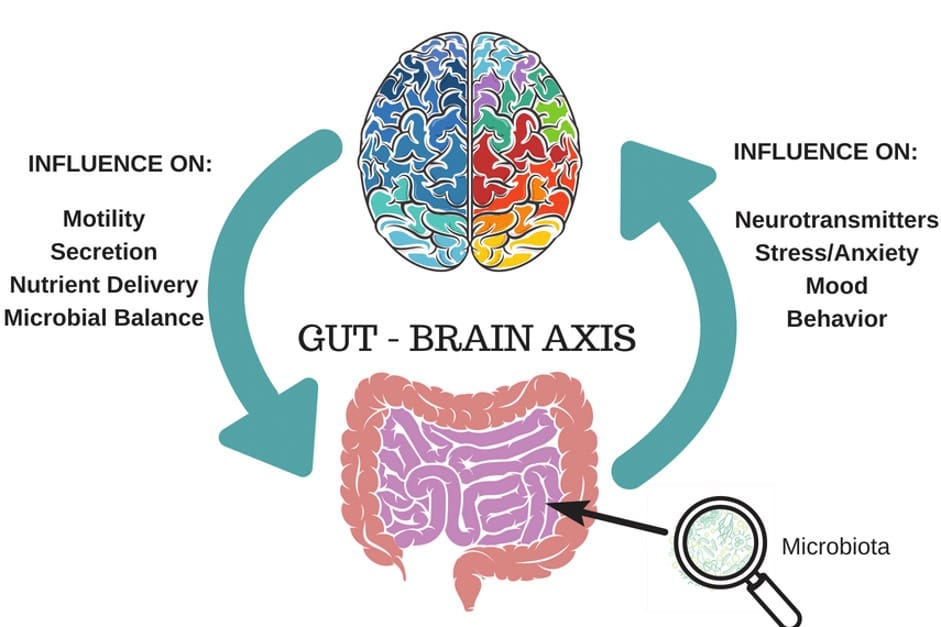
Part of this communication system involves compounds called metabolites. These are chemicals produced when gut bacteria break down food. Some of these metabolites can enter the bloodstream and influence inflammation and immune activity throughout the body, which is why researchers are interested in links between the microbiome and conditions such as irritable bowel syndrome, anxiety and certain skin disorders.
This growing scientific interest has helped fuel a wave of wellness messaging, but much of what circulates online presents these connections with far more certainty than currently exists.
“What I see online and what I see with clients is that the biggest misconception is that gut health is something you can fix quickly or reduce to a single diet,” Kerrison says. “In reality, it is highly individual.”
This simplification is part of what has helped gut health become so widely marketed. From fermented drinks to high-fibre supplements, the idea of “optimising” the microbiome has become a major part of the wellness industry. But according to Kerrison, there is still no single definition of a perfect gut.
“There is no one-size-fits-all diet for gut health,” she explains. “A wide variety of plant foods, fibre-rich carbohydrates, legumes, nuts and seeds tends to be associated with a more diverse microbiome, but individual responses vary significantly.”
Despite the uncertainty, the appeal of gut health messaging is easy to understand. It offers a sense of control over complex and often invisible processes inside the body. In a wellness landscape driven by optimisation and self-improvement, the idea that balance can be restored through food alone is particularly compelling.
However, this is also where science and marketing begin to diverge. While the microbiome is genuinely linked to multiple aspects of health, many of these effects are indirect, gradual, and still being actively studied rather than fully understood.
Ultimately, the gut is not a “second brain” in the literal sense, but a complex chemical signalling system that helps regulate the body’s internal environment. As research continues to develop, experts suggest the most useful approach may be less about optimisation, and more about balance, diversity and long-term consistency.
If you want to know more about what your gut is doing for your body, why don’t you click here?