Social media suggests we can eat our way to glowing skin, but how much of the ‘skincare dinners’ trend is actually backed by science?
The rise of the ‘skincare dinner’
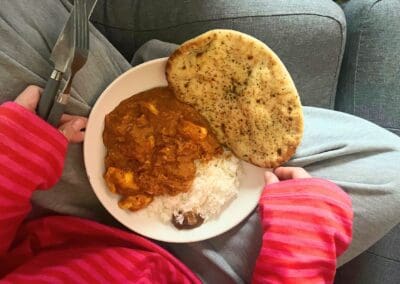
Plates of salmon, avocado and sweet potato are increasingly being framed online as more than just healthy meals. Across TikTok and Instagram, these videos rack up millions of views promoting so-called ‘skincare dinners’ which promise glowing skin through carefully curated combinations of omega-3s, antioxidants and collagen-supporting ingredients. In wellness culture, where beauty is increasingly treated as something that can be optimised from within, food itself has started to function like skincare.
The appeal is understandable. Unlike genetics or hormones, diet feels controllable. In a culture saturated with expensive serums, supplements, and complex routines, the idea that glowing skin could begin with an everyday meal feels both accessible and empowering.
The science behind glowing skin
But whilst the science behind diet and skin health is real, the version presented online is often far more simplistic than the biology itself.
“There are huge misconceptions out there,” says Fiona Lawson, a registered nutritional therapist. “There’s so much we can do to support our skin through what we eat. It’s not the be-all and end-all, but it’s a huge lever we can pull.”
Interest in the relationship between nutrition and skin health has grown significantly in recent years, particularly surrounding inflammation, the gut microbiome and the role certain nutrients play in skin repair and protection. However, social media often compresses these complex biological processes into simplified, aesthetic advice.
Platforms such as TikTok reward immediacy and visual appeal, making skincare dinners particularly suited to online wellness culture. Meals built around colourful ingredients and nutritional buzzwords can easily be framed as both aspirational and scientifically credible.
“Healthy food makes for lovely images,” Lawson says. “But I think that’s a hazard of social media and our attention spans. People tend to simplify things to capture attention, and sadly the nuance that gets missed is often the most important part.”
Why social media oversimplifies nutrition
One example of the viral ‘retinol carrot salad’ promoted online as a natural alternative to topical retinol products. The logic itself is not entirely incorrect; carrots contain beta-carotene, which the body can convert into vitamin A, a nutrient involved in skin-cell turnover and repair. Retinoids derived from vitamin A are widely used in dermatology to treat acne and signs of ageing.
But Lawson explains that the reality is far more complicated.
“That’s not necessarily wrong,” she says. “But most people are widely inefficient at converting beta-carotene to retinol. So in terms of eating that to get your retinol, it isn’t actually the best source you can choose.”
The conversion process is influenced by factors including genetics, fat absorption and gut health, meaning two people eating the same meal may not receive the same nutritional benefit. This is part of what makes translating nutrition science into viral skincare advice so misleading. The science itself is not necessarily false, but it is often stripped of context.
That gap between scientific research and online interpretation sits at the centre of the skincare dinners trend. Whilst certain nutrients can support skin health, their effects are rarely as immediate or dramatic as they are often presented online.
In reality, the science of diet and skin is less about single “miracle foods” and more about broader nutritional patterns and biological systems. Carotenoids, for example, are pigments found in foods such as carrots, sweet potatoes and leafy greens.
“When you eat carotenoids, they travel to your skin and can literally change its tone,” Lawson says. “They give you a natural glow, and studies show people actually find this more attractive than a suntan.”
Researchers have found that carotenoid pigments accumulate in the skin over time, subtly altering its colour in ways associated with health and vitality. Unlike tanning, which reflects UV exposure and skin damage, carotenoid pigmentation has been linked to perceptions of wellbeing.
But these effects are gradual. Skin cells renew over the course of several weeks, meaning any dietary influence is likely to reflect long-term nutritional patterns rather than a single “glow-boosting” meal. This is often where social media and biology begin to diverge.
Other compounds have also attracted scientific interest. Lawson explains Lycopene, found in cooked tomato products, has been studied for its potential role in protecting the skin against UV-related damage, whilst flavonoids in foods such as green tea and dark chocolate have been linked in some studies to improvements in skin texture and circulation.
The skin itself relies on a wide range of nutrients to function properly. Collagen synthesis, wound healing, inflammation regulation and skin-barrier maintenance all depend on adequate nutrition. Vitamin C plays an essential role in collagen production, whilst omega-3 fatty acids may help regulate inflammatory responses associated with some skin conditions.
The gut-skin connection
Even fibre-rich carbohydrates may indirectly influence the skin through the gut microbiome.
“Your gut bacteria feed on fibre and produce compounds that travel to the skin and help to strengthen the skin barrier,” Lawson says.
This connection forms part of a growing area of research often referred to as the “gut-skin axis”.
“There is scientific evidence supporting a gut-skin axis,” says gut health nutritionist Dr Lucy Kerrison. “The gut microbiome can influence immune signalling, inflammation, gut barrier function and metabolite production, all of which may affect the skin.”
Researchers believe one possible explanation lies in inflammation. The gut microbiome helps regulate immune responses throughout the body, and disruptions to this system may influence inflammatory pathways linked to conditions such as acne, eczema and rosacea.
However, Kerrison stresses that this relationship is far from fully understood.
“Skin is complex,” she says, pointing to the role of hormones, stress, sleep, genetics and environmental factors. “The science is real, but it is often presented online with far more certainty and less nuance than the evidence actually supports.”
Why skincare food becomes wellness culture
This uncertainty is often absent from online wellness spaces, where skin health is frequently framed as something that can be solved through elimination diets or restrictive eating habits.
“What I see online and what I see with my clients, I think the biggest misconception is that for healthy skin, it’s all about what you need to cut out,” Lawson says. “And actually it’s completely the other way around. It’s what you need to add in to support your skin structure and function.”
Foods such as dairy and gluten are regularly blamed online for acne and inflammation, despite evidence remaining inconsistent and highly individual.
“Major guidelines still do not support rigid ‘acne diets’,” Kerrison says. “The evidence is not strong enough for these prescriptions.”
Instead, both experts emphasise the importance of overall dietary patterns rather than individual ingredients or “superfoods”.
“There is no one-size-fits-all diet for gut health,” Kerrison says. “Eating a wide variety of plant foods, getting enough fibre, and including wholegrains, legumes, nuts and seeds is one of the most effective approaches. A Mediterranean-style diet is one of the most consistently supported patterns.”
This kind of long-term, balanced approach is far less appealing on social media, where quick transformations and visually striking meals are easier to package and share. A single “skin-boosting” dinner is more marketable than the idea of consistency over time.
The problem with turning nutrition into quick-fix advice
Ultimately, the popularity of skincare dinners reflects something larger than nutrition alone. It reflects a cultural desire to make health visible, aesthetic and controllable. But whilst food can support skin health, the biology behind that relationship is far more complex than many online trends suggest.
“There’s a big difference between entertainment and education,” Lawson says. “People are just so confused.”
The danger is not that the science behind skincare food is entirely false, but that emerging research becomes flattened into quick-fix advice before it is fully understood.
Wanting to know more about the latest skincare trends? Click here for more!