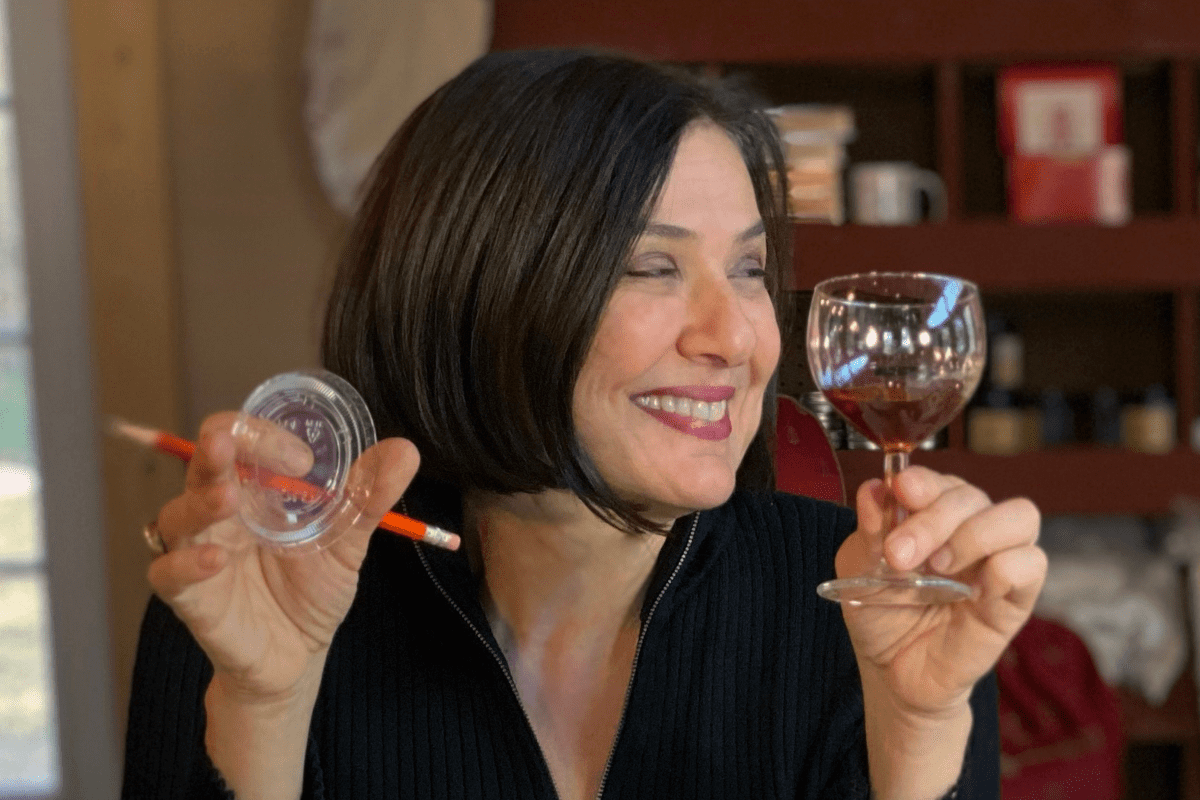
To many people, honey is simply a sweet, uniform, amber-coloured condiment. But away from the supermarket shelves, there is a diversity to honey that brings an array of flavours, aromas, and colours.
Everything from geographic location and the weather, to the type of plants the bees collect nectar from can have an all-important impact on the product and the sensory experience of eating it. In Italy, there is a dedicated Italian National Register of Experts in the Sensory Analysis of Honey to educate and certify sensory experts in the field. Carla Marina Marchese became the first American to be certified by them as a honey sommelier in 2013.
Marchese has a background in the arts, but after moving back from New York to her home state of Connecticut in the 1990s, she met a local beekeeper who gave her fresh honey for the first time. “That was like an explosion. I had never tasted fresh honey before like most people,” she recalls. “So I got a beehive. I thought it would just be a hobby… and I fell into the rabbit hole.
“As I met other beekeepers and I was harvesting my own honey, I started to notice that other beekeepers from other areas, their honey was completely different. It was dark, light, fruity, floral, woody, just really different. And it’s not what you see in the store as a regular consumer.”
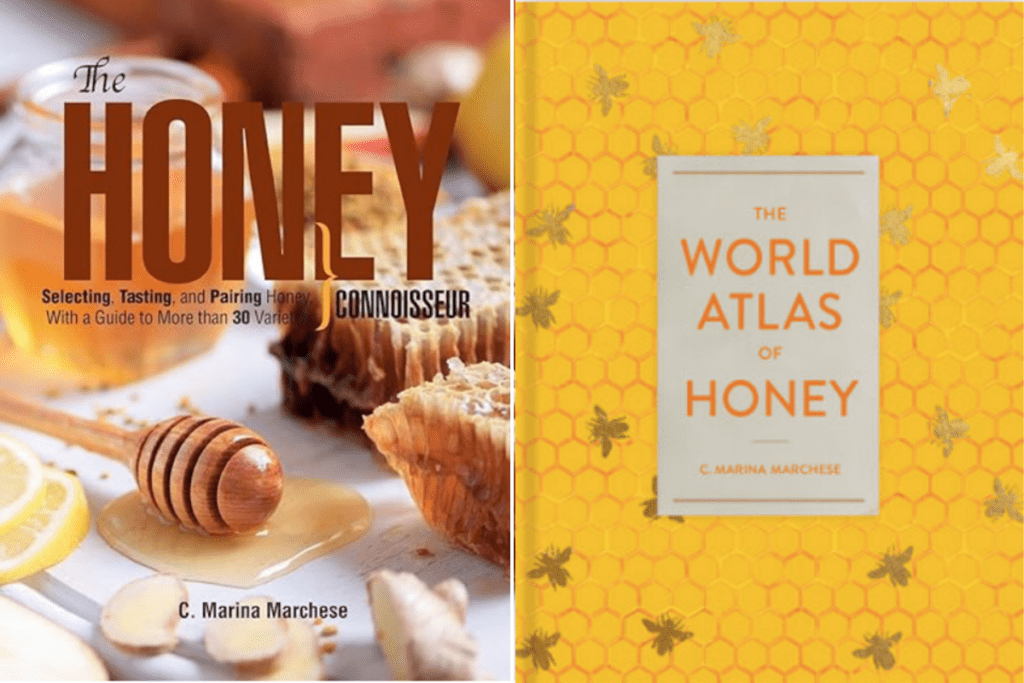
Marchese now runs her own honey brand, Red Bee, and runs courses through the American Honey Tasting Association to educate people about how “there’s a world of flavours from thousands of different flowers”. She has also written four books on the subject – including about global honey practices and how to choose a good honey.
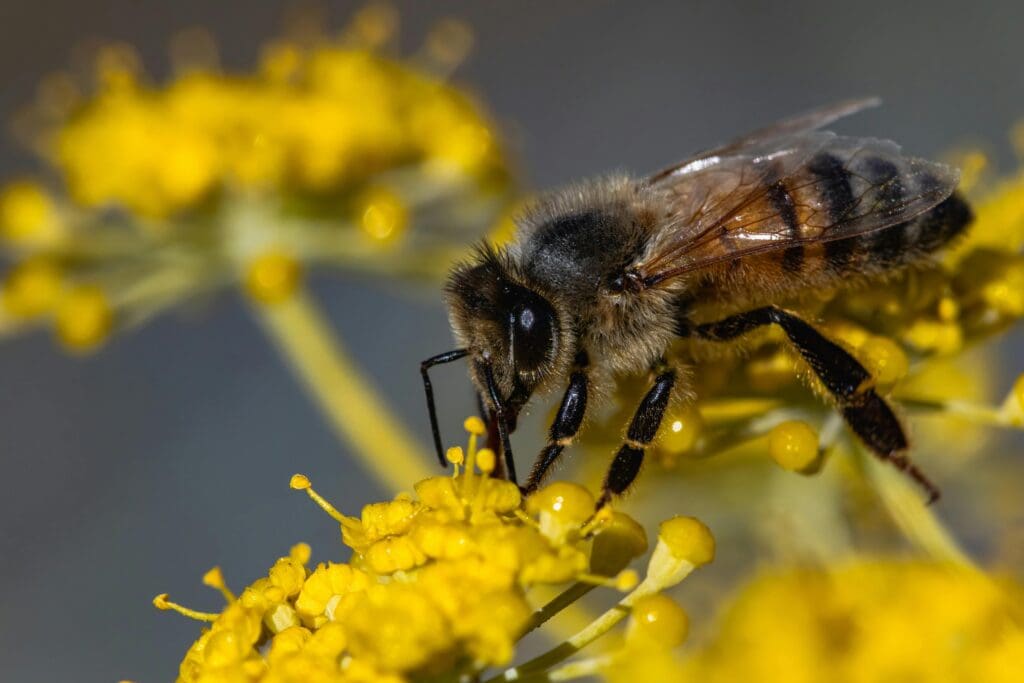
Varieties of honey range from those originating from a huge range of plants: lavender, manuka bushes, acacia blossom, and so on. Each plant has a different sugar profile, nectar profile, and volatile compounds such as essential oils
“The flavours, the smells are extremely diverse depending on the botanical source and the region it was produced. Obviously we’re familiar with floral and fruity, but there are honey that are woody, there are honeys that can be aromatic or have chemical notes,” Marchese tells us.
“If you’ve ever experienced essential oils, they’re basically plant-based scents that are naturally imparted from the nectar. And there’s many different volatile compounds and non-volatile compounds that are associated with specific flavors or smells that you find in honey.”
The climate and location of the honey has an impact because rain, wind, and the nectar plants produce determines which plants the bees are more likely to visit. “Bees have an incredible sense of smell and you’ll see them hoovering around, scouting out plants that have a copious amount of nectar. They’re more apt to visit plants that have a lot of nectar.”
Acidity and sweetness
Honey is associated with its sweetness, but this varies between each variety. How it tastes all comes down to the ratio of the two types of sugar content.
“The sweetness is variable by the ratio of glucose to fructose.” Marchese says. “Fructose tends to be perceived as much sweeter than the glucose, so if it has a higher fructose content it tends to be a little sweeter. When the glucose ratio is higher than fructose, you’ll get honey that will crystallise much quicker.”
However, Marchese adds that if “you can cut through the perception of sweetness, you’ll realise that honey sometimes has a little bit of a sour note.” This is due to enzymes from the nectar giving honey a low, acidic pH – around the same level as apples or citrus fruits.
Alongside the sourness, it also gives it other properties. “Given that it’s an acidic environment, many pathogens and fungi and bacteria can’t survive, which is one of the reasons why honey is known to be antibacterial.”
Aroma
For any good sommelier, the sniff test is always the first port of call. But in day-to-day life many of us neglect this valuable part of the tasting experience. So what are the benefits of taking in the aromas beforehand?
“The volatile compounds in the honey will escape and we smell those, but the non-volatiles tend to come in the mouth. They’re not the ones that are going to disperse out into the air as necessarily. So [as sommeliers] we’re taught to smell before we taste, and we write notes about the smell, and then the flavour.”
This is down to the fact that our olfactory (smell) and gustation (taste) senses are “not always the same”.
“You think that if honey tastes a certain way, the smell is going to be exactly the same, but it’s not,” she adds. “There’s certain honeys that are very, very pungent, very strong, and then all of a sudden, you put them in your mouth, and you lose all of that. You can also have a honey that just smells really mild, and you put it in your mouth, and wow, it’s completely different.”
Colour
“It’s often said that lighter honeys are more mild, and darker honeys are richer and stronger. That’s fairly true, but not with every honey harvest,” Marchese explains.
Pasteurised honey, or honey that has been in the cupboard for a longer time, will be darker, but it also stems back to the origins of what is in each jar.
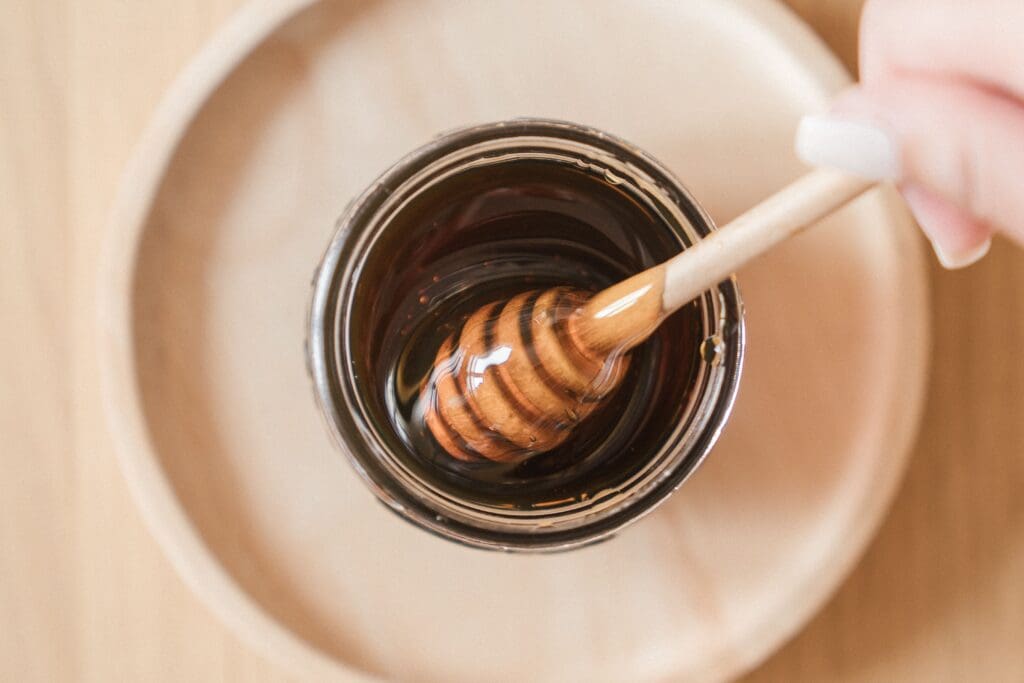
“The color comes from the minerals in the soil and the different nectar composition of that plant. And that comes into play when you’re performing sensory analysis on certain honeys. For example, rapeseed honey tends to be very, very light in color. And that’s what we expect to see. Then you have things like buckwheat honey, avocado honey, tulip poplar honey that is very, very dark.”
The diversity of honey
For Marchese, her current favourite honeys are the ones that stick out as a unique sensory experience. “I’m looking for enjoying honeys that are just a little bit off the beaten path and a new experience for me,” she says, “And one of the things that I’m really excited about is honeys that are sour. You think of honeys as being sweet, but there are honeys that are bitter, sour, salty, or umami.”
For regular consumers, she advises testing out a few to see the diversity for yourself. “Normally people buy one jar and that’s the honey they taste all the time on their toast, in their tea or in their yoghurt,” Marchese continues, “I like to challenge people and say: ‘why don’t you try one honey or two honeys?’ Taste them side by side.
“That’s really where the a-ha moment comes of embracing the diversity and realising that honey is not just sweet. It really has a lot of flavour.”
‘The World Atlas of Honey’ and ‘The Honey Connoisseur’ by C. Marina Marchese are available now.