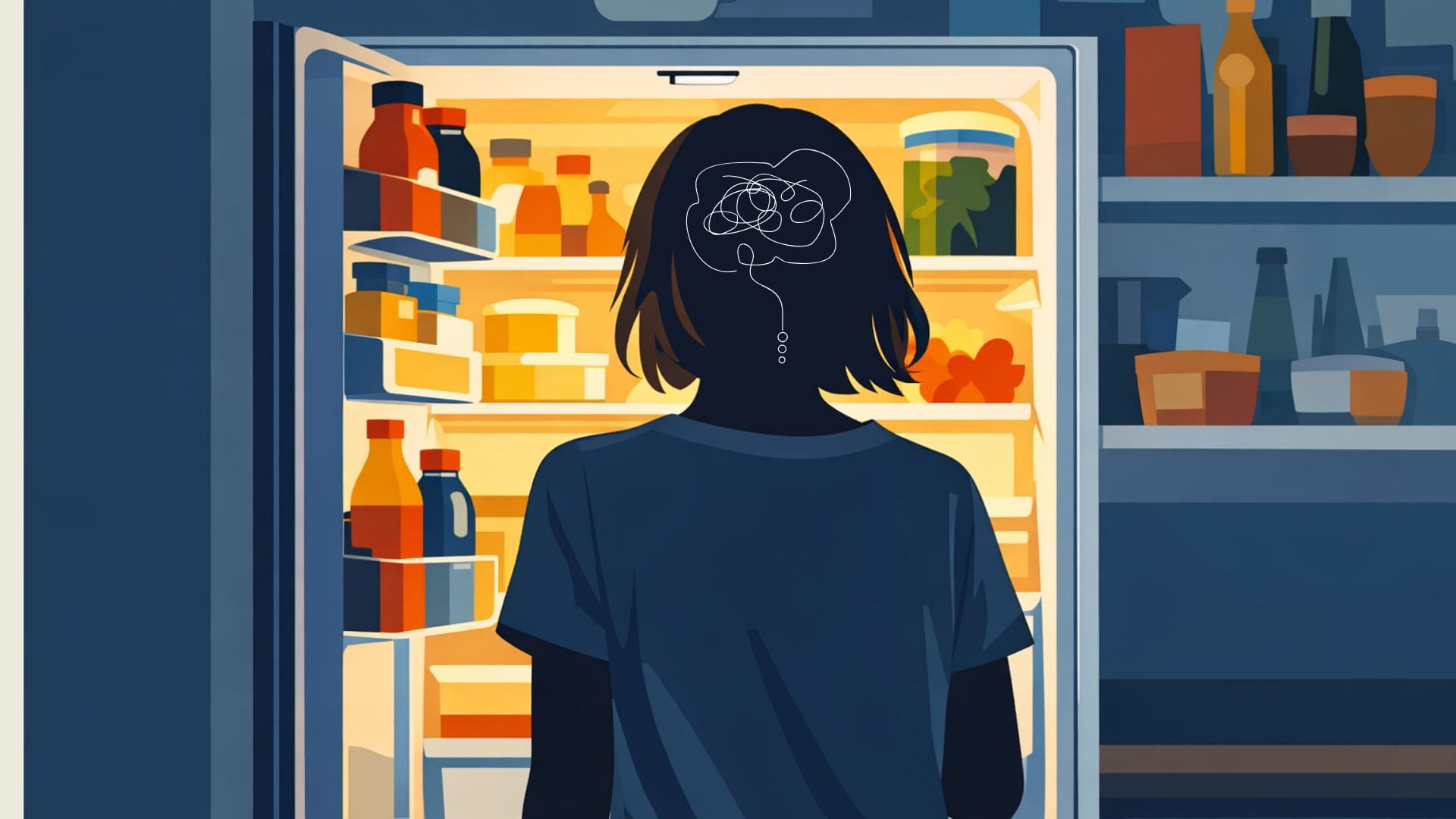
We all start the year with the same idea, a resolution or a plan for change.
For years we have told ourselves, this time will be different. A new plan, a new version of ourselves. This time, disciplined, committed and ready to change.
Millions of us attempt to make this transformation through a shift in our diets, cutting carbs, counting calories and skipping desserts.
But when the weight returns, the conclusion is painfully the same. The diet didn’t work, and we’ll start again next year.
Research from Utah State University shows 95% of all diets fail, with some even proving counterproductive. Whilst studies from Nutriscan shows 2 out of 5 people quit their diet in just the first 7 days.
But what if we have been asking the wrong questions all along? What if rather than asking, what are we eating? We ask, what is eating us?
Diet isn’t a matter of willpower. Often diets fail not because of a lack of discipline, but because they target behaviour without addressing the psychological drivers behind it.
“Patients often arrive after years of failed diets, and the turning point is almost always the same, shifting the focus from food to the emotions and thoughts that drive the food behaviour,” says Doctor Emanuel Mian.
Dr Mian is a psychologist, psychotherapist and co-founder of EmotiFood Ltd, an organisation which brings together nutrition and behavioural analysis.
Dr Mian says he constantly sees the emotional and cognitive dimension to eating as the missing piece. “A phrase I often use with my patients is, before you can change what you eat, you need to understand what is eating you.
“We need to move away from an exclusively nutritional and calorie-based view of eating and recognise the psychological mechanisms that drive food choices,” he says.
Studies show that stress, anxiety and low mood are directly correlated to emotional eating, with psychological factors playing a crucial role in our relationship with food.
Yet most diets offer no real way to address this, leaving the emotional effects entirely untouched, and the dependence on food as a way to cope with stress and anxiety grows stronger.
With that being the case, in a world where hyper-palatable foods are ubiquitous, Dr Mian argues the cycle simply repeats and it is no wonder diets fail.
“People need tools to manage stress and emotions without relying on food, and they need an environment that does not constantly push them towards hyper-palatable products while simultaneously shaming them for their body size.
“This dual pressure, eat more but weigh less, is something I consider on of the defining paradoxes of our time, and it is at the root of much of the disordered eating we see clinically.”
The solution, then, might be focusing less on finding the right diet, and more on asking the right questions.
Before deciding to limit what you eat, assess the emotional impact that are causing you to eat the way you do.
Stop feeling guilty when the motivation for maintaining your diet fades away. And stop viewing every setback as a lack of discipline or personal failure.
For Dr Mian, this shift in thinking is the foundation for a better relationship between us and food.
Want to find out more? Here’s our guide on why food cravings are not the enemy.