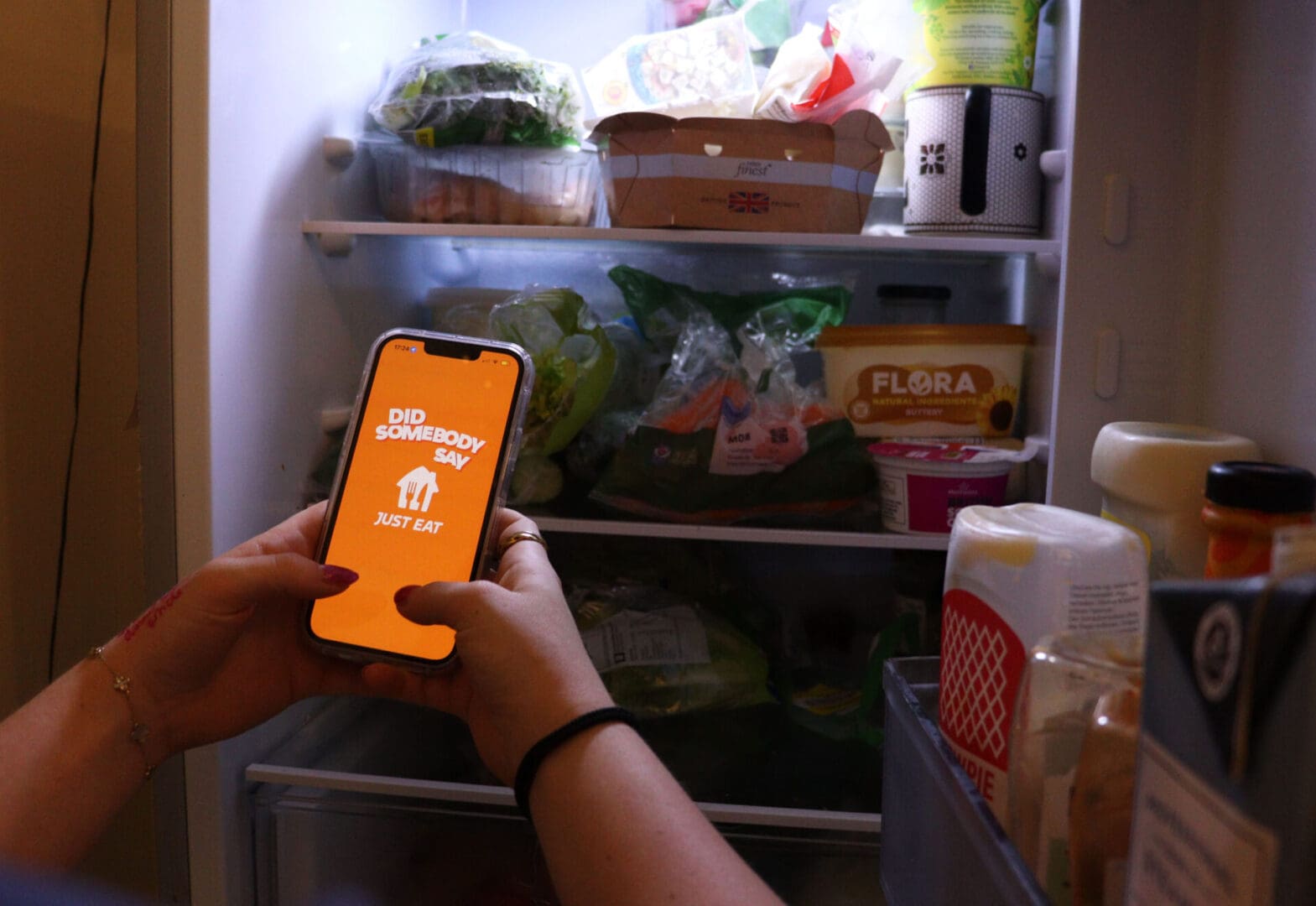
You pull open the fridge door after a long day at work and find the meal-prepped dinner you made last night. Alongside it are all the fresh ingredients you bought to make your weekly rotation of meals.
It’s all there.
You did the shop, you planned for this, and yet you find yourself fixated on the JustEat homepage without even realising you took your phone out of your pocket. You’re craving something else.
It’s not a lack of food that’s driving this moment, but something specific.
You look up from your phone back at the brightly lit shelves of vegetables, and a feeling of guilt creeps up. You planned for salad. You like salad. And yet now you just don’t want it. You feel guilty for wanting the taste, texture and sensation of eating the burger instead.
Cravings aren’t sabotage – they’re communication

According to the Yale Journal of Biology and Medicine, more than 90% of the population experiences food cravings and they can be a helpful tool to understand what your body needs. As a Nutrition coach and Personal Trainer, Fran Hemms explains, “a lot of the time, a craving is just the body’s way of telling you that you need something, and then it just has to figure out if it’s your mind or body that needs it.
“A craving is more than a hunger; it’s a strong desire and a combination of the physical, mental and hormonal sides working together. Sometimes it’s just a boost of serotonin or a dopamine hit that you’re looking for rather than a taste.”
The ‘happy hormones’ are quite often at the source of a craving because we rely on them to regulate mood, pleasure and motivation.
“While hormones play the biggest factor in food cravings, there are other things that should be considered. Cravings can stem from many factors, such as lack of sleep and stress (which are the most common for repetitive and constant cravings), and how you fuel your body the rest of the day, which can increase the cravings you have later,” Fran explains.
Together, these factors help explain why cravings often persist even when we think we’re “doing everything right.”
“A lot of the time, we think we’ve eaten healthy and hit all of our boxes, so we wonder why we are still craving something else? And it’s usually because you’ve eaten what you think you should, not what you actually need,” says Fran.
What does my craving mean?
Unfortunately, it isn’t as simple as saying that craving spinach means you need more iron, as different people will crave things for different reasons. However, there are a few common cravings which experts agree about the nature of.
For example, chocolate, which is assumed to be a sign of a need for magnesium, or a desire for comfort, which could stem from low serotonin or oxytocin. Or salty foods, which can indicate dehydration, electrolyte imbalances, or high stress levels, and finally, craving carbs, which could stem from low energy levels. Not all cravings are a mystery, and as Fran explains, listening to the body is key.
Next time you crave something, try asking yourself, is it the texture? Taste? Nostalgia or comfort? Or most commonly sugar?
Sugar crops up a lot when cravings are mentioned, and some coverage will lead you to believe that we have become too dependent on it, or even ‘addicted’. However, Specialist Eating Disorders Dietitian from Dietitian UK, Priya Tew, explains that that is not the case.
“If we were ‘addicted’ to sugar in a clinical sense, we would see withdrawal symptoms regardless of our nutritional status, but often these ‘cravings’ disappear once a person is consistently and adequately nourished. Research shows that the ‘addictive’ behaviour (like feeling out of control around cookies) is most intense when those foods are restricted.

What do experts recommend when a craving occurs and why?
The advice around cravings can differ based on the expert, but both Fran and Priya agreed on their approach. They encourage listening to the body and allowing yourself to have your cravings. Priya explains, “My advice is always to honour the craving rather than restrict it.
“Restricting creates a scarcity mindset that triggers a negative neurological response. When you ban a food, your brain increases production of neuropeptide Y, which leads to you wanting that specific food more. Your reward centres become hyper-sensitised, driving the urge to binge.
“Instead, use habituation where you allow yourself the food, remove the ‘forbidden nature’ and over time the intense cravings will dull down as your brain realises the food is always allowed.”
Fran echoed this, “I’m very much a believer that listening to your body and not restricting yourself is the key to everything. I think ignoring your body’s cues is the worst thing you can do.”
She explains that this doesn’t have to be a drastic difference from your usual eating patterns or diet.
“You don’t have to have the craving in full force if the craving doesn’t work for your targets but try having a smaller version of it or modify it slightly. That’s the way forward. Crowd out, don’t cut out.”
Hormones men vs women
Because cravings are strongly influenced by hormones, how do they tend to differ between men and women, given the hormonal patterns typically seen in each?
Fran explains, “Women have a lot of fluctuations in the body with oestrogen and progesterone, which often leads to more cravings for carbohydrates and foods that give you instant satiation, foods that make you feel full and satisfied quickly. Whereas men don’t have the same fluctuation, particularly on such a quick cycle,”
She suggests that this is why a lot of the existing information and coverage around cravings has been female-oriented. “I think craving just naturally is associated more with women and there’s probably a bit of stigma around that. People assume they give in to it more and have less discipline. Whereas scientifically, they just do crave more.”
For some women, this can be a source of guilt; among them is one of Fran’s clients, Amanda Giles who spent years comparing herself to those around her and restricting what she ate. The 48-year-old found headlines about cravings being ‘a loss of control’ damaging.
“I was trying to prove I had as much discipline as my husband, but he just doesn’t crave things as often or strongly as I do,” she says.
“When I want a glass of wine after dinner, or a bit of chocolate, he’ll join me, but it never seems to be his idea. He doesn’t think the same as me, so trying to ‘compete’ with him was just pointless.
“I try not to restrict myself now, and if the craving is ‘normalised’ and doesn’t conflict with anything else, I guess I will satisfy it. Like I won’t drink a glass of wine at 10 am or have cheese for breakfast, but if it makes sense, then I don’t see any harm in it.”
Cravings aren’t commands or failures; they’re simply data, and what you do with that data is entirely up to you. There is a lot of advice online about how to make cravings “go away” or make commonly craved foods “healthier”, but as both Fran and Priya have explained, it’s not a bad thing to take note of your body’s cues and allow yourself to have those foods you crave.
Afterall, food cravings aren’t the enemy.
Hunger vs Cravings
A food craving differs from hunger on both a physical and neurological level, yet the two are often used interchangeably. When talking about a craving, we’re not simply referring to what you happen to fancy in that moment, but to a more complex signal shaped by both the body and the brain.
Dietitian, Priya Tew, describes a craving as “an intense, sensory-driven emotional or physiological ‘tug’ toward a specific food that often signals an unmet need for energy, a restriction-driven imbalance, or a desire for emotional regulation rather than biological hunger.”
The difference between the two is crucial in understanding where a craving comes from as the hormones behind each differ. Hunger is regulated by hormones like ghrelin, leptin and insulin and is quite often accompanied by physical stomach sensations, fatigue and irritability.
A craving, on the other hand, is a more specific targeted signal and reflects a mix of biology, psychology, memory or context and can be driven by dopamine, serotonin, progesterone and oestrogen, among others.
Dr Adrian Muele summed up the differences well in his article ‘The psychology of food cravings’. He writes, “A food craving can usually only be satisfied by the consumption of a particular food, whereas hunger can be alleviated by the consumption of any type of food.
While the two often overlap, recognising how they differ can help explain why cravings persist even when we believe we’ve eaten “enough.”
Want to know more? Here is our guide on why willpower isn’t the reason diets fail