We often hear about how nutrition can stop athletes hitting ‘the wall’. But what if the same applied to desk workers?
Steph Ley, a corporate nutritionist from Oxfordshire, has seen the real-world effects this has had on office teams, events teams, and remote workers in various businesses. Through nutrition workshops and small changes to how people approach food in the workplace, participants are avoiding the so-called “3pm slump”.
“In the workplace, I think there’s like a massive disconnect between how us as humans are meant to be and how employees are generally expected to be,” she tells me when we speak over the phone. “Employers are often trying to boost energy levels, and they spend a lot on these expensive training programmes and leadership courses. But when an employee is struggling each day with a lack of energy, afternoon fatigue, and low-level niggles like headaches, if they just look at the nutrition and what their employees were eating then that can make a huge difference.”
Ley trained as a nutritionist ten years ago and previously ran a catering business. “The schedules were very erratic, the breaks were very erratic, and I saw a massive impact on what they ate. I found that when I provided snacks that were healthier it had a big knock-on effect in terms of sustained energy.”
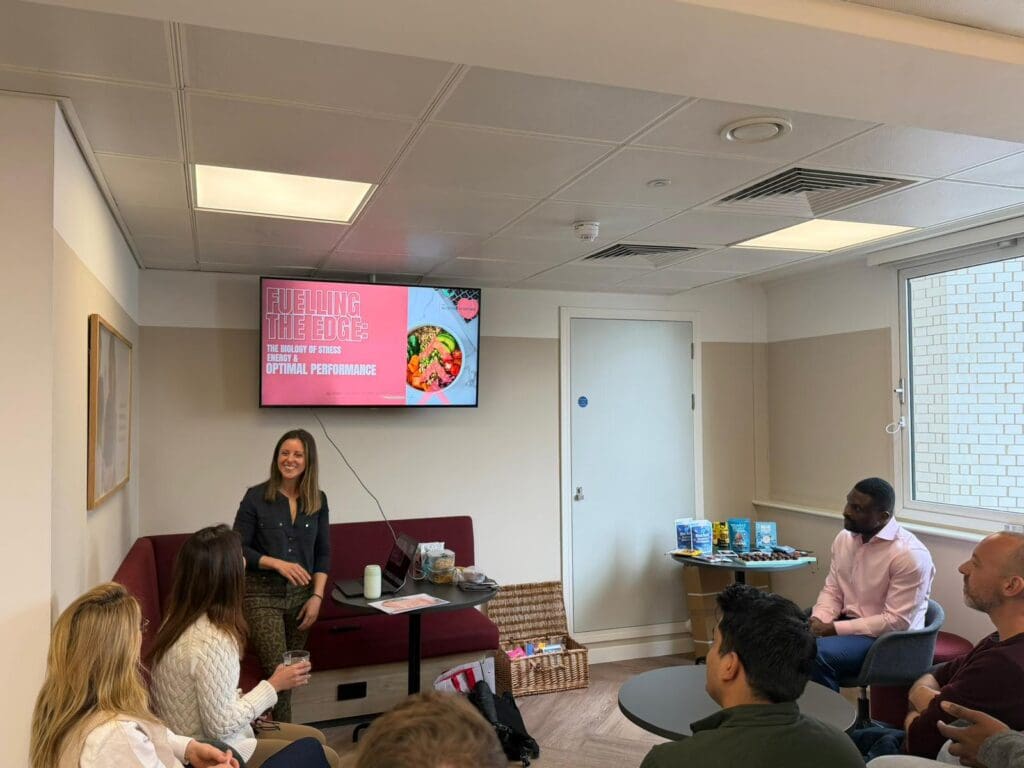
It was this that inspired her to start The Nutrition Advantage, through which she provides workshops on a wide variety of topics such as how nutrition can improve energy levels, mental health, burnout, and immunity and absenteeism. Through working with organisations and teams in the Oxfordshire, Buckinghamshire, Berkshire, London, and beyond, she has seen education and commitments to small, achievable diet changes help people get through the working day “without a crash”.
But how does this actually work? And how can more people make these effective changes? “A big thing is managing blood glucose,” she explains. “It’s not affected just sugar and carbs, there’s so many things, even stress alone.
“The level of glucose in our blood really does determine well our body fuels what reserves it feels it’s got in terms of powering our brain to make those quick decisions and logical thinking and stuff like that are very much reliant on steady levels of blood glucose. When it drops, that’s when your body particularly shifts away from the prefrontal cortex part of your brain and that’s one of the first things to go offline. It can really affect people’s decision making, ability to focus, and not get brainfog.”
She advises, when you can, to have a good source of protein and at least three plants with every meal as these slow down the release of carbohydrates into the bloodstream. Healthy fats from food such as avocados, nuts, good quality meat, and fish, can also help as these slow gastric emptying and slowing glucose release for more sustained energy.
It’s about working these nutritious elements into your diet, and the answer, Ley believes, cannot lie in one ingredient. “I don’t think there’s one magic herb or food, even though I know a lot of food companies want you think that.”
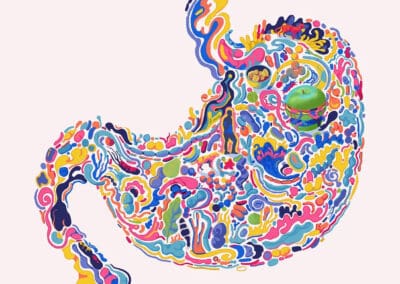
Another major factor is the body’s second brain: the gut. Ley explains the gut-brain axis which is strongly linked by the Vegas nerve: “Our gut is constantly sending things to our brain, assessing the environment, and telling it if our gut is inflamed, or if there’s an imbalance of certain bacteria. That can send signals to our brain of stress and anxiety and distress, which can impact how we feel at work, our ability to focus, and our ability to engaged and do that deep work.
Modern working problems
Stress, ultra-processed foods, emulsifiers, and pesticides and herbicides are just some of the modern-day factors that have left our guts and, in turn, our brains, “taking a hit”.
A new component is also the health risks associated with remote working. As Ley, points out working “right near your kitchen” can lead to a greater temptation to snack. “Grazing is definitely more an issue I see with remote workers,” she says, “It’s even more tempting throughout the day just to continue to graze, which is not great for our gut health. Our gut likes having a break in between meals to reset and clean itself.”
It can, however, have benefits too. “It’s a lot easier for them to make quite a nutritious meal from not having prepped anything, like scrambled eggs with some spinach, or some salmon. They can make that because they work from home, whereas someone working at the office maybe not have those kinds of facilities available, and they have to rely more on what’s being sold at the local supermarket.”
Supermarket meal deals, it’s fair to say, often don’t cater for professionals look for non-processed, nutritious foods. Having recently researched the better options available, Ley cites boiled eggs, olive snack pots, and bean medleys as things to look out for. “But it was really hard to do,” she adds, “because I wanted to find ones that were not overly processed, not too high in sugar, that had good ratios of protein and fibre, and 99% of snacks in supermarket did not meet these criteria.”
If things on offer don’t tickle your tastebuds, Ley suggests time-bound workers set aside half-an-hour on a Sunday to batch cook sauces, soups, or anything you can use in a variety of ways over the course of a week. Things that take “a bit of planning” but are “fairly quick and easy once you know what you’re doing”.
Crucially, though, if you’re looking to boost your work performance and help your gut and your brain by adjusting your diet, it doesn’t have to be about trying to follow a specific diet or food. In nutrigenomics – the concept of everyone’s body being different and requiring different things – it’s about finding what’s right for you.
“My workshops are mainly in groups, so I have to keep what I suggest fairly broad. I can’t recommend a keto diet for everyone or the carnivore diet because it won’t be appropriate. But I think it’s largely just about eating real food.
“It can be very confusing out there but I think if you just look at the food and think, “Can I imagine this growing in nature?” Then you’re probably doing alright. You can’t go too far wrong if you do prioritise food as nature intended.”
To read more about food in the workplace, check out this exploration of mindless eating.