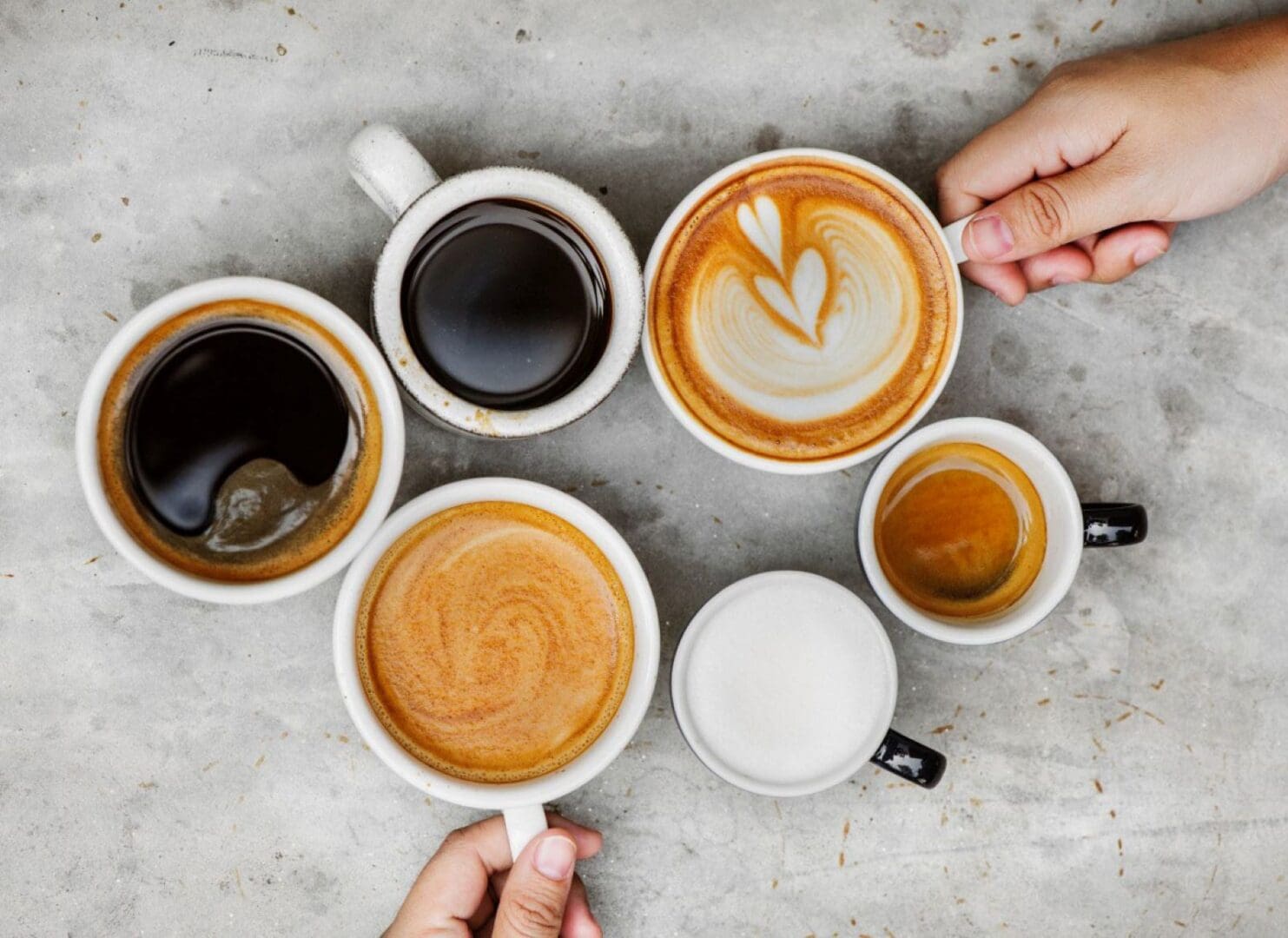
From morning rituals to café culture, coffee has evolved into something far bigger than caffeine alone. Forkful explores the psychology, sensory science and identity behind the world’s favourite daily habit.
Coffee as comfort and routine
For millions of people, the day does not properly begin until the first sip of coffee. Whether it is picked up on the commute to work, made carefully at home or consumed as part of a social routine, coffee has become deeply embedded into everyday life. According to the British Coffee Association, in the UK alone, around 98 million cups of coffee are consumed every day. But modern coffee culture is no longer centred purely around caffeine consumption. Increasingly, coffee functions as ritual, social performance and personal identity all at once.
Coffee’s role in daily life has expanded significantly over the last two decades, particularly with the rise of café culture and social media. What was once viewed largely as a functional drink has become tied to aesthetics, lifestyle and routine. From iced oat lattes to minimalist coffee counters and “coffee run” videos online, the drink has evolved into something highly visible and culturally loaded.
But why has coffee become so emotionally significant to people in the first place?
“There’s no denying that coffee is a drug,” says philosopher of taste Barry Smith. “We like the effect that caffeine has on our neurotransmitters and we seek out that reward again and again.”
Caffeine stimulates the central nervous system, increasing alertness and temporarily reducing fatigue. But according to Smith, the emotional attachment people develop towards coffee extends far beyond the chemical effects themselves.
“None of us liked coffee the first time we tasted it,” he says. “We laced it with milk and sugar and persisted. And that’s because we liked the caffeine rush.”
Over time, the brain begins to associate sensory cues such as smell and taste with the anticipated reward of caffeine. This process helps explain why coffee can feel psychologically comforting long before it is consumed.
“Eventually the brain learns to like the signals that predict we’ll get that rush, such as the smell of freshly brewed coffee,” Smith says. “It becomes comforting to know we can administer a small dose of this enlivening substance when we need it.”
This connection between repetition, reward and routine is part of what makes coffee consumption feel so automatic. According to consumer behaviour expert Professor Kate Daunt, habits become embedded when behaviours are repeated consistently in the same context.
“When individuals perform the same behaviours repeatedly in the same context, they can quickly become automatic and bypass usual decision-making processes,” she explains.
Coffee is particularly effective at forming these routines because it operates on multiple levels simultaneously. “First, it’s a stimulant,” Daunt says. “Second, it’s ritualistic and can become embedded in consumers’ daily routines. Third, it can be social in nature.”
Together, these physiological, psychological and social elements help transform coffee from a conscious choice into something that feels almost essential.
Why the smell of coffee matters more than the taste
But coffee culture is not shaped by caffeine alone. Increasingly, the experience surrounding coffee has become just as important as the drink itself.
“The look and smell of coffee is much more important than we think,” Smith says. “We all love the smell of freshly brewed coffee but are just a little disappointed by how it tastes.”
According to Smith, this difference is partly explained by smell. Coffee contains hundreds of volatile aroma compounds, many of which are lost once the drink is consumed.
“That’s why we say ‘wake and smell the coffee’, not ‘wake up and taste it’,” he says.
We also talk more about smell over here!
The rise of cafe culture and the ‘third place’
This sensory experience also helps explain why drinking coffee in a café can feel so different from drinking the same coffee at home. Whilst the drink itself may be similar, the surrounding environment changes the experience entirely.
“It’s the atmosphere and the attention to detail those who make the coffee for you give to it,” Smith says. “The room and the gentle caffeine-filled buzz also helps me concentrate for some reason.”
Cafés themselves have increasingly evolved into what sociologists describe as “third places”: social environments that exist separately from home and work. Particularly following the rise of remote and hybrid working, coffee shops now function as places for productivity, social interaction and identity performance all at once.
Daunt argues that coffee has become a form of self-expression as much as consumption.
“With the increased availability of coffee and especially different types of coffee drinks, coffee has become shorthand for how consumers wish to be seen by others,” she says.

What people order, where they buy it and how they present it publicly can all communicate aspects of taste, lifestyle and identity. Platforms such as Instagram and TikTok have amplified this further, transforming coffee into an aesthetic experience as much as a sensory one.
“Coffee isn’t only purchased and consumed for its taste and caffeine content,” Daunt says. “It’s also a form of self-expression and group membership.”
From caffeine to experience economy
Smith similarly connects modern coffee culture to what he describes as the “experience economy”.
“We went from being a goods economy to a service economy, and then became an experience economy,” he says. “People are selling and marketing along these lines: ‘It’s not a hotel, it’s an experience.’”
Coffee increasingly fits into this model. The drink itself becomes secondary to the atmosphere, ritual and identity attached to it. In many ways, buying coffee today is as much about participating in a lifestyle as it is about consuming caffeine.
At the same time, the accessibility of specialist coffee has transformed dramatically over recent decades.
“When I travel to towns and cities I don’t know, the easiest thing is to locate a coffee shop,” Smith says. “That only happened in the last 25 years.”
The growth of independent cafés, speciality roasters and social media coffee culture has made high-quality coffee more available than ever before. Yet Smith argues this has also produced new forms of conformity.
“There is actually less variety and choice now,” he says. “The norms of coffee making get entrenched and shared on social media.”
The rise of coffee culture therefore reflects something broader about modern consumer behaviour. Coffee is no longer simply a drink used for energy, but part of a wider culture built around routine, atmosphere, identity and performance.
And perhaps that is why the attachment people feel towards coffee can seem so personal. The morning coffee run is rarely just about caffeine. It is ritual, comfort, familiarity and identity wrapped into a single cup.