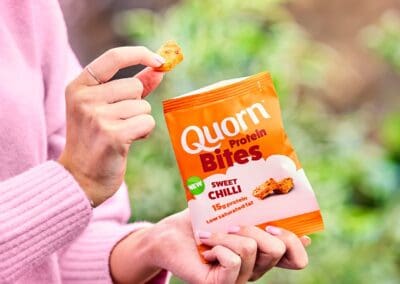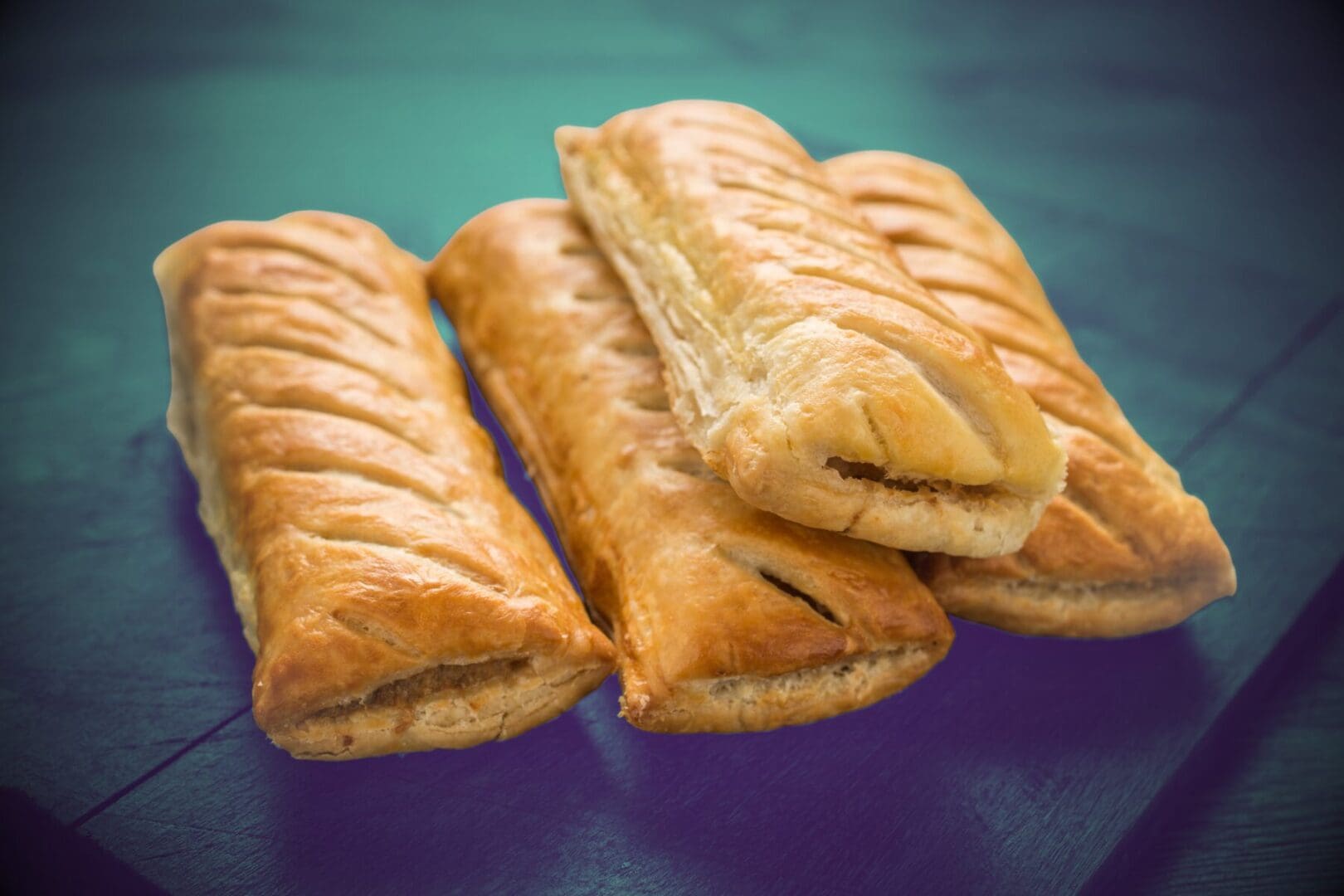
A scientist from Cambridge University discovered how Greggs could double the sales of its Vegan Sausage Roll overnight – without changing a single ingredient. No recipe tweaks. No new 3D printed meat. The secret? Protein marketing and labelling.
In a 2025 paper published in Frontiers in Sustainable Food Systems, Dr Chris Macdonald points to two psychological quirks that have been driving the public’s growing obsession with protein consumption. The “insufficiency illusion” and the “availability illusion”.
These theories set out how we underestimate plant-based food, either because we assume it’s nutritionally lacking, or because real-world options we’re given often reinforce that belief. You know, the rubbery halloumi burger, the dressing-less-salad, the watery veggie soup?
Dr Macdonald took the same sausage roll, applied protein-focused marketing, and there was a completely different public reaction.
“Greggs are one of the rare companies where the vegan range actually outperforms the meat options with regard to protein content,” Dr Macdonald explains. “The protein labels shattered the insufficiency illusion. They took the meat-free option from the minority choice to the majority choice – marking a significant change.”
Once the label on the vegan option switched from the “lesser” option to the option with clearer nutritional benefits, it flew off the shelves. Because, despite what your “just normal milk” request for a latte might try to suggest, we choose food emotionally, aspirationally and politically.
Dr Macdonald calls this disconnect between nutritional reality and public perception the “insufficiency illusion”: the widespread assumption that plant-based food is somehow lacking, even when labels say otherwise.
Walk into almost any supermarket, gym or fast-food chain in Britain right now, and the same word screams at you from every direction: protein.
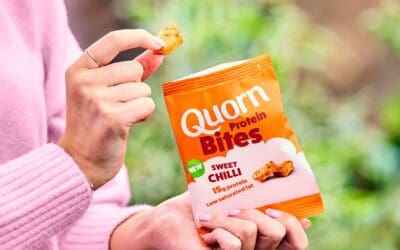
High-protein wraps, protein-packed yoghurt, protein-powered cereal. There are probably protein-rich air molecules floating around PureGym as we speak. It’s become shorthand for discipline, strength and self-improvement.
Meanwhile, the word “vegan” appears to trigger almost the opposite reaction.
“A lot of baggage comes with that word,” says Barnaby Patchett, Managing Director of One Nine Nine, a food marketing agency.
He says, “There’s absolutely a link between what we consume and how we wish to be perceived, from food to fashion. That’s why branding exists.”
Food has always been a form of social signalling and often flaunting wealth. Henry VIII flexed his wealth with enormous meat feasts. The Victorians literally had “Fat Men’s Clubs” because being overweight meant you were rich enough to not have to work. Today, status comes in the form of a $38 Erewhon protein-smoothie and people pretending to like cottage cheese.
But in the case of veganism, Patchett argues that signal has become increasingly complicated, political and polarising.
“Political polarisation and politics more generally influences people’s perceptions of food; it’s a bit like the word ‘sustainability,” Patchett adds. “Veganism has got locked up with a kind of package, unfairly.”
He describes veganism as something perceived more as an identity marker than simply a food choice.
“If you say the word vegan on X, you may as well say net zero, sustainability, left wing and soy boy all in the same sentence,” he says.
“It’s as if it comes in a package when, in reality, it’s just someone choosing not to eat animal products.”
Most of us don’t engage with food in a purely rational way. We, often subconsciously, respond emotionally to food branding, trends and aesthetics, and how what we put in our basket is a non-verbal form of self-expression.
Right now, protein’s PR team are capturing these trends and emotions felt by consumers exceptionally well by tapping into the psychology of food.
Carbs and Carbs
Here’s the uncomfortable bit. While a lot of the stigma around plant-based food is perception with no basis in reality, some of it has been genuinely reinforced by the food industry itself.
Dr Macdonald describes what he calls the “availability illusion”: the repeated experience of vegan options being nutritionally worse than the meat equivalent.
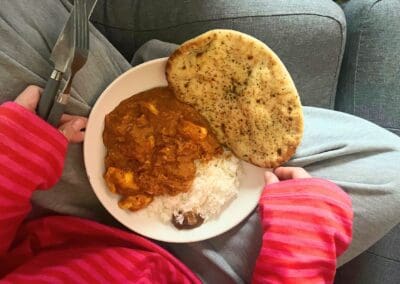
“I often see a place serve chicken curry, and the vegan option will be a potato curry,” he says, “given that the side is rice, the customer is effectively being offered “protein and carbs” or “carbs and carbs.”
Over time, these experiences build a narrative that vegan food requires compromise.
The school’s mushroom burger that tasted like cardboard. The limp cauliflower “steak”.
Bad vegan options feed the assumption that vegan food lacks nutrition. The assumption puts people off ordering it. Fewer orders mean companies invest less effort into improving the options. And round and round it goes.
Patchett says, “A lot of the protein pushing comes down to the ideals of male physique and how what’s deemed a desirable physique has evolved. We’re back to the classic ideals of a Greek god, superhero-type physique.”
Spend five minutes on TikTok and you’ll see exactly what he means.
Gym influencers drinking protein shakes the colour of wet cement. Teenagers “looksmaxxing”. Shirtless men deadlifting while quoting Marcus Aurelius. Entire personalities built around chicken breast consumption.
“We’re in the GymShark era with fitness influencers all over our social media,” Patchett says, “these are the people the public might aspire to be like.”
“There’s a rise in male body dysmorphia and that disconnect between what men think women like and what women actually want. Protein is a huge part of the bigger is better belief some men have.”
The irony is that most people are nowhere near protein deficient.
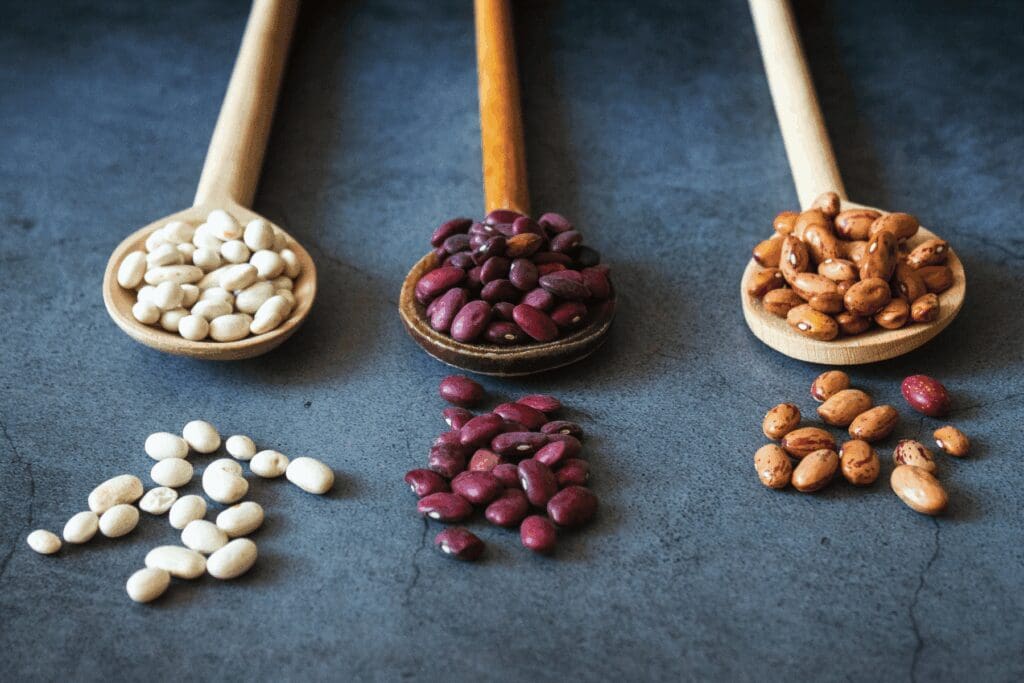
Patchett says, “Most vegans would hit their minimum acceptable protein every day anyway.”
Tijana Drndarski)
Dr Macdonald agrees that while protein is important, social media has flattened nutrition into one giant buzzword.
“A sole focus on it would be unwise,” he says, “most people have low intake of at least one micronutrient, like vitamin D, magnesium, calcium and iron.”
But why doesn’t “high in magnesium” hit the same on a billboard?
Protein is easier to market because it promises transformation. Stronger. Leaner. Trendier.
“Huel is vegan, B-corp; they’ve got really good sustainability credentials,” Patchett says, “you never hear about that. It’s not the central point of their brand; it’s convenience and function.”
That is the key shift happening across food marketing right now. Brands are moving away from morality and towards function and usefulness.
“Vegan is more of an identity marker, whereas high-protein is more of a functional claim,” Patchett says.
If the protein label is big enough, even gym-bros will happily tuck into a protein-packed Vegan Sausage Roll without the embarrassment of buying food which might suggest they’re “woke” – god forbid.
You don’t need a political opinion to buy a protein yoghurt. Maybe that’s what the Greggs experiment really exposed.
People don’t hate vegan food – instead, most of us are buying food with our emotions; we’re buying stories.
This means the future of plant-based food might not depend on ingredients at all. Just the branding.