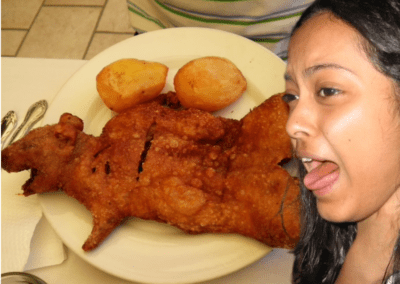
Have you ever imagined what a vulture would consider fine dining? Roadkill, an animal carcass, carrion, perhaps. Millions of years of evolution make it highly likely that you just experienced disgust.There’s a reason that description invites an immediate yuck factor; our brains are hardwired with a danger response that helps decide what feels ‘safe’ to consume.
As evolutionary psychologist Professor Diana Fleishman put it, “Some vegans would no more look at a chicken leg as food as a human leg as food.” Disgust isn’t logical – it’s visceral, deeply personal and often wildly inconsistent.
For many people, cultured meat has alarm bells ringing. The animal-derived protein has been hotly debated since 2013, when Mark Post invented the world’s first €250,000 ‘lab-grown’ burger, with many questioning its safety and morality. In the years since, the cultivated meat industry has rapidly expanded and is now legally sold for human consumption in four countries So what is cultured meat, and where does disgust actually come from?
Why disgust exists in the first place
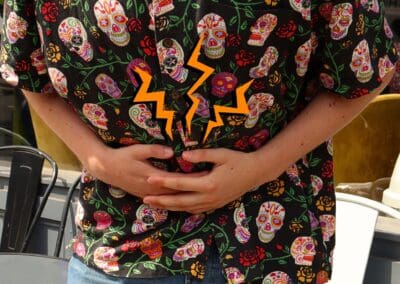
Long ago, disgust developed as a tool to keep our ancestors alive, a survival mechanism working through the senses to ward people away from potential disease or toxic substances. Yet today, that simple gut reaction has evolved into a complex mix of physical, social, and moral responses that are unique to everyone.
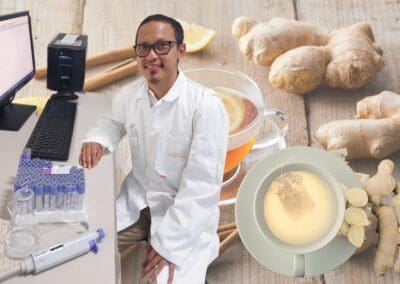
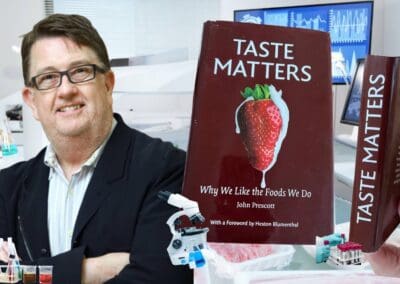
Professor Charles Spence, the head of the Crossmodal Research Laboratory at the University of Oxford, defined this subjectivity as ‘mostly cultural and psychological.’ He said, “Some people might be more neophobic, afraid of new foods, liking what they know. Others might be neophilic, liking to try new foods.”
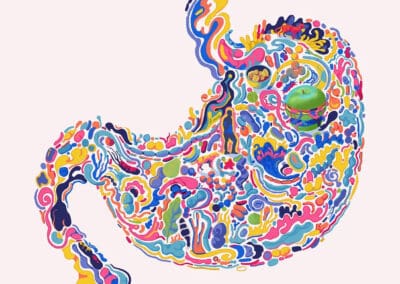
So what’s happening inside our mind to create this divide? The insula – the region of our brain that fires when something feels ‘off’, works hand-in-hand with the amygdala, the center for fear, to create disgust. Psychologists say that this reaction can fall into four types: core disgust, animal-nature disgust, interpersonal disgust, and moral disgust. All four shape our attitudes towards the food we eat, and new food technology such as cultivated meat.
Why we fear unfamiliar food
Dr Fleishman, from the University of New Mexico, explained two reasons behind our food aversions. “There’s a sensitive period of childhood where you decide what’s good to eat, which is why it’s hard to change your food perception with just one idea,” she says.
Therefore, disgust toward specific foods, once developed at the age of two or three, can last a lifetime. Dr Fleishman also said that evolution was the culprit, because people are naturally omnivorous, meaning we tend to treat certain foods as riskier than others. “One of the ways that we decide whether something is dangerous or safe,” she explained, “is by testing.”
But we’re biased. We trust the foods we’re familiar with, even when the real risks tell a different story. Historically, meat is far more likely to carry food-borne illnesses than plants, so we label it with a bigger disgust and fear factor. People, however, still perceive animal meat as ‘natural’ and subsequently safer than cultured meat. As a new technology, Dr Spence said that right now in people’s minds cultured meat is ‘unnatural, artificial and ultra-processed.’
The paradox of ‘natural’ meat
Having worked in sensory science for 15 years and being awarded a 2008 Nobel prize for nutrition, Dr Spence is currently partnering in a research project on 3D printed-food, which carries the same disgust response.
“In some of our research, we find a difference between those who are more kind of willing to think about technology and food together, and those who’d rather keep them apart,” he says.
“I think we should really be more squeamish about the real killing of animals and be less squeamish about the lab-grown ones.”
From science experiment to supermarket shelves
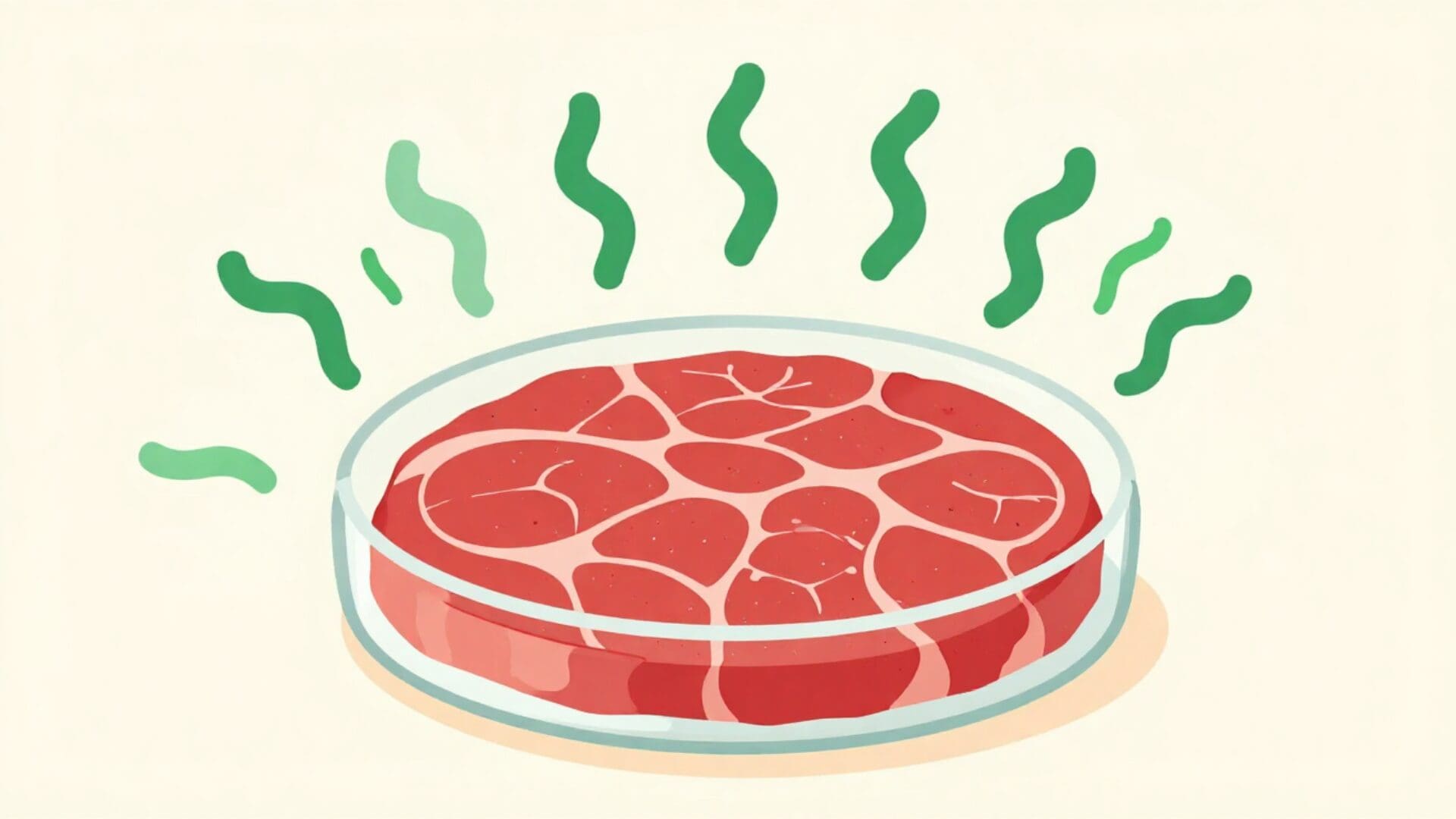
Cultured meat is created by multiplying animal cells in a controlled environment, after scientists multiply them inside a bioreactor to biome muscle tissue.
In just a decade, cultured meat has transitioned from a €250,000 novelty in 2013 to a product served in restaurants in four countries. There are currently 98 cultured meat companies worldwide, with the industry growing rapidly alongside the rise of alternative proteins. In December 2020, Singapore became the first territory to give regulatory approval to cell-based meat, paving the road for Israel, America, and Australia.
Can cultivated meat overcome the yuck factor?
Dr Fleishman tried lab-grown smoked salmon and gave up being vegan after ten years. “I went to this conference called Hereticon, and I tried some lab grown smoked salmon, and that was my last experience,” she says.
“It had a less good texture than real smoked salmon, but the flavor was very good.”
She supports the expansion of cultivated meat, mirroring arguments made by meat companies that it is unfeasible for the whole world to go plant-based. “People cannot change their diets to literally save their lives. They cannot decide to eat a totally different repertoire of foods and to enjoy different repertoire of foods,” she says.
“When I was vegan one piece of advice that I got was that you shouldn’t go from eating cows cheese, like cheese made from dairy, to eating vegan cheese back to back, because vegan cheese is always going to seem disgusting compared to the real thing.
“You get a sense of flavor in your mind, and then you’re disappointed when something is compared to that.”
The UK doesn’t currently allow cultivated meat to be sold as food, but the regulatory pathway exists through the Food Standards Agency. There was a £1.6 million investment into the Sandbox Program, designed to work with industry leaders to improve a regulatory approach.
Mosa Meat, a Netherlands cultured meat company formed in 2016 by Mark Post, was awarded a partnership. Their mission is to ‘pioneer a cleaner, kinder way to make real beef’, aiming for the first market introduction in the next two years. Like many other companies they are trying to rebrand cultivated meat.
Josef Youseff, the chef-patron of Kitchen Theory, whose work blends gastronomy with sensory science, has experience making unfamiliar food desirable. Speaking about cultivated meat he said: “There’s a big hang‑up we have in our mind about meat that’s come out of a lab. It sounds a bit dystopian, but most foods we eat now are processed.
“I liken cultured meat in a way similar to how we serve jellyfish on our menu. You know, jellyfish isn’t something that most Western consumers would consider to be food or palatable or something that they want to eat, but they’re highly sustainable.
“In fact, they’re one of the most sustainable ingredients you could consume from the sea, and so with that messaging and packaging it in the right way, flavoring is in the right way, and educating people is very important.”
Experts predict that cultivated meat could be available in UK supermarkets by 2027, with the UK Foods Standards Agency aiming to approve two proteins by then.