Bread is one of the key stapes in diets across the world. Whether it be the loafs of Europe like baguettes, ciabatta or british granary bread, African breads such as Injera, Mediterranean Pitas, or the Indian Dosa, every society has it’s own bread. Bread is so common throughout humanity, so people even argue that it’s key ingredient- wheat- is the true dominent species of the planet. Wheat cultivation takes up around 219.5 million hectares globally.
In medieval Europe, bread was served as a staple in every diet, accompanying most dishes. Not only were they used for eating, but stale bread would be used in service to eat off of. A ‘trencher’ was used basically as a plate, absorbing any juices or liquids from the dish that was eaten off of it. In times of food scarcity, a relatively common occurrence at the time, it would be eaten after the meal.
As industrialisation occurred in the 1800s, production of bread moved to factories. Here, bakers would use cheaper alternative additives in the bread such as chalk or sawdust to cut costs.
The milling process used discarded bran and wheatgerm, which helped improve the shelf life of the flour used to make the bread, however it removed some key nutrients. The US government took action following serious nutrient deficiencies in WWII, and mandated that bread be fortified with some of the nutrients lost in the milling process.
Interestingly, the historical preference of the rich and upper class was white bread, while the poor were left with wholegrain and brown bread. In the late 20th century, however, this was reversed as people cottoned on to the nutritional superiority of wholegrain bread. White bread later became associated with the nutritional ignorance of the lower classes.
Pita’s Past
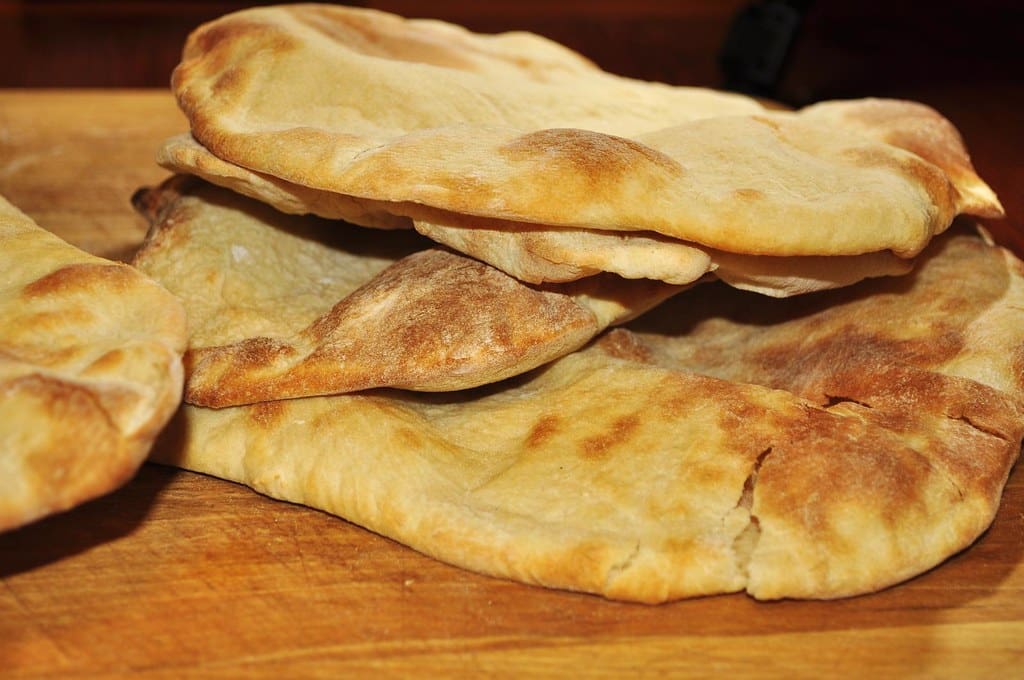
Pita bread is a medeterranean and middle eastern flatbread commonly used in gyros and to hold souvlaki in the modern world
Pita bread has a history that stretches back a very long way. The first evidence of pita bread being made is from around 14,500 years ago in what is now Jordan. Researchers from teh Unviersity of Copenhagen, University College London and University of Cambridge discovered this when inspecting the charred remains of food at a site in the Black Desert. This discovery completely rewrote bread history, showing that bread was being made at least 4000 years before the dawn of agriculture. Scholars argue that this suggests bread making may have motivated people to start farming, rather than the other way around.
This discovery was a primitive form of flatbread, over the next few thousand years the technique of making this bread was refined, adding yeast and hotter ovens to create the ‘pocket’ that Pita is known for.
Dosa’s Dating Back
The Dosa is a bread that originated in South India. Literature suggests that the Dosa was in use in the ancient Tamil country in the first century, however historians do dispute this. Popular history attributes the Dosa to the city of Udupi. At the start of the 1930s Upudi restraunts began opening up in Mumbai, and the Dosa spread.
1947, India was inedpendent, now free from british rule, and the dosa reached the north of the country, and the Madras Hotel in Dehli added it to the menu. This established the dosa as a staple in Indian cuisine.
You can read more on our history of food series here