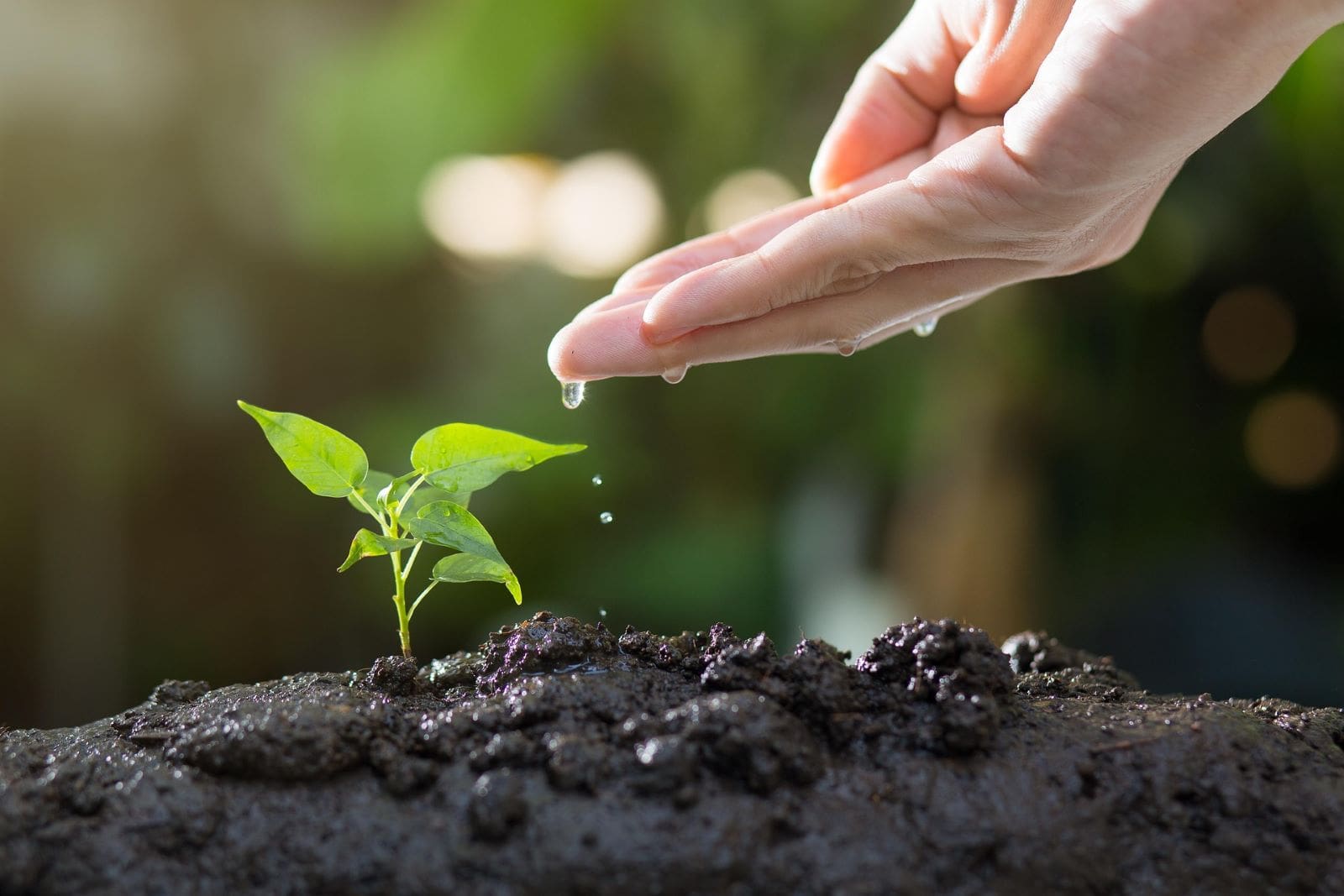
As food consumers, we spend an immense amount of time obsessing over labels. We look for “locally grown,” “organic,” or “sustainable” stamped across our vegetable packaging. But if you walk out of the supermarket aisle and onto a real British farm, you quickly learn that the true science of what we eat doesn’t start in a lab or a marketing meeting. It starts in the dirt.
Except, if you call it “dirt” in front of my dad, Stephen Tortice, a lifelong commercial farmer who manages around 7000 arable acres across Norfolk and Suffolk, he will immediately correct you.
Dirt is dead; soil is alive. A single teaspoon of healthy agricultural soil contains more microorganisms than there are people on Earth. Natural History Museum and the United Nations Environment Programme
“The average soil that you would find in your garden is not suitable for intense vegetable growing,” he explains, cutting through the romanticised myth of the backyard veggie patch. “The soil that we look after and use for our carrots, vegetables, and cereals has been cultivated and fertilised with natural and organic fertilisers to make it good quality, healthy, and well-drained.”
To understand how the ground beneath our feet shapes the food on our plates, I sat down with him for a brilliantly unvarnished look at the chemistry, physics, and daily reality of modern soil management.
The Nutrient Loop: Feeding the Soil to Feed the Plant
In food science, we talk endlessly about macronutrients like nitrogen, phosphorus, and potassium (NPK). We know humans need them, but plants need them first. If a plant is grown in depleted soil, it suffers from poor yields and becomes highly vulnerable to disease.
According to my dad, keeping those nutrient levels steady requires a level of scientific precision the average shopper never sees. “Every year, we analyse the soil to see what it needs putting back into it, so it stays healthy to be able to produce and reproduce vegetables on an annual basis,” he says.
But where do those nutrients come from? On a modern farm, it’s all about the ultimate recycling system: Anaerobic Digestion (AD) plants.
“We have digestate that we take out of our AD plant, which is a waste product,” my dad explains. “It has nitrogen and phosphate in it, which is then put back onto the ground in a liquid form. We also put what we call solid digestate – the waste product from the maize and rye that we put into the AD plant. There’s a continuous recycle of nitrogen going around our system.”
From a sustainability standpoint, this is a massive win. By using the natural byproducts of their own crops farmers are drastically lowering their reliance on purely synthetic chemical fertilizers.
Physical Geography: Why Shape and Texture Matter
Have you ever wondered why supermarket carrots are perfectly straight, while the ones you try to grow in your lawn look marvellously twisted, root-like and natural? It turns out that soil physics is just as important as soil chemistry. My dad’s farm relies on what he calls “light land.”
“The light soil is so important for growing good quality, nice-shaped vegetables, because it’s soft,” he says. “The vegetables can grow straight down into the soil, and because the soil’s well-drained, they produce a nice-looking, healthy-looking vegetable.”
On the flip side, you have “hard land” or heavy clay. “Heavy land is not really suitable for vegetables because it’s very hard to cultivate, and the vegetables find it very difficult to penetrate into,” he notes. “Heavy soils are best for cereals and wheat.”
This explains the ultimate difference between commercial agriculture and your backyard garden. In a controlled farm environment, fields are chosen specifically for their geological traits, and crops are rotated on a strict four-to-five-year basis. “You can’t just continuously grow the same crop in the same field,” my dad points out. “In a garden, people may not have enough room to do that… and then you get loads of different problems and pests build up within the soil.”
Myth-Busting: Flavor, Pests, and the “Crisis”
I tried to push him on a few trendy concepts, but a practical farmer has no time for fluff. When I asked if thriving, biodiverse soil changes the flavour profile of a vegetable (what wine experts call terroir), he shut it down instantly.
“No, there’s not a taste difference. Mostly the taste difference comes from the crop variety,” he says, though he concedes that soil affects aesthetics. “If they grow potatoes on a good virgin land that hasn’t had potatoes for 20 or 30 years, they get a nice golden skin colour.”
I also asked a classic food-science question: Does healthy soil help a plant protect itself from pests naturally, reducing the need for chemical sprays? His response? “Stupid question. No, it doesn’t protect itself. If we have an infestation of green flies, or bugs, or caterpillars, we have to do something to prevent that. We have to spray, the soil types don’t really make any difference.” (Note to self: nature is brutal, and bugs don’t care how good your soil is).
But what about the widely publicized “topsoil crisis”? If you read reports from environmental think-tanks or the UK Environment Agency’s State of the Environment report, the numbers look terrifying. According to their data, soil degradation costs the UK economy an estimated £1.2 billion to £1.5 billion every single year. Furthermore, intensive agriculture over the last century has caused UK arable soils to lose between 40% and 60% of their natural organic carbon, leaving almost 4 million hectares at risk of severe compaction.
“There are problems with erosion of light soils when the soil is exposed to high winds,” Tortice says. “We overcome this by putting a stabilising solution to stop the soil blowing away when we drill maize. And in late summer into early winter, we plant what we call ‘green crops’ – like radishes, turnips, or rye – to stabilise the soil so it doesn’t get eroded. Then we get a regeneration of nitrogen from that green crop when it’s turned back in.”
The UK Advantage: The World’s Bread Basket
When it comes to where our food is grown, British consumers should feel incredibly proud of local supply chains. The UK has over 700 distinct soil types, and our unique temperate climate offers a massive geographic advantage for specific staple foods.
“We produce very good potatoes, carrots, and onions,” my dad says, pointing out that the Southeast and East of England are particularly blessed. “Lincolnshire is what we refer to as the grain basket of the UK because it has massive fields and really good quality soil for growing cereals. In the Fens, we have some really black loamy soil which produces a lot of really top-quality lettuces, Brussels sprouts, and onions because it is full of natural nutrients.”
Combined with our famous winter rainfall, which my dad naturally captures in massive winter reservoirs to use sustainably for crop irrigation during dry summers, the UK environment is highly optimised for food security.
The Long Game
Ultimately, food science and farming share the same goal: a predictable, healthy, and resilient food supply. But while scientists look at data points on a screen, farmers have to look decades into the future.
“We definitely think long-term ahead,” my dad reflects. “We have to protect the soil, because that’s our main game. If we don’t look after the soil, the soil doesn’t look after us. If we don’t, then we won’t be farmers anymore.”
With the UK government currently pushing initiatives like the Sustainable Farming Incentive (SFI), which aims to bring 60% of England’s agricultural soils under sustainable management by 2030, the gap between laboratory science and field practice is closing fast.
Soil, the be all
Next time you pick up a bag of perfectly straight, crisp British carrots, remember that it isn’t an accident. It is the result of years of soil analysis, natural nitrogen recycling, winter water management, and a dedicated farmer making sure the ground beneath their tractor stays as near to perfect as nature allows.
As my dad puts it: “Soil impacts the food. It’s the be-all and end-all of what we produce. It’s a huge commodity.”