At some point between 6 and 7 pm, we pause, gather, unwrap, serve, and sit down to eat. Or at least, that’s the story we tell ourselves.
It’s a comforting image, plates passed around the table, conversations stretching across the evening, the day neatly punctuated by a shared meal.
But look a little closer, and that rhythm begins to unravel. As food anthropologist Dr Makta Das explains, the reality is far more complex. “We’d love to subscribe to the idea that as a society this is us,” she says, “but actually, we have all sorts of routines and unsynchronised patterns of eating.”
The Evolution of the British Dinner Time
That sense of synchronicity was once easier to maintain.
“It used to be that we all ate around 7, 7.30, 8, and that was just what we did.
“We sat down to watch these kinds of key water cooler programmes, so we had a good idea of when an evening meal should take place around the dinner table.”
Dr Das explains how the idea of a fixed national dinner time doesn’t seem to exist anymore, and we’re now seeing a lot of earlier dinner reservations for the younger generations, while the older favour later.
Why Moving Out Disrupts Our Eating Routines
This generational divide is to be expected as the biggest shift in rhythm occurs for young adults when they move away from the routines of their childhoods.
“When we are younger, we are socialised into certain patterns of eating that we think are right, what foods are healthy, what aren’t, when we should eat, when we shouldn’t,” explains Dr Das.
“But when we move away from these, like in our first few years of university, we can feel disrupted, which can be confusing and lead to some worry and negative emotions.” She says.
The Psychology of Communal Eating vs. Eating Alone
According to research from the University of Oxford, people are happier when they eat communally, with shared meals linked to stronger social bonding and improved wellbeing.
Yet the same study found that a third of weekday evening meals are eaten alone, with the average adult consuming 10 out of 21 weekly meals in isolation.
Our desire to eat together is not just rooted in behaviour but also psychology, as Dr Helen McCarthy, ‘The Appetite Doctor’, a clinical psychologist, explains how this isolation is more complex than just missing the people we eat with. It’s a psychological response which changes the way we view a meal.
“Who we are eating with influences the memory networks that are being activated as we sit down to eat. Memory networks include emotional feelings and sensations, so when you join a person for a meal, your memory networks related to them are probably activated, which will influence your experience of this meal there and then,” she explains.
This explains why if you like the person you’re dining with, your enjoyment of the food in front of you is heightened, and the same is true of the reverse. While this may seem obvious, the psychological reaction to eating with others plays a big role in our everyday routines and forging rituals.
Missing the Family Dinner Table: The Student Experience
This could explain why some university students like Emily, Kat and Hayden found the move away from home so difficult.
Kat Macmillan says, “I do miss family meals, and it was really hard at first missing out on that. Everything funny that happened in my family happened around the dinner table, and now I feel like I’m 3 years behind on inside jokes.”
Emily Cervino felt similarly and says, “I miss eating with my family even in the chaos. It was a big adjustment. Suddenly, I had all this freedom and could eat whenever, although sometimes it did feel odd having dinner at the wrong time.”
Hayden Atkins echoed these sentiments, although he joked that the main thing he missed from family meals was not having to wash up afterwards.
While leaving home can disrupt the rhythm of eating, it does not erase our (often) unconscious need for one. Instead, we look to ready meals, takeaways and meals out to do more than feed. We rely on them to organise the day and bring us all back together.
Reclaiming the Dinner Ritual with Convenience Foods
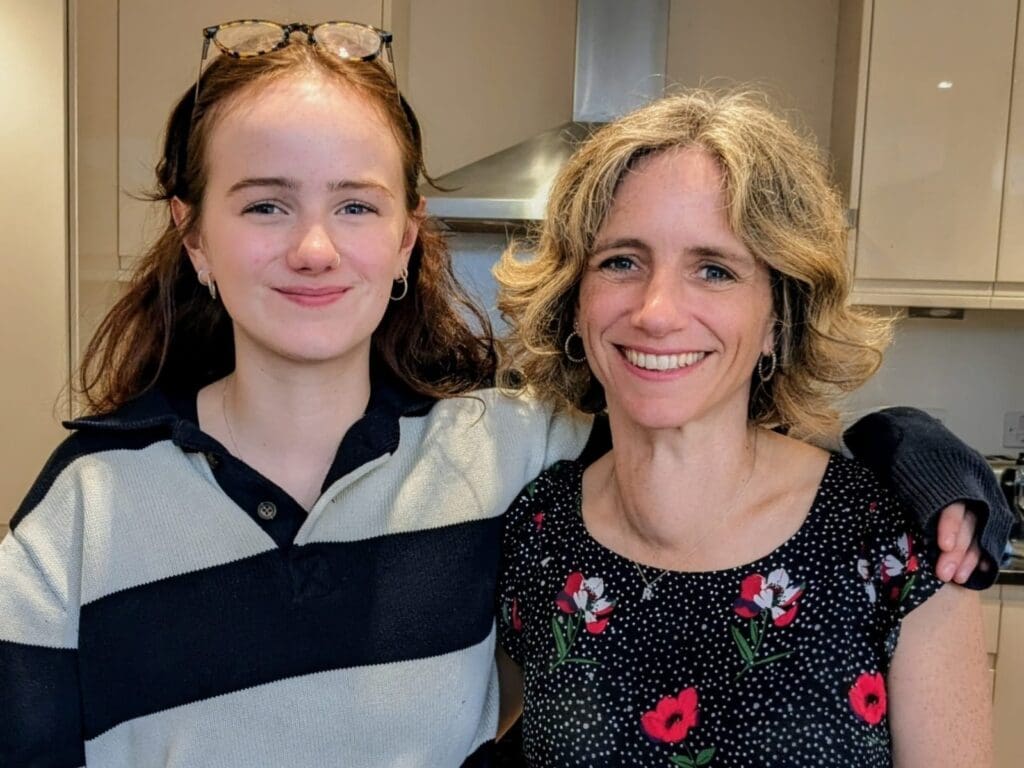
Kat’s mum, Rosie, understands this need for convenience more than most as she tries to coordinate her 4 children and her husband’s school and work schedules to all fit around the dinner table.
“In an ideal world, we would all have dinner together every night of the week, but this rarely happens, and someone is always doing something. Instead, I rely on the weekend meals to get everyone together, and usually that means ordering a takeaway or eating out, which feels like a bit of a cheat code.”
Dr Das explains how this “cheat code” is not an accident but part of a wider system built around our need for structure.
Ready meals, meal kits and takeaways do more than just provide food quickly; they offer predictability, and these systems create shared norms in new ways, according to Dr Das.
The Rise of ‘Ordered Eating’ and Food Guilt
But this reconstructed order comes with its own pressures. Without a single, shared cultural rhythm, many people still measure themselves against the idea of what eating should look like.
Dr Das explains how this has created a sense of “ordered eating” which can lead to disordered eating.
Disordered eating does not mean an eating disorder, but is rather the clinical term for a range of eating behaviours. Dr Das explains how the pressure to eat at certain times or certain meals is partly instilled from childhood but is now further encouraged by social media, as we are more aware than ever of what others are eating.
“People put a lot of judgment on themselves if they don’t eat the standard meal at the standard time or as a family, but a lot of the time, it’s just not realistic.
“It’s okay to reach for the instant noodles or the Deliveroo app,” says Dr Das.
So, when Rosie is trying to find time and space for a communal meal despite their conflicting schedules, turning to a takeaway or a restaurant to ease this is totally normal.
Her daughter, Kat, says it doesn’t matter to her where they are or what they’re having when they share a meal as long as they are together and, God forbid, her mum doesn’t make casserole.
It’s not just Rosie and Kat who rely on these methods. According to the Agriculture and Horticulture Development Board, as of 2024, more than 3 in 10 consumers have a ready meal every week. And a study by Cancer Research showed that at least 79 million ready meals and 22 million fast-food and takeaway meals are eaten weekly by adults in the UK.
How to Recreate the Ritual of a Shared Meal Solo
However, a takeaway or ready meal can’t fix an issue of separation or distance so what can we do to fabricate the feelings of a communal meal when it just isn’t feasible?
Dr McCarthy suggests syncing your meals with another person as a way of staying connected. This can be done across time zones, and while she says it’s not exactly the same, it is an option people can try.
She offers some further advice, “If this isn’t suitable for you, what you can do is to create the ritual without the company – make a small ritual for your meals, where you make a point of setting a place for yourself to eat with proper cutlery and crockery, and a glass to drink from.
“As you eat, focus on the connection you have with the people who grew or raised the food and cooked it or worked in the place it was manufactured. Give thanks to them in your mind or feel gratitude to them,” she says.
The notion of a fixed, shared mealtime is increasingly difficult to sustain. Instead, eating patterns have become more individualised and shaped by shifting routines.
What emerges is not disorder, but adaptation and new forms of structure built around convenience, flexibility and personal schedules which we should be able to enjoy without guilt. As Dr Das summarises, “it’s okay if you don’t fall into these patterns, you can be outside of the norm and still have a full and healthy life. You don’t need to force yourself into these classic patterns.”
Dr McCarthy echoes this as she says, “When it comes to eating and psychology, it’s important to remember that what works for one person may not work for another, so it’s important to be gentle on yourself and recognise if something isn’t working, let it go and consider trying something else.”
And while Britain may no longer eat in sync, the desire to eat together, and to find meaning in that time, remains, which is arguably more important than what and when we eat.