Scroll through social media at any point in the day and cortisol is there. Blamed for belly fat, poor sleep, brain fog, burnout. The message is always the same: lower it.
The reality is not.
Late nights, early alarms, caffeine to get through the day, and a brain that never quite switches off. For a lot of people, that cycle feels normal. It is also where the conversation around cortisol tends to start.
Cortisol is often described as the body’s stress hormone, but that label has started to do more harm than good. It suggests something that needs to be controlled or reduced. Something working against you.
“It’s a very useful hormone,” says Dr Nicky Keay, hormone health expert and author of Hormones, Health and Human Potential. “Cortisol will be high in the morning to help you wake up, and then it falls across the day.”
That rise and fall is not random. It is a rhythm. Cortisol peaks shortly after waking, helping you feel alert, and gradually declines towards the evening, allowing the body to wind down.
“Social media has jumped on the concept but taken it too far,” Keay adds. “They make it sound as though cortisol itself is a bad hormone, but that’s simply not true.”
What gets labelled as “high cortisol” is rarely a clinical problem. More often, it reflects something less dramatic but more familiar: inconsistent sleep, long days, and low-level stress that never quite switches off.
What cortisol actually does
Cortisol is part of how the body manages energy.
“If you go out and do intense exercise, cortisol will go up,” Keay explains. “It helps break down glycogen to give you the energy to do that.”
That response is not a flaw. It is the point.
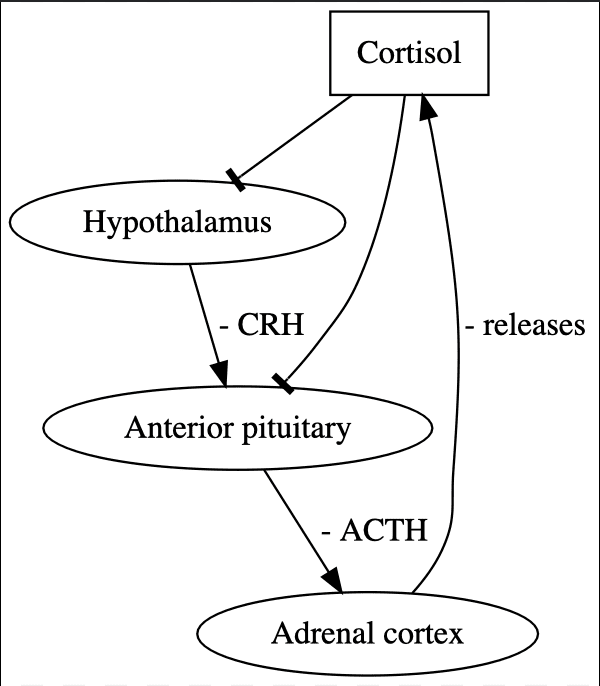
Cortisol works as part of a wider system known as the HPA axis, the link between the brain and adrenal glands that regulates how the body responds to stress and demand.
“The body responds to change,” Keay says. “If cortisol is just consistently high, that’s when it becomes less helpful.”
What matters is variation.
When cortisol rises and falls as it should, it supports energy, focus and recovery. When that pattern flattens out, the signals become less clear. The body loses track of when to be alert and when to switch off.
Energy becomes inconsistent. Sleep becomes lighter, more fragmented. What people often describe as a cortisol problem is, more often, a rhythm problem.
And rhythm is easy to lose when everything about modern life pushes in the opposite direction.
Stress and digestion
One of the first places this disruption shows up is in digestion.
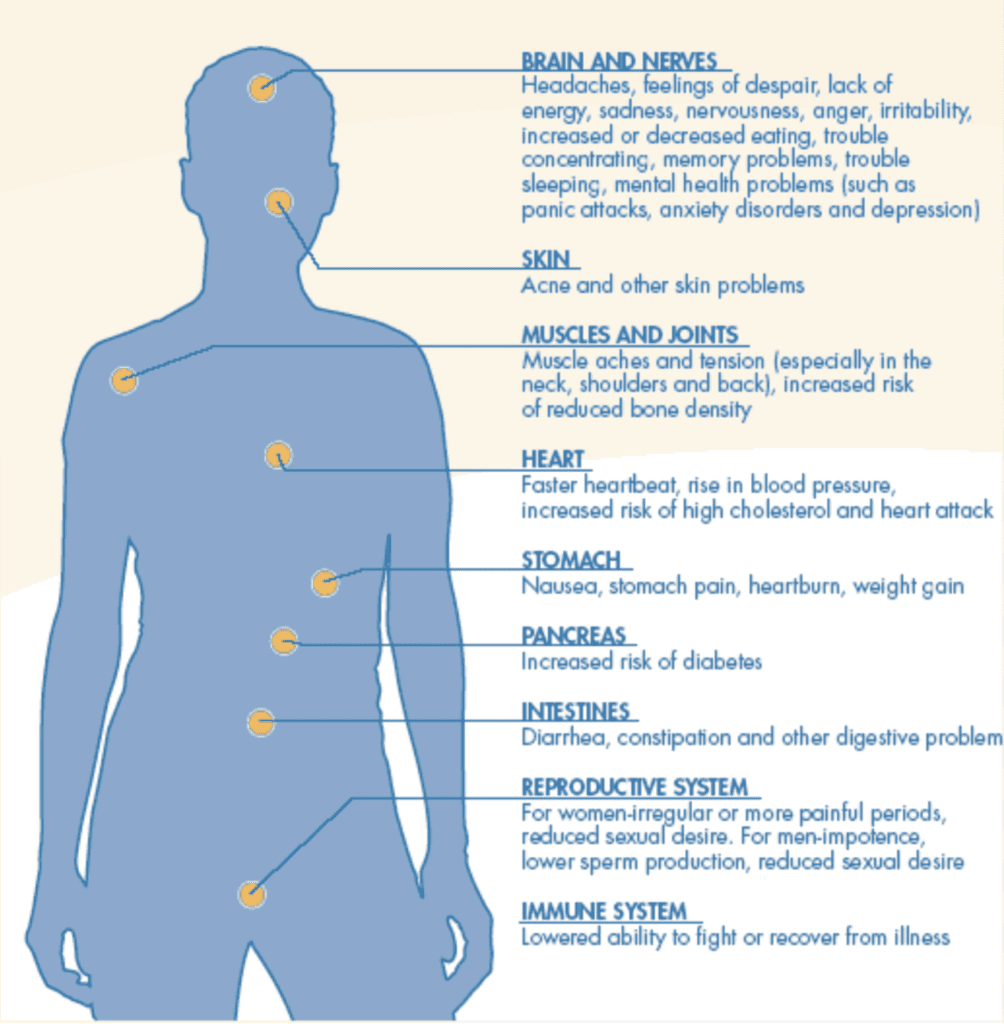
“When we are stressed, the body goes into fight or flight,” says Natalie White, a naturopathic nutritional therapist. “Blood flow is directed towards the organs needed to run and stay alert, and away from digestive and reproductive functions.”
In the short term, that response is logical. Digestion is not essential if the body thinks it needs to react quickly.
Over time, it becomes harder to ignore.
“With chronic stress, you end up with a lack of blood supply to the gastrointestinal tract, which essentially starves the area of nutrients,” White explains.
The gastrointestinal tract, or GI tract, is responsible for breaking down food and absorbing nutrients. When it is under-supported, that process becomes less efficient.
“Chronic stress can lead to low stomach acid. With low stomach acid comes compromised absorption of iron, magnesium, B12 and proteins, and you also increase the risk of bacterial overgrowth in the upper GI tract.”
That shift is not always visible, but it changes how the body uses food.
“Under stress, you aren’t just what you eat, but how you absorb it,” White says. “The reality is far more complex than that.”
It also starts to shape behaviour.
“People under stress are more likely to opt for ultra-processed foods and sugary sweets. That then damages the microbiome balance and gut lining, leading to increased intestinal permeability, which in turn drives inflammation.”
Digestion, absorption and food choice begin to move together. Not as isolated problems, but as part of the same pattern.
Why the “perfect diet” falls apart
This is where a common assumption starts to break down.
The idea that eating well should automatically lead to feeling well does not hold up under pressure.
“I see this all the time,” White says. “People think if they follow a perfect diet, they should feel well. But lifestyle factors like stress and sleep interfere with that expectation.”
What works in theory does not always translate into real life.
“Some people can change everything overnight, others take baby steps,” she explains. “You have to consider someone’s capacity. A full-time working single mum in her forties will have totally different capacity compared to someone in their early thirties.”
Even with the right intentions, context matters.
“Sometimes it’s not about a perfect diet,” White says. “It’s about being better than yesterday.”
No single response to stress
If White’s work shows how stress disrupts the system, Sonal Jenkins, a nutritionist and health coach, focuses on how differently people respond to it.
“Stress can affect appetite in very different ways,” Jenkins says. “For some people, it suppresses hunger, while for others, it increases it.”
That variation is not random.
“A lot of this comes down to individual resilience, stress thresholds, and how someone’s nervous system responds under pressure. Physiologically, these changes are driven by hormones and neurochemicals, particularly cortisol and adrenaline.”
For some, stress shuts things down.
“Some individuals shift into a more ‘fight or flight’ state, where digestion is suppressed and appetite decreases.”
For others, it pulls in the opposite direction.
“Others may move towards a more ‘comfort-seeking’ response, where food becomes a way to self-soothe.”
The biology might be shared, but the outcome is not.
“In many cases, I see clients gravitate towards quick-energy foods, typically refined carbohydrates, including sugary foods, because they provide a rapid release of glucose and a temporary sense of comfort or reward.”
Habits tend to shift alongside that.
“Stimulants and coping mechanisms also tend to increase, so a higher intake of caffeine and alcohol is quite common.”
What looks like poor discipline from the outside often has a physiological basis.
Small habits, bigger impact
Jenkins’ focus is not on rigid plans, but on how everyday habits shape how the body copes.
“They have a significant impact, often more than people realise,” she says.
Caffeine is one example.
“When consumed in excess or too late in the day, it can elevate cortisol levels, disrupt sleep, and increase feelings of anxiety or jitteriness. Poor sleep then feeds back into the stress cycle.”
Meal timing is another.
“Skipping meals or going long periods without eating can lead to drops in blood sugar, which may trigger irritability, low energy and increased cravings.”
What helps is not extreme intervention, but consistency.
“Eating regularly and including a balance of protein, fats and carbohydrates helps maintain stable blood sugar levels, which in turn supports more consistent energy, mood and focus.”
Even small adjustments matter.
“Starting the day with a balanced meal or reducing caffeine later in the afternoon can make a noticeable difference in how well someone copes with stress day to day.”
The “wired but tired” feeling
For some, this imbalance becomes difficult to ignore.
“Wired but tired is essentially cortisol and HPA-axis dysregulation,” White explains. “The adrenals need to be nourished, routine needs to be established, especially around bedtime, and early morning sun exposure can help.”
It is a state where the body feels switched on, but not restored.
“Depending on how long someone has been experiencing this, it could have been years,” she says. “Their cortisol rhythm is out of sync, their stomach acidity is on the floor, and they are not absorbing nutrients properly.”
Recovery becomes slower. Less predictable.
“They will need a lot more than someone who has just had a stressful few years.”
Cortisol is often framed as something to control. Something to reduce. Something to fix.
What these perspectives suggest is something quieter, but more useful.
“It’s not about removing cortisol,” Keay says. “It’s about allowing it to follow its natural rhythm.”
That rhythm is shaped by more than one factor. Sleep, routine, stress, diet, all of it feeds in.
There is no single fix. No clean solution.
What looks like a hormone problem is often a reflection of something wider: how people are living, how they are recovering, and how much demand they are placing on their system without giving it space to reset.
And for most people, that does not show up in a blood test or a diagnosis.
It shows up at the end of a long day, when you are exhausted but still awake, not quite able to switch off, already thinking about tomorrow.
That is not a cortisol problem.
It is a rhythm that has quietly lost its shape.
Not broken, not dysfunctional, just pushed out of sync by the pace of how many people now live.