Watch the Forkful team try out the ‘future’ of eating….
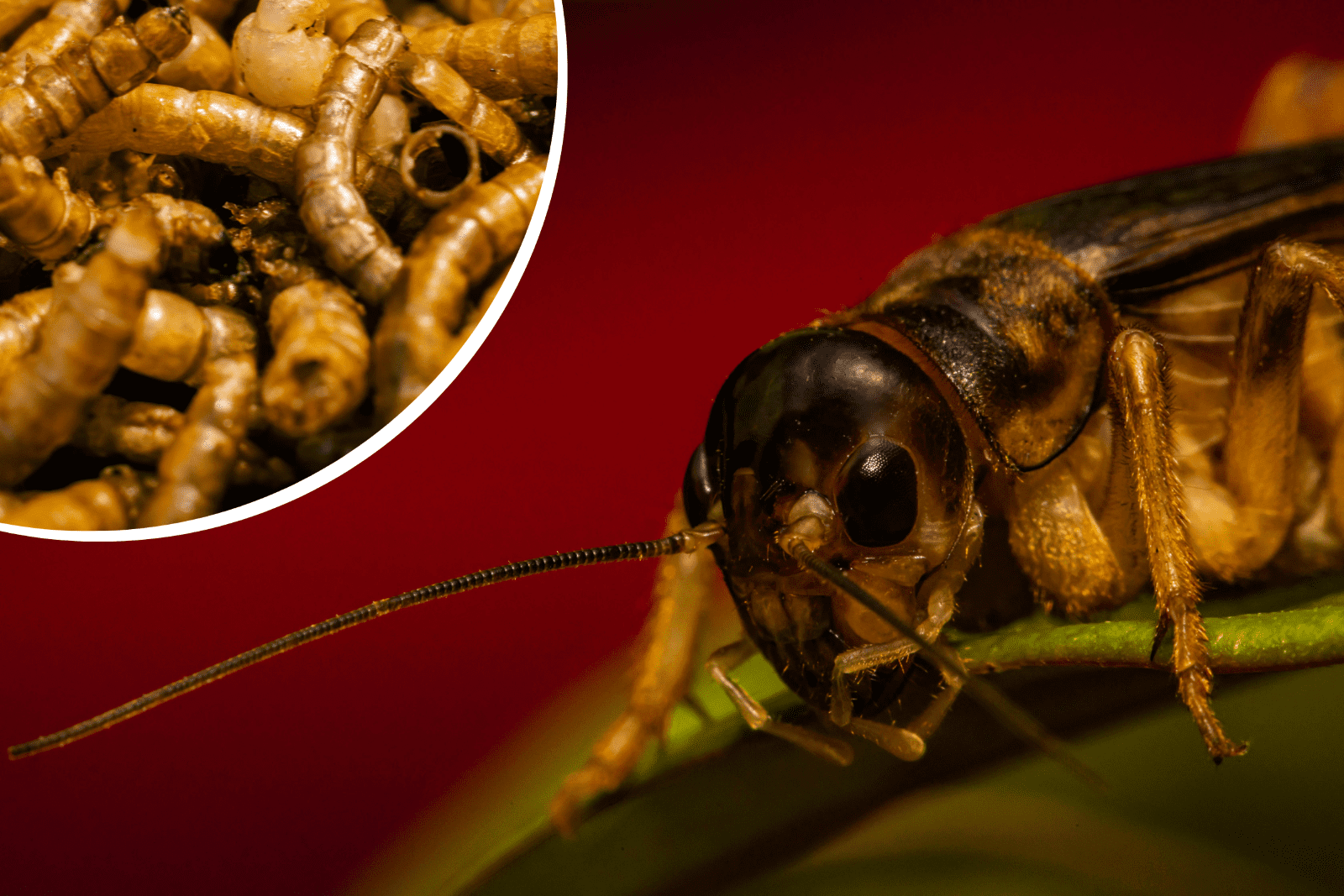
At Geoffrey Knott’s farm in north Norfolk, the food of the future is being grown. Although this isn’t an artificially produced meat or an exotic modified crop. It’s instead something you’d be more likely to see in the wild than on your plate: crickets.
“We have an on-site processing facility where we convert them into an ingredient,” Knott explains from his kitchen, where he has a pantry full of insect-based snacks and supplements. “We then sell to other businesses that incorporate it into healthy snacks, brownies, cakes, and functional blends like protein powders. They’re really high in quality protein and also better for the environment: tick, tick.”
Since launching Edibl alongside business partner Daniel Levan-Harris last summer, it has become the UK’s leading producer of edible crickets – tapping into a rapidly growing UK market for the alternative protein source.

The 35-year-old is also a researcher, co-founder of HOP cricket protein products, and the chair of the UK’s Edible Insect Association (UKEIA).
“The vision of UKEIA,” he adds, “is a future where insects are recognised as an ingredient in balanced nutritious diets and where insect farming is widespread.”
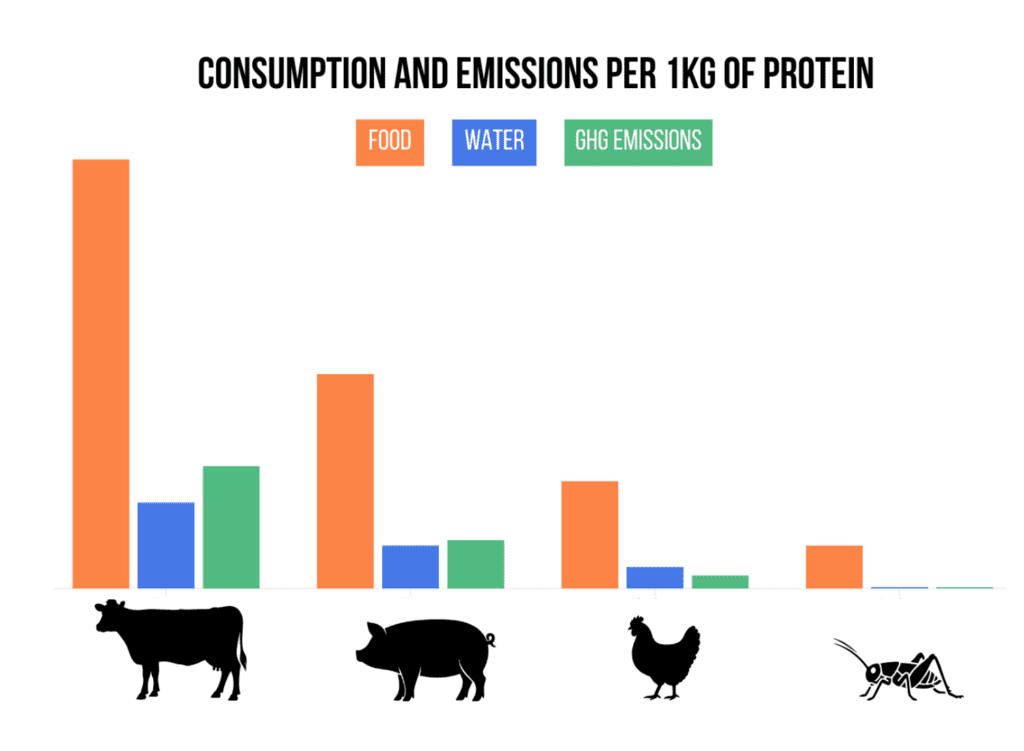
Due to their low greenhouse gas emissions and need for very little space, food, or water, edible insects are being touted by scientists as a sustainable way to meet the need for a 70% increase in global food production by 2050. The UK is home to dozens of these producers and outlets – more than anywhere else in Europe – and everything from mealworms, to locusts and worms are being sold.
However, to the UK’s picky public, the foods are generally seen as either a novelty, or a trial to torment B-list celebs on ITV’s I’m a Celebrity. A survey from Edge Hill University indicated only 13% of adults are willing to give them a try. But with insect consumption being an established part of food culture in parts of East Asia and South American countries like Mexico, what is it that makes us Brits so reluctant?
Simone Mancini is an associate professor in veterinary sciences at the University of Pisa. In 2021 he co-authored a study which found suffering from food neophobia (the fear of trying something new) was the best predictor of someone being less likely to try insects. This is then exasperated by perceptions of insects in Europe. “They are related to risks, to dirt, and are something we try to kill and avoid,” he says.
The Italian grew up on a farm, and adds that because many of us are detached from the food production process, it is harder to create a positive impression of new foods. “I always saw what it meant to rear and eat an animal,” he explains, “That’s something we now don’t have in our culture because you go to the market and purchase a piece of meat already packed. So starting to include a new product from animal origin is very hard, especially when it comes from animals we fear.”
Historically, these fears stem from climate and agricultural changes. Mancini says that for people living closer to the equator, “insects are bigger and are easier to find through the year”. However, as humans migrated towards colder climates where insects are smaller and a threat to farming, we had “less of a link between the idea of insects and food”. This divergence has then parted further through the use of pesticides.
“If you go into a field in the summer and pick some cherries to eat, you’re going to be eating some insects. Because there are a lot inside if you don’t treat the plant with pesticide. Maybe 100 years ago, it was not much of a problem to eat cherries like that and also eat some larvae, but now we have cherries in the market that are all perfect, so the way we face food has been standardised.”
At the same time, bringing food into a culture is a gradual process, which means we could still see a gradual European shift in the direction of the 2000 insect species currently consumed by 2 billion people worldwide. When explaining this to his students, Mancini talks of Italy’s pride for its tomatoes and how the first plant arrived from America only a few hundred years ago. “They were not part of our culture, but now they are,” he says, “Maybe in 150 years we will say Italy is very proud of our crickets.”
So neophobia and Europe’s changing perception of insects have left many reluctant to hop on to the revolution, but for those in the sector like Knott, the so-called “yuck factor” is something they are trying to break through. “Part of tackling it is awareness, education, and dispelling some of the myths out there,” he says. “ Crickets are actually very safe to consume. One of the reasons we grow in the UK is because of the high food standards. And because it’s so new, we’re actually held to an even higher bar than the beef, chicken, and pork you find on your supermarket shelves.”
He admits that when, as PhD student in 2018, his friend pitched the idea of making cricket protein bars, he had thought he was “mad”. But the prospect of producing nutritious food in an ethical and sustainable way was enough to convince him. In 2023-24, HOP sold more than 10,000 products.
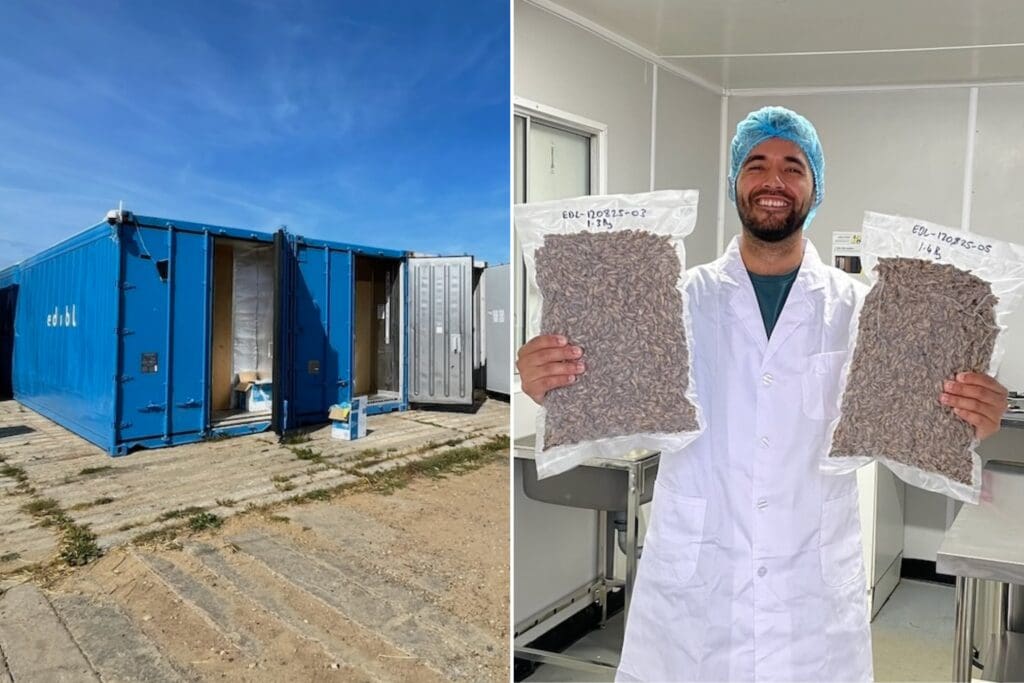
The house crickets used are now grown in their millions over a period of six to eight weeks in Edibl’s modified, reused shipping containers, which are designed to mimic the humid and high temperature conditions of their natural habitat.
The final product can contain up to 70% protein, in comparison to the up to 40% content in beef. Alongside iron, fibre, all nine amino acids, and a range of other macronutrients, the nutritional value is something businesses are using to market to reluctant customers. For consumers, Knott says, the factors with the most influence are “nutrition, flavour, and taste”.
“The sustainability benefit might be on the back of a package, but I don’t think it’ll be on the front because it’s not a core reason why you would go into a supermarket and buy that food ingredient,” he says.
Knott is also working on an upcoming scheme which will see offerings such as cricket con carne with jacket potatoes rolled out at London university canteens. Putting insects into staple foods has also been shown to be an effective way of minimising the role of disgust and showing that products containing them don’t taste that different. “That is a win in my eyes because it shouldn’t be a big deal. And when it’s not a big deal, I think we’ve won in normalising it,” Knott says, adding they are moving away from the foods being seen as novel and “a gimmick people only try once”.
Tiziana Di Costanzo set up Horizon Insects – an insect farm in Ealing – after her son began doing it as part of a Duke of Edinburgh project in 2015. The family built a 30 square metre shed in their garden and filled shelves up to the ceiling with different species. When post-Brexit regulatory changes rendered the business no longer financially viable, they continued doing tasting sessions and cooking workshops with produce shipped from abroad.
“ We’ve also been doing some team building in offices. We did catering for the Amazon Prime series premiere of Fallout – they’d been queueing for half an hour so maybe that was why everybody tried the food,” she laughs. “We’ve also done scouts conventions, and children are absolutely up for trying it.”
Another study conducted by Mancini in 2019 found young men and university students were more willing to try insects than other demographics. What psychology can this be put down to? “Normally men are more prone to do something crazy,” he says, “And if you study, you are generally more open than people that don’t look outside at the wider world.”
Even down to studies about urbanisation, our tolerance of insects has been found to improve when we are more exposed to them. Di Constanzo believes giving people this exposure helps break the stigma, though that can also depend on individual psychology.
“Some people are instinctively curious eaters, some people are fussy,” she reasons. “Personally, I think I fall into the first category.”
Now retired, she previously worked as a business analyst in the aviation industry, a job which took her all over the world and opened her eyes to new and different cuisines.
Her first time trying insects was at a bar with colleagues in Thailand. “They were serving Thai beer and fried insects so that was it,” she says matter-of-factly. “ They did taste a bit oily but they were spicy and crunchy too.”
Di Contanzo’s tip for anyone wanting to try out insects with the same open mind? “I would say just try one insect once,” she suggests. “And then you’ll realise there’s really nothing to be afraid of.”
For more about sustainable food, read this about the importance of soil.