Soldiers and gym goers eat for the same reason until food stops feeling rewarding
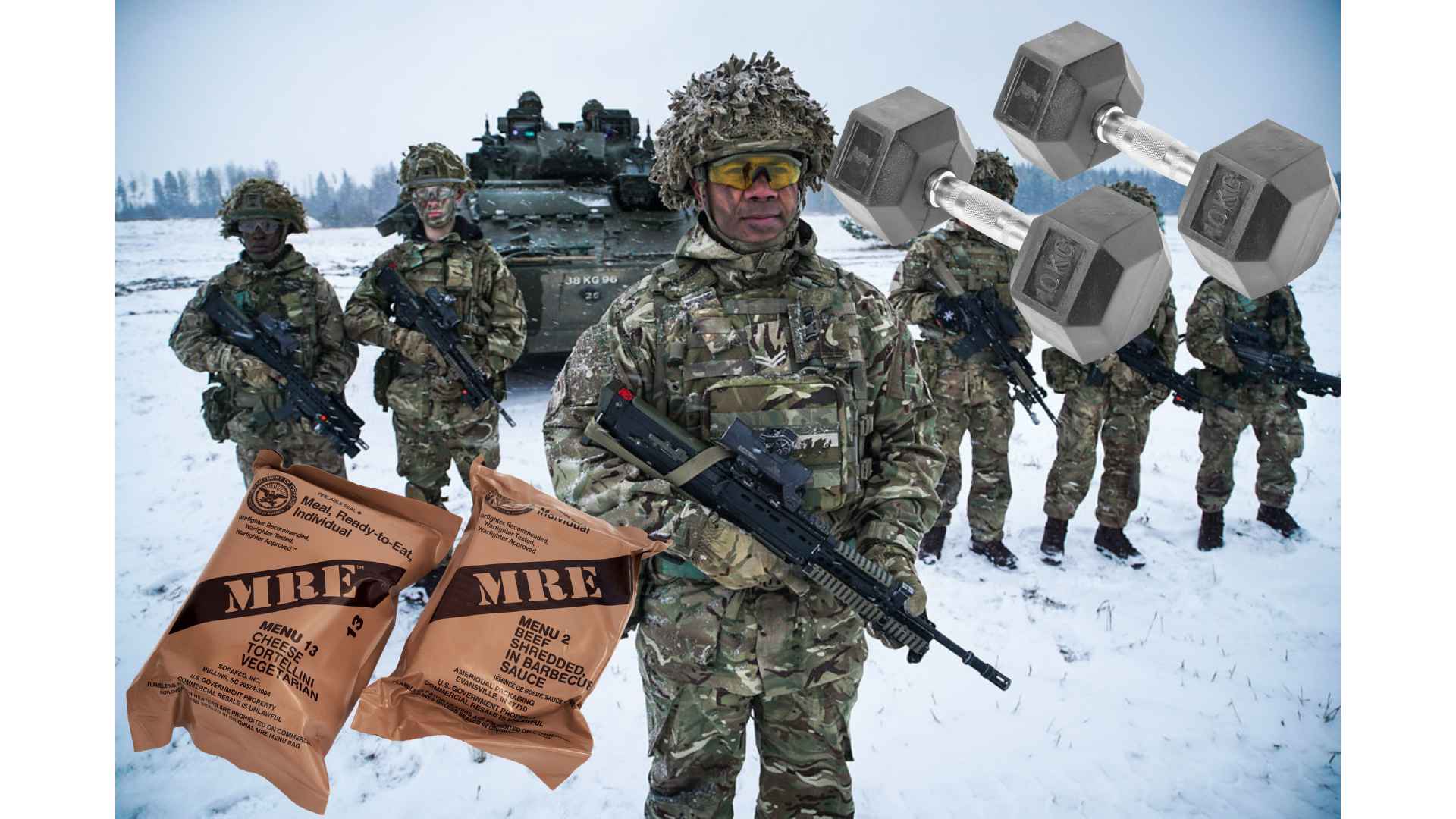
At 3am, a soldier eats cold food from a foil pouch before heading back out on patrol. Hours later, a gym goer stands in their kitchen forcing down another box of chicken and rice before training. In both cases, eating is not about enjoyment. It is functional. Food is fuel, consumed under stress, pressure and physical demand.
For gym goers, that fuel is carefully controlled. Meals are weighed, calories counted and protein prioritised. Chicken, rice, oats and eggs appear on repeat, not out of necessity, but because consistency promises results. Progress is measured, macros are tracked and choice is always there, even if it is deliberately limited.
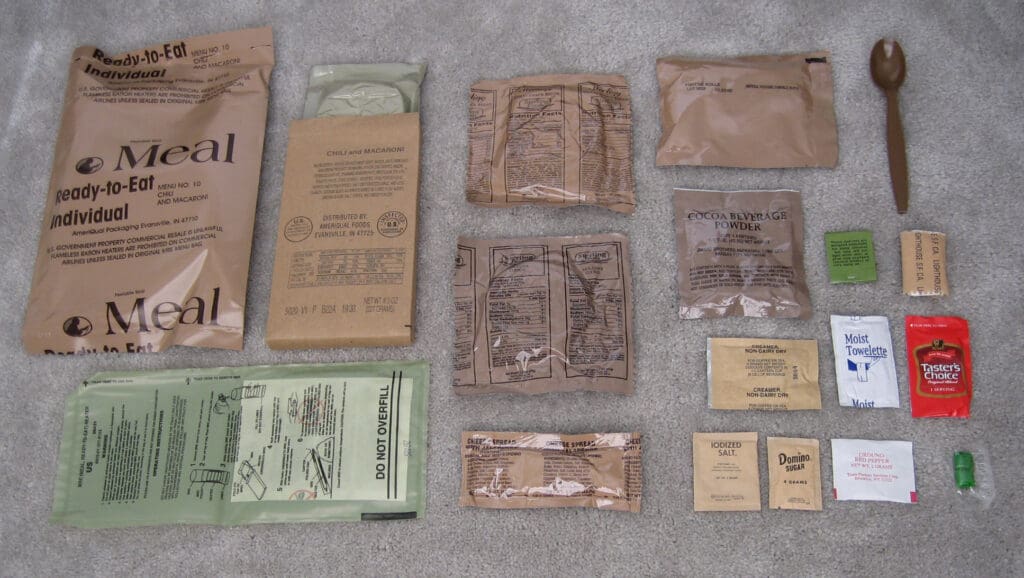
For soldiers, the principle is the same, but the conditions could not be more different. Time is scarce, choice is minimal and cooking is often impossible. You cannot weigh out rice or grill fresh chicken while operating under fire. Those on the front line need to be fuelled quickly and reliably, which is where ration packs come in.
On paper, both groups eat with purpose. In reality, only one of them gets to choose how.
Inside the ration pack
A British military ration pack is not simply enough food in a box to last a day. It is a meticulously constructed, nutritionally balanced system designed to keep soldiers functioning when eating is the last thing on their mind.
Bill Cooper helped design British military ration packs for frontline troops and says the scale of energy provision alone sets them apart from everyday eating.
“The average person is advised around 2,000 calories a day,” he explains. “Ration packs have a minimum of 4,000 calories, with a prescribed nutritional breakdown. Around 50 percent comes from carbohydrates, about 32 percent from protein and 18 percent from fat.”
Those numbers are not about aesthetics. They are about output. Carbohydrates provide immediate energy, protein preserves muscle and supports recovery, and fat supplies sustained fuel when movement is constant and rest is limited.
Behind those figures is years of research. Cooper describes teams of nutritionists calculating what the body needs when it is cold, exhausted and under constant physical strain.
“The amount of research that’s gone into what they need, what fuels them correctly, is ridiculous,” he says. “They’ve got a team of around five or six nutritionists, people with doctorates in nutrition.”
At times, that research extended beyond laboratories. Cooper recalls bone density being measured on the frontline to understand how prolonged operational stress affected recovery and injury risk.
The logic is simple. When food intake drops, performance follows.
“If you’re well nourished when you go to hospital, your chances of recovery are doubled compared to someone who hasn’t eaten very well,” Cooper says. “The same applies to soldiers. If you can keep them well nourished, then they heal twice as fast, particularly with bone breakages.”
In this context, ration packs are not just meals. They are infrastructure. As essential as boots or body armour.
But even perfectly designed food systems only work if people actually eat them.
When eating becomes the hard part
When most people imagine eating in a military environment, they think about time pressure. Grabbing food quickly before being sent back out. What is often overlooked is what stress does to appetite itself.
Priya Tew, specialist dietitian at Dietitian UK and author of The DASH Diet and The Complete Low FODMAP Diet Plan, explains that sustained stress fundamentally changes how the body behaves around food.
“When you are under sustained stress, your body operates in survival mode, governed by the sympathetic nervous system, the fight or flight response,” she says.
In that state, digestion is deprioritised.
“Physiologically, blood flow is diverted away from the digestive tract toward your limbs and heart,” Tew explains. “This can lead to slowed gastric emptying or functional dyspepsia, that heavy, knotted feeling in your stomach.”
Stress affects not just how much people eat, but how effectively food is absorbed.
“Under stress, you aren’t just what you eat, but how you absorb it,” she says. “Chronic stress can actually compromise your gut barrier and lead to systemic inflammation.”
This matters in high-demand environments, where energy needs are elevated but appetite is often suppressed. It also explains why simply providing enough calories does not guarantee they will be consumed.
Menu fatigue: when repetition kills intake
This is where menu fatigue enters the picture.
Menu fatigue is the gradual loss of appetite caused by repeated exposure to the same meals over long periods of time. Cooper describes it as “the biggest single factor as to why people don’t eat under these conditions,” and it is one of the hardest challenges faced by military nutrition planners.
A 2014 British Journal of Nutrition study tracking Royal Marines during a six-month deployment to Afghanistan found that soldiers lost an average of four to five percent of their body mass midway through the tour. This was not because rations lacked calories. Energy intake was consistently lower than energy expenditure, particularly at forward operating bases.
Environmental stress, heat, exhaustion and operational pressure all contributed. But repetition played a significant role. When food stops feeling rewarding, people eat less, even when they know they should eat more.
“If you had the same thing every day for months at a time, you actually stop eating because you’re so fed up with it that you can’t face another beef and potato hotpot,” Cooper says.
Earlier ration systems offered limited variety, sometimes as few as eight menu options. In reality, supply chain issues often reduced that number further. The solution was not to change nutritional content, but to increase choice.
“When we took over the Ministry of Defence contract, we increased the number of menus from eight to twenty,” Cooper explains. “Whatever happened in the logistics chain, there was always choice so nobody could ever get bored.”
The aim was simple: protect appetite to protect intake.
Lived experience on the ground
Zac Chiswell, a Royal Navy weapons engineer, has experienced ration packs during extended periods in the field.
“There’s only like five or six different packs you can get,” he says. “So when you’re there for a week, you end up having the same stuff more than once.”
While outright refusal to eat is uncommon, reduced intake is not.
“I’ve heard people not eating as much as they should because they’ve gotten a bad ration pack and it’s just not what they like,” Chiswell says.
Those small deficits add up. Soldiers can burn thousands of calories daily through load carriage, movement, sleep deprivation and temperature regulation. When intake repeatedly falls short, weight loss becomes inevitable.
What makes this particularly dangerous is that performance does not always decline immediately. Fitness is often maintained in the short term, masking the energy imbalance underneath. Over time, the effects emerge through fatigue, slower recovery and increased injury risk.
That is why ration packs are deliberately over-provisioned.
“We provide more than enough so that if they don’t end up using it all, it’s not critical,” Cooper says.
The gym parallel: chosen repetition versus enforced monotony
This is where the comparison with gym culture becomes revealing.
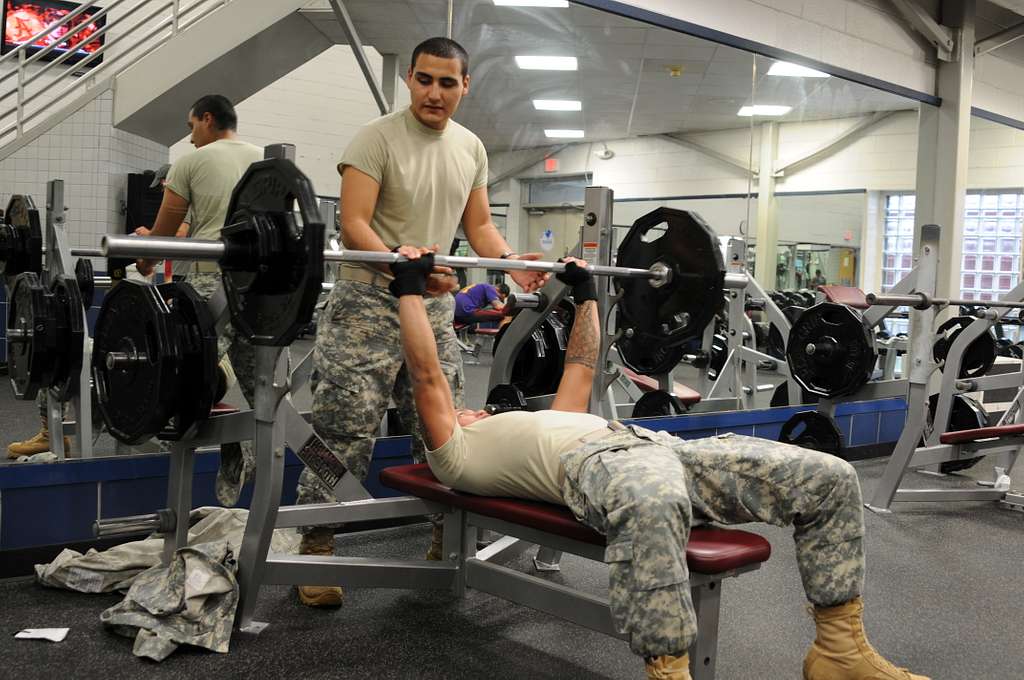
Many gym goers intentionally eat the same meals every day to simplify calorie control and support muscle growth. Routine reduces decision-making and creates structure. But crucially, that repetition is chosen.
Soldiers do not have that freedom.
For Chiswell, the contrast is clear.
“When I’m training for the gym, I eat a lot more proper meat and vegetables because you can cook it properly,” he says. “Being on ration packs is basically like living on microwave meals.”
The difference is not nutritional awareness. It is control.
Gym goers choose repetition as a tool. Soldiers endure it as a constraint.
Even in civilian life, repetition can fail when stress increases. Tew explains that rigid food rules often collapse under pressure.
“Traditional performance eating often relies on complex macro counting and rigid meal timing,” she says. “When you add high cognitive load and physical fatigue, your executive function is the first thing to go.”
“Rigid rules are brittle. They tend to snap under pressure.”
Why this matters beyond the military
Menu fatigue is not a military problem. It is a human one.
Any environment where stress is high, choice is limited and energy demands are elevated creates the same risk. Whether that is a deployment, a shift worker on nights or a gym goer deep into a cut, the biology does not change.
High stress reduces appetite. Repetition dulls reward. Intake drops quietly.
The lesson from military nutrition is not about eating perfectly. It is about protecting appetite.
As Cooper puts it, “I don’t just supply food, I deliver morale.”
In the military, that performance can be the difference between success and failure. In the gym, it might be the difference between progress and stagnation.
Different environments. Different stakes.
The same relationship with fuel.