Lunch breaks once represented a pause in the day. Now, meals are increasingly eaten between emails, during meetings, or whilst scrolling through social media.
Food has become something squeezed around productivity and distraction rather than properly experienced.
Modern eating habits are no longer shaped solely by hunger, but by convenience, environment and constant accessibility.
According to health psychologist Jane Ogden, the rise of remote working has fundamentally altered the way many people structure their eating habits.
“Food is very much more accessible,” she says. “There’s more food noise, more triggers, because the fridge is there and the food is there.”
As working from home becomes more common, traditional mealtimes are increasingly being replaced by constant grazing throughout the day. Rather than sitting down for structured meals, many people now snack whilst working, replying to emails or moving between tasks.
But this shift is not only changing how often we eat. It is also changing how consciously we experience food itself.
“If you eat on the go, or if you eat at your desk or if you’re snacking, then it doesn’t actually fill you up in the same way,” Ogden explains. “Your body doesn’t actually remember what food you’ve had.”
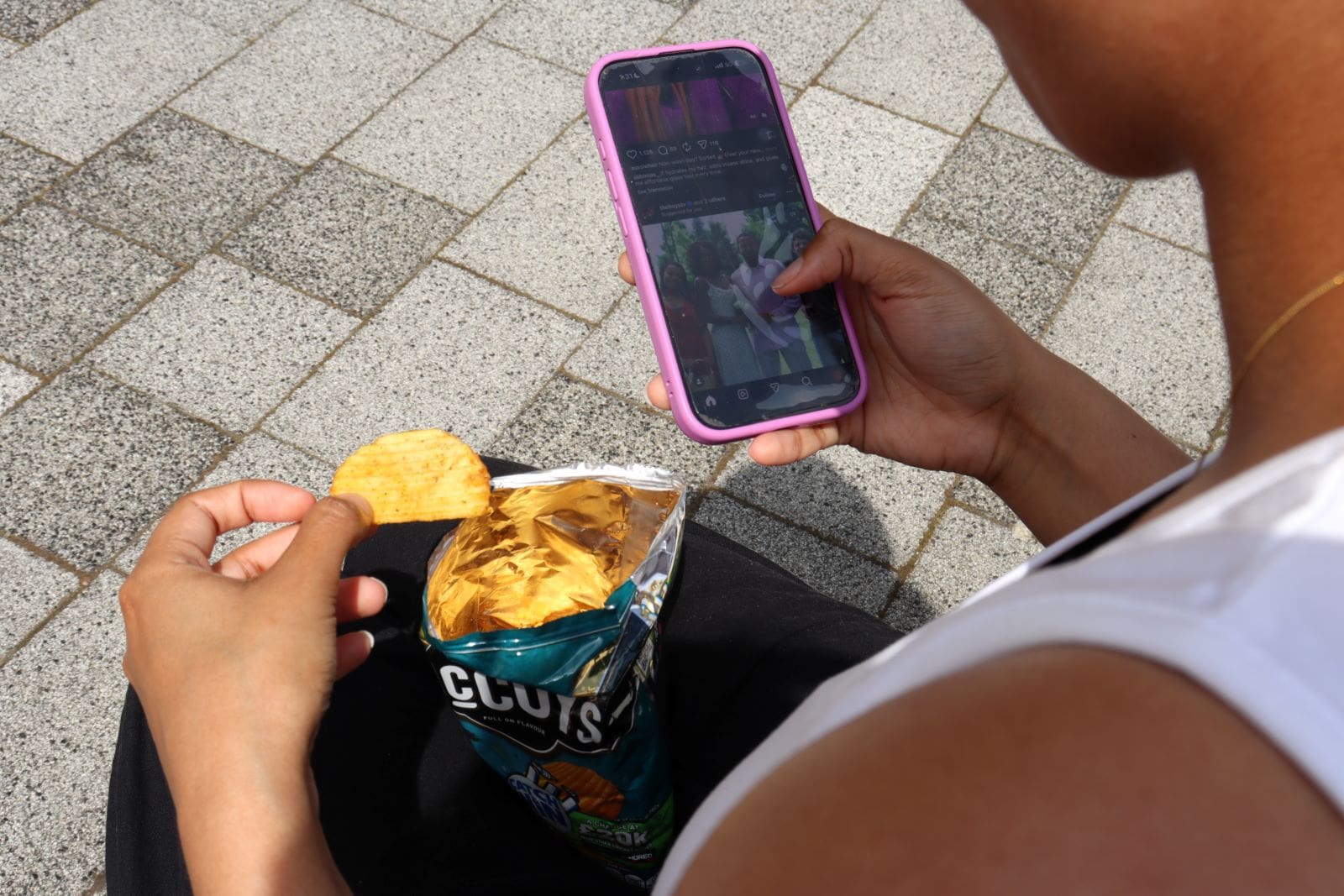
Research surrounding distracted eating has suggested that multitasking during meals can reduce awareness of fullness and increase overeating. Yet in modern life, distraction has become difficult to avoid. Screens, notifications and constant multitasking now shape much of the way people consume food.
“We’re not concentrating on your phones but we’re not concentrating on what we’re eating,” Ogden says. “We’re not concentrating on our relationships or nature, we’re doing everything all at once.”
This lack of attention has contributed to what psychologists often describe as ‘mindless eating’, where food is consumed automatically rather than intentionally. Whilst people may not always realise it in the moment, Ogden believes this behaviour often builds into feelings of guilt or frustration over time.
“There is an awareness about it,” she says, “but not necessarily at the time.”
The pressures of modern work culture also play a role. According to Ogden, office environments increasingly reward visible busyness, encouraging workers to eat quickly at their desks rather than properly stepping away for breaks.
“People want to be seen to be busy,” she says. “Breaks used to be seen as part of wellbeing at work and work-life balance. They’re now seen as an indication you’re not working hard enough.”
At the same time as this, emotional eating has become deeply embedded within everyday culture. Ogden argues that many people learn from childhood to associate food with comfort, reward and emotional regulation.
“As children we’re told that food is a treat, food is a comfort,” she explains. “We learn that food is a good way to manage our emotions.”
Interestingly, she points out that stress itself does not biologically encourage eating. “Biologically when we are having stress hormones then we wouldn’t eat”, she says, referring to the body’s natural fight-or-flight response. Instead, emotional eating is often shaped more by learnt behaviours and cultural habits than biology alone.
The environment also plays a significant role in influencing modern eating behaviours. Meal deals, packaging, advertising and convenience culture constantly encourage people towards certain choices, often without conscious thought.
“The environment’s not our friend,” Ogden says. “It’s set up as a battleground really.”
However, despite these pressures, she believes eating habits are not fixed. Whilst biology and environment influence behaviour, people still have the ability to reshape their relationship with food over time.
“We’re not victims of the world we live in nor are we victims of our biology,” she says. We still have some kind of agency to make changes so we can look after ourselves better.”