Circadian rhythms are essential to our routines. These rhythms dictate when we wake up, use the loo, go to sleep and, importantly, when we eat.
Andrew McHill is an Associate Professor and the Director of the Sleep, Chronobiology and Health lab at Oregon Health and Science University and explains this natural cycle: “The internal biological clock promotes certain behaviours across different times of day. One of these behaviours is when we are the hungriest and this peaks around 8pm.
“We know this by putting people in studies where we watch them for weeks at a time. They get put on non 24 hour days and asked how hungry they are. Even though they don’t know the time, it always peaks around 8pm, even if they’re sleep deprived.”
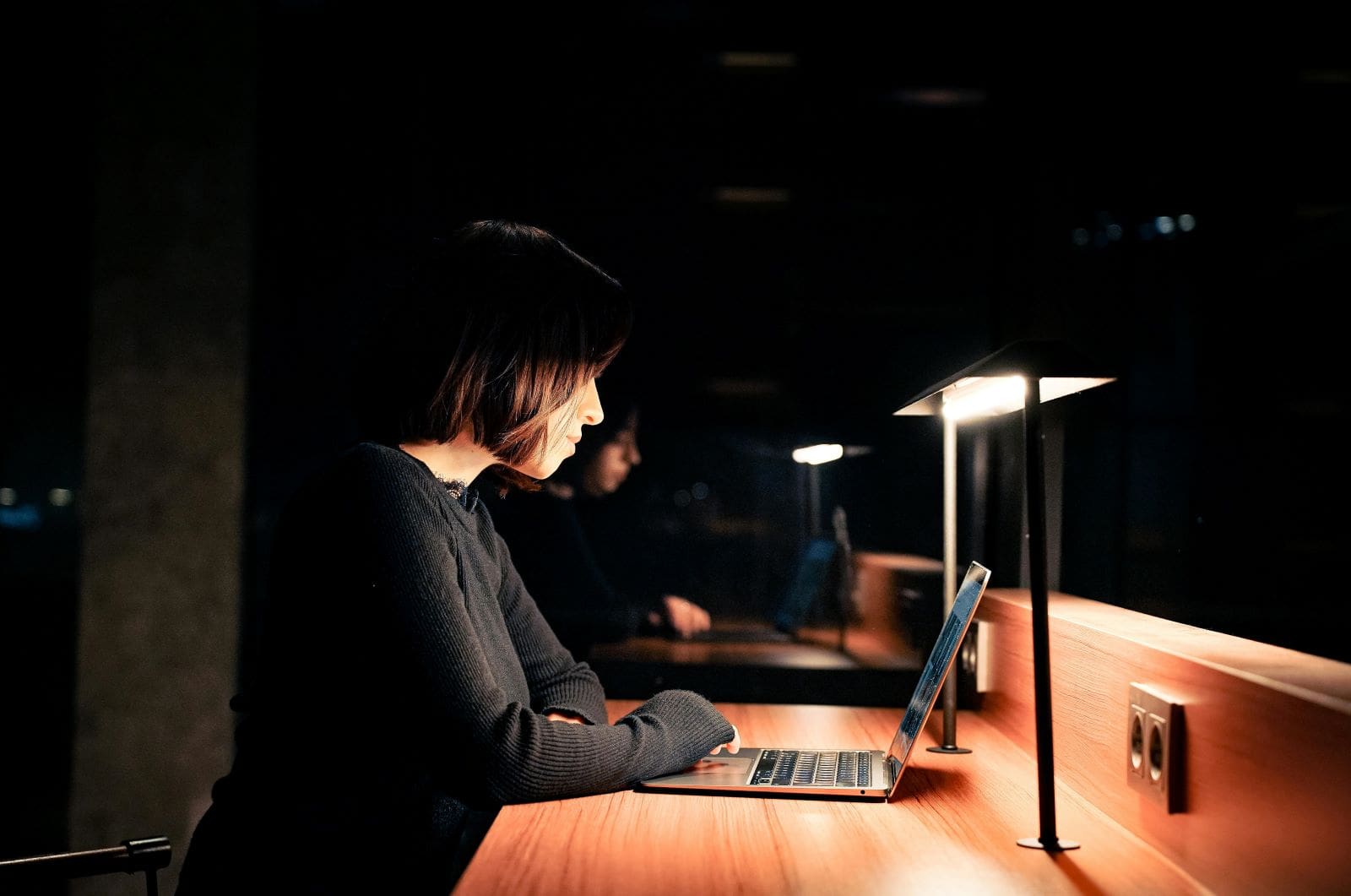
Nina Wilson is a student nurse who, when doing night shifts, works up to 12 and a half hours. “I tend to live a very regimented life, because my shift patterns, and when I have Uni,” she says, “but night shifts really fuck this up. I loose all sense of when and what to eat.
“I find that I drink a lot of sugary drinks,” she confesses, “this isn’t something that I normally do. I also have a lot more snacks.”
“Our eating schedules are so heavily based around day/night, light/dark cycles, and it is best for our health that we stick to an eating rhythm,” explains Professor McHill, “and night work wreaks havoc on our systems.” Night work has been shown to lead to a 45% increased risk of obesity, 40% increased risk in heart disease, and up to a 58% increased risk of diabetes. “Our bodies aren’t supposed to be awake and eating at night. Food at night is a huge driver of the misalignment between what our clocks are telling us to do, and how we are behaving.
“There isn’t amazing data on it, but there are currently ideas that if you move a night shift workers calories to the start and end of the night, rather than throughout, there can be an improvement on their health.”
“The issues of eating and night shift work are twofold,” he continues. “There is the biological perspective that, even if you are eating the healthiest of food, it’s still going to be worse for you than eating in the day. Then there is also the fact that society is not set up for night work, which means the food available tends to be much worse.”
Professor McHill explains that the time you eat in the day actually impacts how the food is digested. “The thermic effect of food, or diet induced thermogenesis is when it takes less energy to digest a meal.
“If you eat a meal at 10pm, the energetic response to break down the food down will be lower than it would if you were eating the same meal earlier in the day, and if you aren’t breaking down food, it’s probably being stored as fat.” Traditionally, this would be a good thing, however because of modern abundance, with food so readily available, we are overeating later in the day, and storing more calories than we need.
Josh (who did not want to use his real name) is a bar tender in Sheffield who works night shifts 2-3 times a week. He noticed the impact this had on his eating habits. “When I’m not doing night shifts, I tend to eat a lot more healthily,” he says, “working nights means I eat a lot more greasy food, and it means I am drinking quite a bit too.” As part of his job, Josh is allowed to drink alcohol while working at the bar. “U have about 4 or 5 drinks a night,” he confesses.
“An annoying factor is how much it messes me up the day after. I won’t wake up till midday, and then won’t even have my first meal until 4 or 5ish.
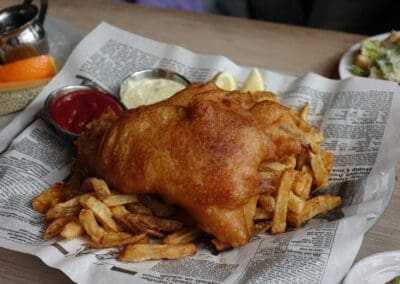
“Sleep and food go hand in hand, if I don’t get a good nights sleep then I’m tired, and I end up filling up on energy drinks. It completely ruins your appetite.” In what he called one of his worst weeks for his diet, Josh only ate two full meals- surviving off of chips for the rest of it.
“The reason we crave these energy dense, high carb food like chips at night time,” Professor McHill explains, “is because it’s an evolutionary byproduct. We know we’re about to go for a big period of fasting, and we don’t know when our next meal is going to be. We had these high energy foods at night because we may need to wake up and go scavenging in the morning.
“People think that this is why we have sugary cereals and big breakfasts, but breakfast is actually more of just a societal norm.”
It’s not just circadian rhythms that change how we eat, but also how much sleep we get. A study conducted by McHill at OHSU in which they sleep restricted participants to just 5 hours of sleep showed that people ended up eating more snacks after dinner than during the say. Talking about the study, McHill said: “what is more fascinating is that the markers in our brains will tell us to stop eating, but we override this and keep eating no matter how full we are. We don’t know how these markers are overridden.”
Another factor that changes our circadian rhythms and eating habits is also seasonal changes. “Most animals have seasonal eating habits, and likely so do humans. We did a study where we measured peoples clocks in a controlled lab environment in winter and also in summer. There was no difference.
“We took the same participants camping and after a few days in the wilderness, waking with natural light, their clocks adapted. Betweeen winter and summer there was as much as a four hour difference between their clocks.
“This issue with this is that we can’t look at how they change in the modern world because we can mask these changes with a flick of a switch. Electric lighting masks this.
“Simultaneously, when we work with nutritionists they warn us not to do food tracking between November and February because it will be garbage data.
“In America we have big celebrations like Thanksgiving, Christmas and New Years. People just don’t eat like they normally would.”
Ultimately, the day/light cycle that influences our circadian rhythms is viral to maintaining healthy eating habits. As Andrew McHill says: “If our eyes are open, our mouths are probably open, the best way to protect ourselves from bad eating habits is to go to bed at a reasonable hour, and stop eating two to three hours before you go to bed.”
Read more about late night eating here.