Flour, water, salt.. ordinary. Or at least it used to be.
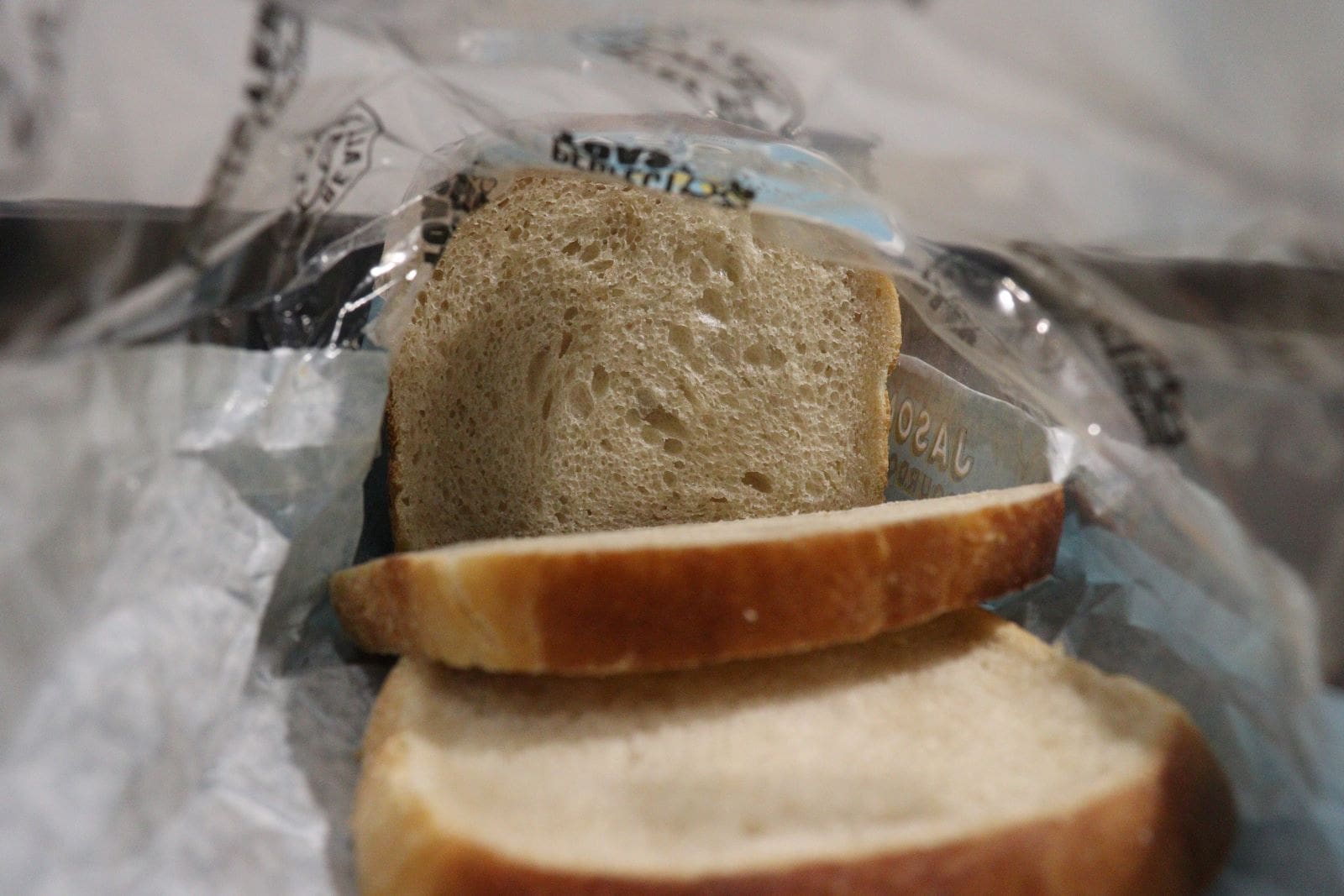
Britain’s bread is unusually soft. The softest in Europe. It squashes easily, springs back into shape, and keeps for days without going stale. For decades, that texture has been treated as a marker of freshness and quality.
Engineered to disappear quickly; from the mouth, from the gut, and from public and political scrutiny altogether.
As British bakers compete against a labelling crisis of industrial food marketing vs authentic artisan dough, and teeter between the priorities of speed, shelf life and scale; nourishment is increasingly sidelined.
Softness changes how bread behaves
“Bread may look the same on the plate,” says Dr Sarah.
Berry, Chief Scientist at ZOE, a a nutrition and health program that uses science and personal data to help people understand how food affects their body. “but the way it’s made can fundamentally change how the body responds.”
Bread doesn’t just affect hunger cues psychologically; it alters them biologically.
It keeps your hands clean, not your stomach full. Berry describes breads “food matrix” as a structure, not just ingredients, that govern digestion. The finely milled flour in low-fibre white breads break down quickly, sending glucose and insulin soaring before crashing, leaving you hungry again. While coarser or whole-grain breads slow digestion, support steadier energy, and keep you fuller for longer.
Traditional sourdough however, can ferment for up to 70 hours, “allowing fibres to alter and reach the colon where they ferment to produce acids that feed gut bacteria” says Dr Berry. These compounds are linked to improved insulin sensitivity, reduced inflammation and the release of satiety hormones.
Ultra-processed breads, made fast with refined flour and additives, offer little nourishment for the microbiome, a difference clearly visible in ZOE’s PREDICT studies, which track how foods affect blood sugar and metabolic health after eating. Low-fibre white bread scores around 30, organic rye around 60. “A big part of that difference comes down to fibre content and carbohydrate quality,” Berry explains.
The story is historical as well as biological. After World War II, when food shortages and rationing, which went on for some time after the war. Britain prioritised speed and scale.
The Chorleywood Bread Process, developed in the 1960s, could turn dough into a loaf in 20 minutes using emulsifiers, hard fats, oxidisers, enzymes and high-speed mixing. It even allowed low-protein British wheat to work economically at scale. Cheap, consistent bread won and softness became the norm.
Engineering softness
In Devon, artisan baker Andrew Gilhespy of The Fresh Flour Company works with heritage wheats, stone-milling flour just days, sometimes hours, before baking.
“I’ve been stone-milling for six years,” he says. “The biggest difference is structure.”
“Stone-milling doesn’t just extract the white endosperm,” he explains. “It brings through the richer parts of the grain, depending on moisture and variety.” The pale flour turns creamy with water; a visible clue to what’s left intact.
Industrial flour can sit for months before use, “often stabilised through a so-called ‘greening’ process,” a term Gilhespy dismisses as marketing rather than nutrition. Greening’ as a stabilisation process that renders flour biologically inactive, allowing it to sit for weeks or months.
Once grain is milled, he argues, oxygen rapidly degrades sensitive compounds, including vitamin E and B vitamins, many of which are altered within days. From his perspective, the question is simple: “why wouldn’t you use flour as fresh as possible?”
Time is the final ingredient. Slow fermentation changes flavour, texture and how bread feels. “You smell it, you chew it,” Gilhespy says. “It behaves differently.”
Many now re-bake frozen dough on site, creating the appearance of freshness without the time, skill or fermentation traditionally associated with bread-making.
“It’s the result of heavy processing and chemical intervention. What’s well documented is the overlap in interests and practices between chemical, tobacco and food corporations, industries that have historically prioritised addiction, shelf life and profit over health. Today, many of the world’s largest food companies are owned by powerful investment groups, and their responsibility is to generate returns, not nourish people.”
Bought by 99 per cent of households and consumed at a rate of 60–80 loaves per person each year. “It’s a loaf, but it’s not food in the way bread used to be.”
What the labels don’t tell you
Around 90–95% of UK loaves fail the Real Bread Campaign’s definition of “real bread,” packed instead with additives and processing aids.
Industrial bakeries argue that their bread exists to deliver consistent quality, affordability and scale to millions of households every day. For instance, Warburtons (one of the UK’s largest bakery brands) emphasises its focus on quality control, innovation and ingredient sourcing, with dedicated teams testing texture, crust and freshness across millions of products each week.
Chris Young, co-founder of the Real Bread Campaign, has spent 15 years challenging UK bread regulation, pushing governments to curb misleading labels that undercut skilled bakers.
If softness was engineered, confusion was legislated. ‘farmhouse’, ‘rustic’, ‘stone-baked,’ all promises of variety.
But behind the labels, the processes are nearly identical. Branding, not biology, drives choice. “‘Freshly baked’, ‘baked in store’, ‘whole grain’, ‘sourdough’ — none of these terms have meaningful legal definitions,” Young says. “They’re marketing tools, not guarantees of how the bread was actually made.”
In many supermarket bakeries, “‘baked in store’ simply means frozen dough is reheated at the push of a button. There are no bakers out back,” Young says, emphasising a loss of skill. The process can use nearly twice the energy of traditional baking, an environmental cost hidden behind convenience.
Young’s work involves running initiatives including calling for an Honest Crust Act of better loaf labelling and marketing laws, because labelling gaps have nutritional consequences too.
“Manufacturers can exploit the health halo,” Young says. “We once found a loaf sold as wholegrain that contained just six per cent wholemeal flour.”
These terms often come with a premium price. “For people on tight budgets, that matters,” Young adds. “They’re spending extra based on trust, not truth.”
“People think they’re buying something closer to a local bakery, they’re not.”
A correction, not a trend
At E5 Bakehouse in London, bread is treated as a living process rather than a commodity. “Our bread is made using just flour, water and salt,” says founder Ben MacKinnon. “It’s leavened naturally using wild yeast.”
“The dominance of ultra-processed bread is a symptom of a broken food system, we’re producing food in a disconnected way that damages soils, waterways and biodiversity. “People are actively seeking out bread that doesn’t cost the planet or their health.”
This is not nostalgia, he argues, but correction. Independent bakeries and microbakeries now operate in most major towns, reshaping how people think about bread. Supermarkets have taken notice, producing their own ‘sourdough’ loaves; many of which the Real Bread Campaign describes as ‘sourfaux’.
“There’s no going back,” MacKinnon says. “This is an active choice, away from commodity food towards something genuinely nourishing.”
Across Europe, breads with chew and crust never quite lost their place; ciabatta in Italy, baguettes in France, dense rye in Scandinavia. “The next big shift needs to be in ingredient sourcing: moving away from generic commodity wheat towards specialist grains grown through regenerative farming systems, without synthetic pesticides, herbicides, fungicides, or insecticides.
For long-term sustainability, better regulation is needed, but that change is unlikely to come from the government alone. It has to come from us as consumers, becoming more informed and changing the way we eat.”
An ordinary slice, reconsidered
None of this means bread is inherently ‘bad’. Context matters. “What you eat with your bread really counts,” Dr Berry says. Pairing bread with protein, fats and fibre can slow digestion and turn the same slice into a more satisfying meal, “A Sunday morning isn’t complete without a bacon sandwich for me, but these days I’ll add some avocado to help avoid the post-carb crash as much as possible!
“Remember it’s OK to bend the rules every once in a while.”